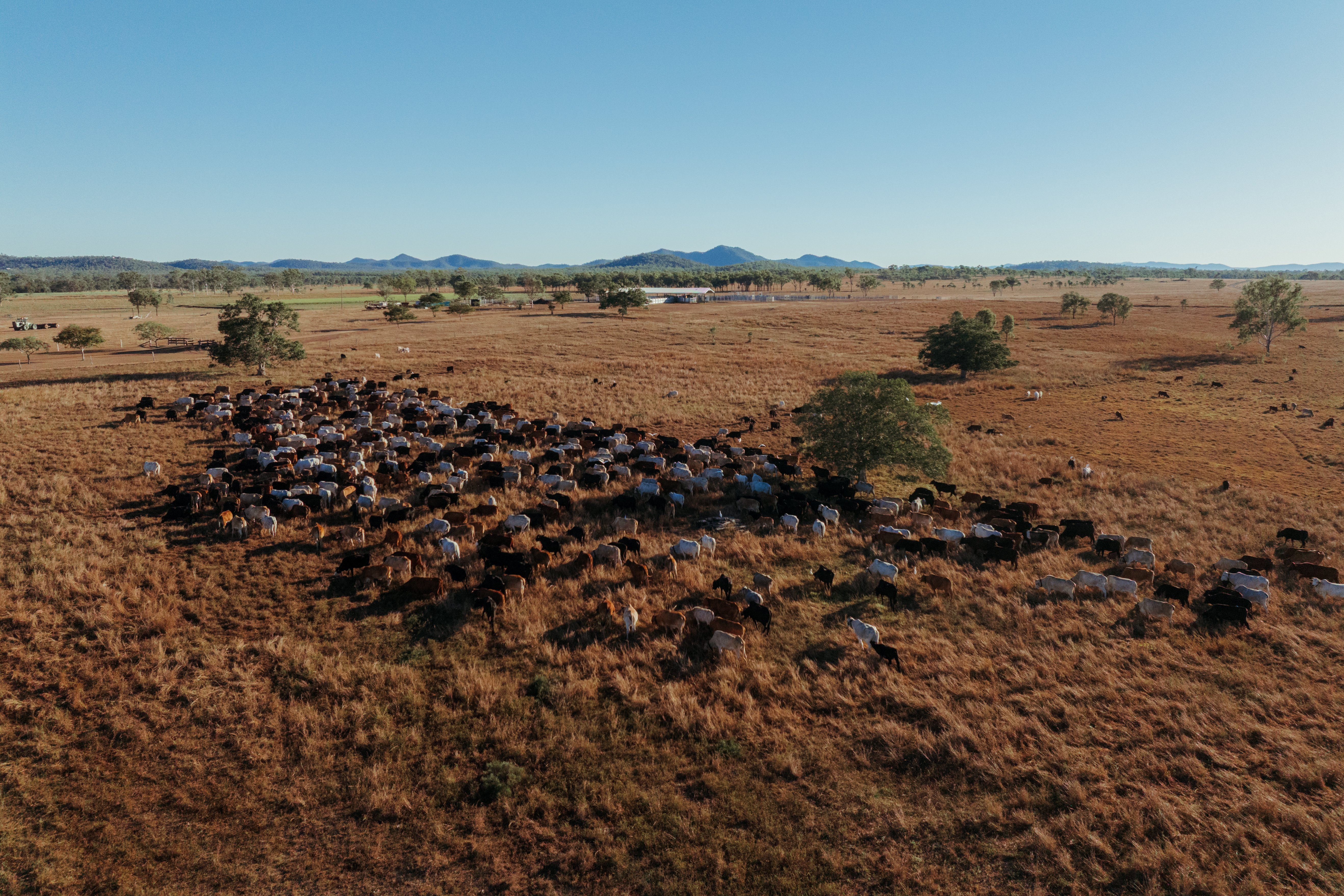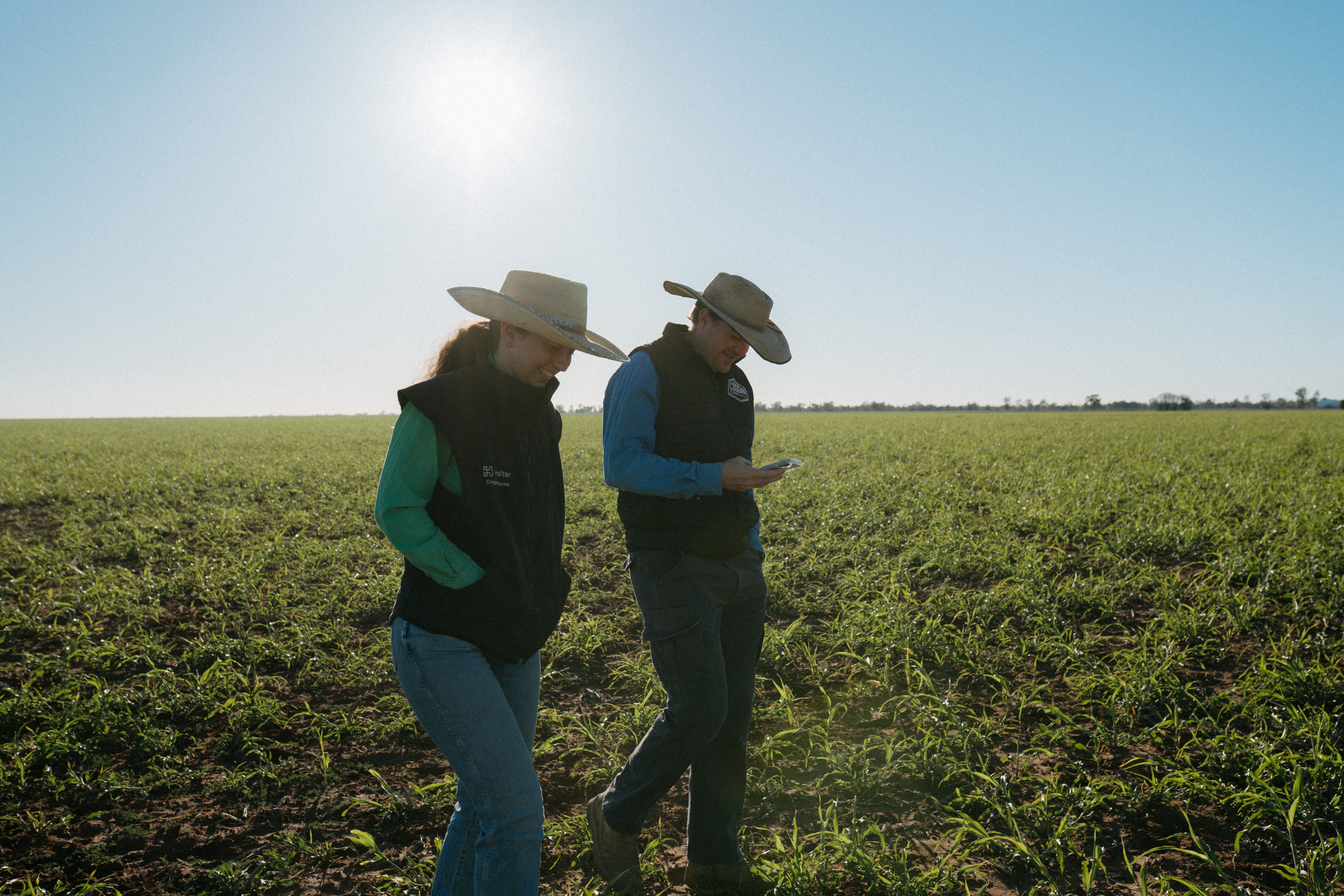


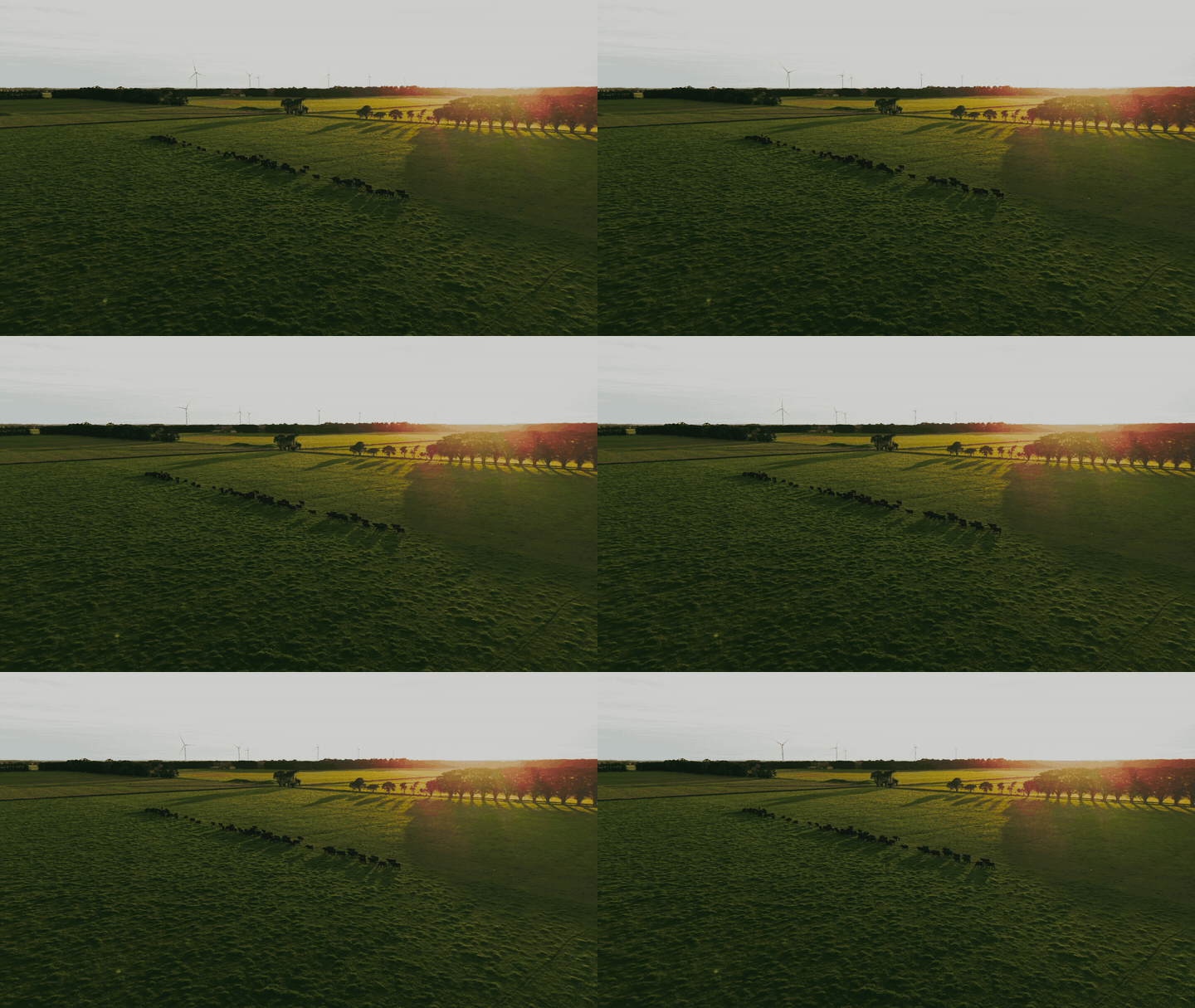
James and his wife Georgie run Sisters Pastoral Co, farming around 2,200 hectares in west Victoria, where they live with their two children. This year they’re running 1,450 breeders and calves, with weaners sold later in the year. In the 100 days since the first Halter collars went on, they’ve started farming grass first. They know what’s on offer, they graze it better, and they’re growing more of it.
“There’s been a massive influence through Halter in my opinion and we’ve actually measured that we’re growing 20% more feed, or 20% more kilos of dry matter per hectare per day on the Halter platform versus our control. Pretty incredible really when you break that down.”
It’s a big place with a small team, and like most Australian farmers, they plan their year around the dry months. Every bit of grass they can grow and use is feed they don’t have to buy when summer bites.
“It’s the cheapest food I’ve got,” James says. “That is the be all and end all for our business, that we utilise as much grass as we can through the mouth of an animal. Doesn’t get much cheaper than that.”

Big paddocks, small team
James’s wake up call came three or four years ago. Once the business was running at a certain level, he looked at the grass being left behind in the paddocks and knew there was more use to it.
“We’re in a business that had basically been set stocking since god was born, and then one day I woke up and realised there might be a little more to life and grass production than set stocking.”
He got talking to a few local dairy farmers, who’d been rotationally grazing for decades, and wondered why beef should be any different. Someone recommended he do a pasture principles course, all about leaf emergence and the benefits of rotational grazing. From there, he began to move the business to rotational grazing, and it went from strength to strength.
“Not only did that give us a large production increase, it actually gave me a lot more control in my business and a lot more nights of sleeping comfortably at high stocking rates.”
But anyone running big paddocks knows where that hits a wall. James’s paddocks average 40 hectares, and with only so many hands and hours in the day, strip grazing still only got them to half of that at best. As James says, “even at 20 hectares we’re leaving stock in paddocks probably longer than what they should be.”
If you’ve ever tried to rotationally graze big country, you’ll know the feeling. The feed’s going to waste, the mob should have moved yesterday, and the sun’s already setting by the time you get out to shift the strip fence.
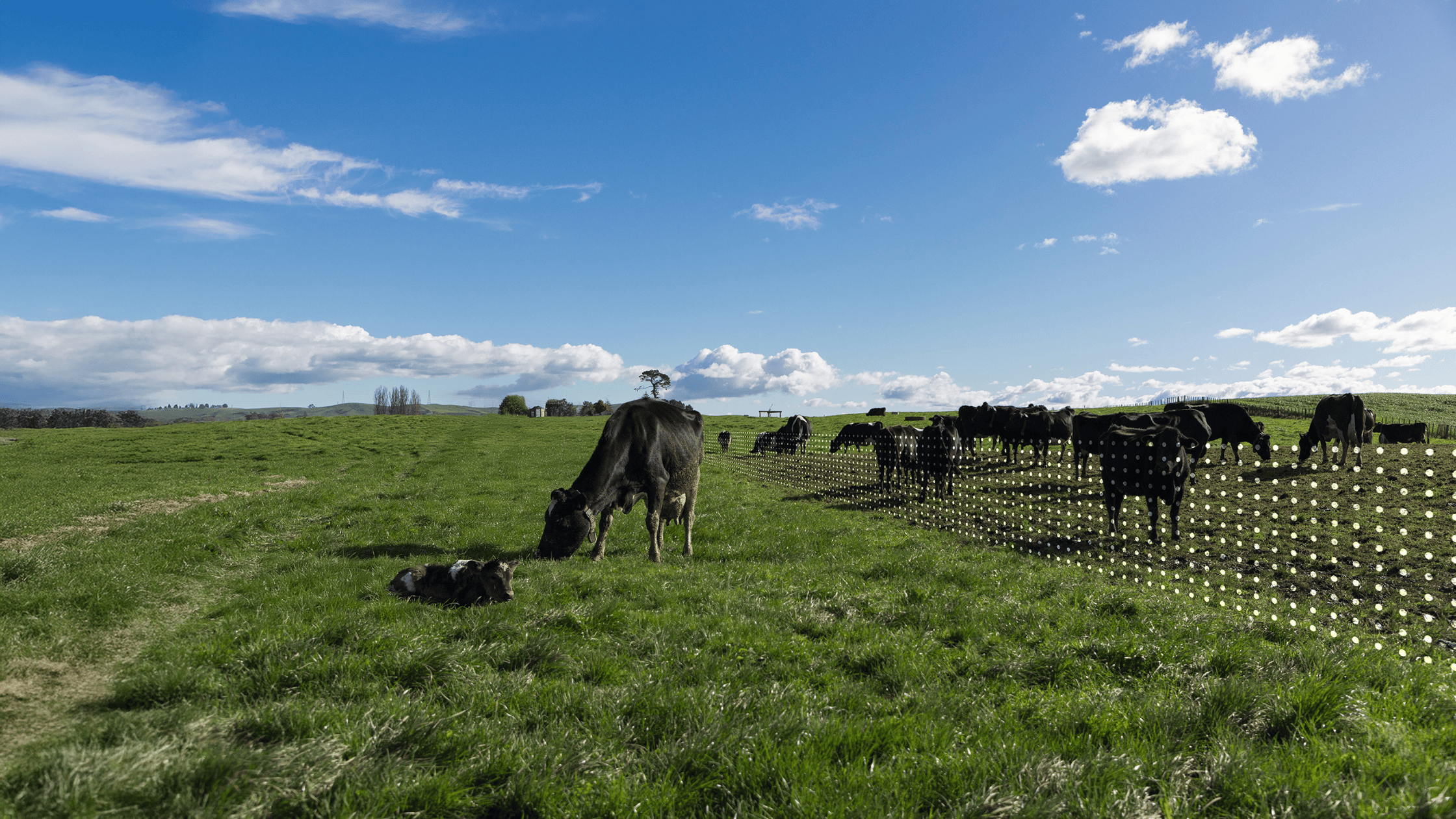
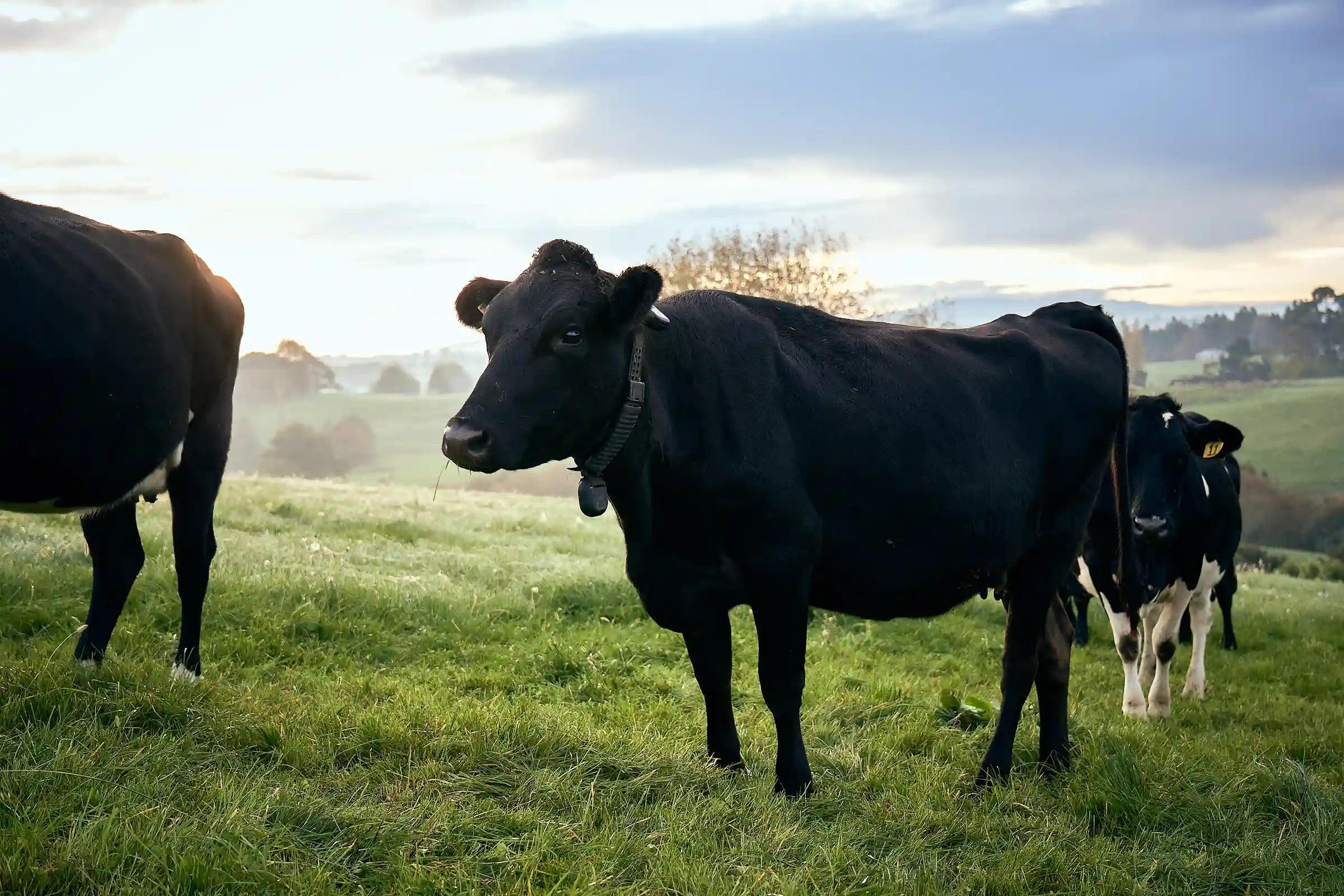
James knew there had to be a better way, and he could see himself getting there with Halter. “I knew that I could get to the bleeding edge, or the upper echelon of grazing, by putting a collar on.” Simply put, now each cow wears a collar, James draws the break in the app, and the mob moves to it.
Winter: the real test
The first surprise came on day one at training. James calls it “mind-boggling”: watching his cattle interact with a break within the first 15 minutes of having a collar on.
“There’s been so many exciting moments or just pinch yourself moments that you think, oh hell, that actually worked.”
Those first collars went on heading into winter, the toughest stretch on the farm. It’s also where his year is won or lost.
“Our key profit driver is mid winter stocking rate,” he says. “How many widgets you can run through the middle of winter to maximise the amount of feed we’re about to grow in spring.”
The biggest gains he saw came from changing how he used his pasture. “A lot of our first 30 to 60 days was around how we could manipulate residuals and how we were grazing,” James says. One thing he’s really proud of is the shift in how he and his team think: “we’re becoming more grass managers and animal managers.”
As the cold days rolled on, that’s when James really started to see the difference. He points to “the flexibility that it’s given when the going’s got tough in the middle of winter, and ground conditions have got pretty hard.”
If you’ve run cattle through a wet winter, you’ll know the sinking feeling of watching a paddock get torn up because there was no one free to shift them.
“We’re just managing residuals so well on the Halter platform, and they’re constantly moving on to fresh feed and not having any of these issues where they’re standing on no feed for 2 or 3 days before they’re moved.”
The flow-on effect shows up in the grass. Shifting cattle little and often gives paddocks a proper rest, so they bounce back quicker. And James has the numbers to show it. “We lifted stocking rate by 20%. To then go and tell someone that you’re measuring 20% more grass grown per hectare is massive on top of that.”
Calving with an extra set of eyes

James kept his first calving with collars simple: pause the collars, give the cows room and don’t overcomplicate it. But with a collar and GPS location on every cow, he’s had “meticulous management of calving.” Most breeder farmers know the feeling of finding a calf on its own at first light, with no idea which cow is its mum. For James, the features in the app changed that.
“We have been able to use the app to replay. You find a calf who doesn’t have a mum and through the app we can replay the whole movement of the mob and find that calf’s mum to take her back to be remothered. I think it’s been that attention to detail for me that the collars really helped with.”
Then there’s creep grazing. The cows stay put behind the virtual fence line while the calves slip ahead to get first pick of the fresh feed, which helps lift weaning weights come sale time.
More grass, more sleep
100 days in, the change isn’t only in the paddock.
“We’re making money, it’s giving back in spades to us. It’s made lives easier, I’ve been sleeping better at night, animal performance has been better, per hectare performance has been better. We’ve never grazed our paddocks better.”
For a family farm with two young kids, easier days and better sleep count for a lot. And out in the paddock, spring is showing what all that winter work set up.
“I’m just seeing a massive difference in our residuals,” James says. “We’re getting a beautiful consistent grazing across our platform that I would have never imagined it’d be so good, just by being able to contain animals and shift them frequently across grass.”
Turns out there was a lot more to life, and grass production, than set stocking.

Turning up the volume for spring
James is all in, and he’s already planning for the seasons ahead. After weaning, he plans to use the Halter collars to hold cows back, so they slowly eat through the lower quality feed before the autumn break.
But first, there’s a spring to handle. Every bit of that spring flush he can get through his cattle is less feed to buy in the coming summer.
“The next 100 days is big because that’s trying to manage that massive bulk of feed that grows in spring, and it’s a really steep curve. So that collar will really come into play where we can turn the volume up on how much demand we throw at that supply curve. So I’m pretty excited as to how we can manage that spring feed.”
Running breeders on big paddocks? Book a chat with your local Halter rep to talk through what 100 days could look like on your farm.