

Calving season doesn't wait for anyone. You’ve already worked hard to get here - cows are pregnant, dry off was well planned and now you are transition feeding.
Now it’s time for calving and you know well that this is a full-on time for being a dairy farmer.
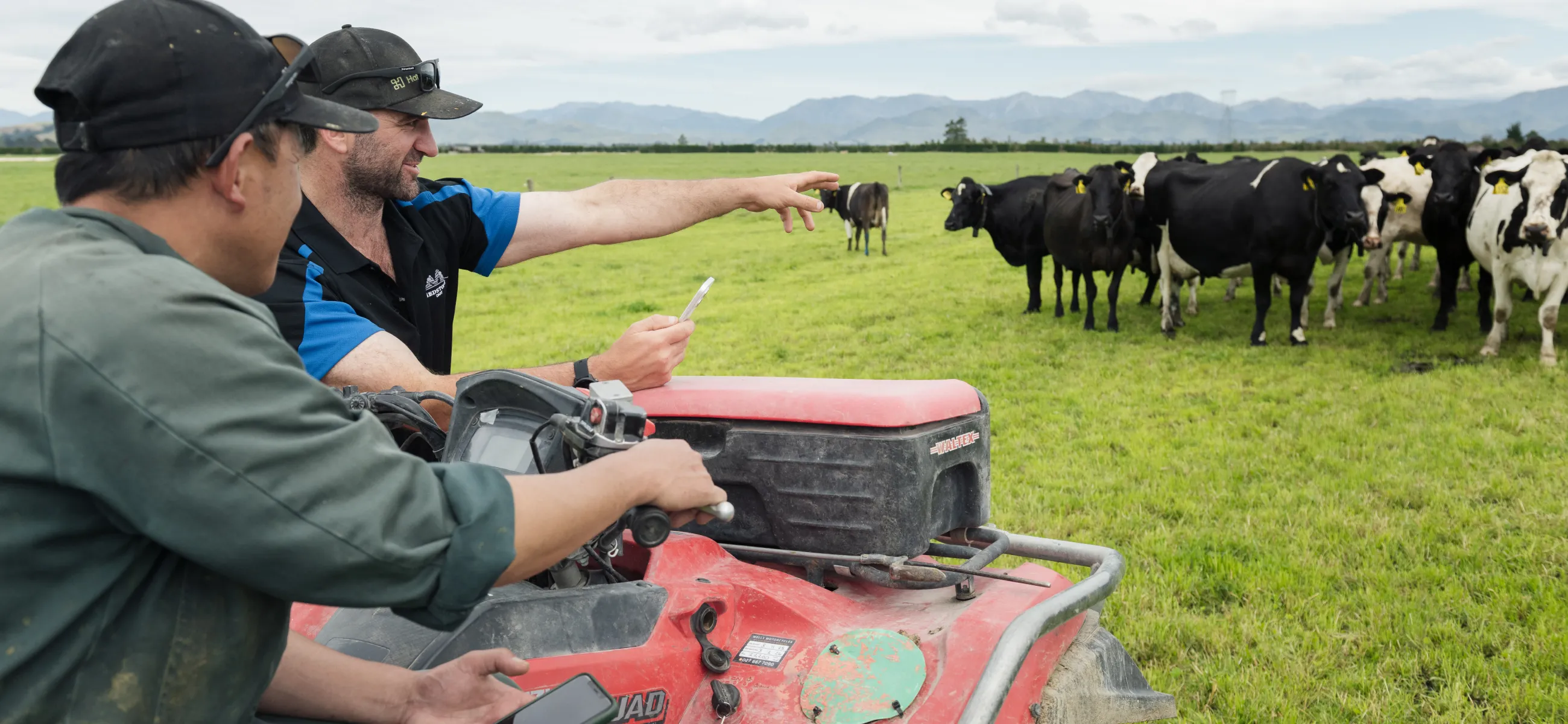
We've talked to some of our farmers across Australia, and picked up a few tricks of the trade in using Halter for your calving season. These small changes using Halter in your day to day begin to add up to a calmer, better organised calving season.
Here's what experienced Halter farmers are doing differently.
1. Pausing collars the moment a cow shows signs
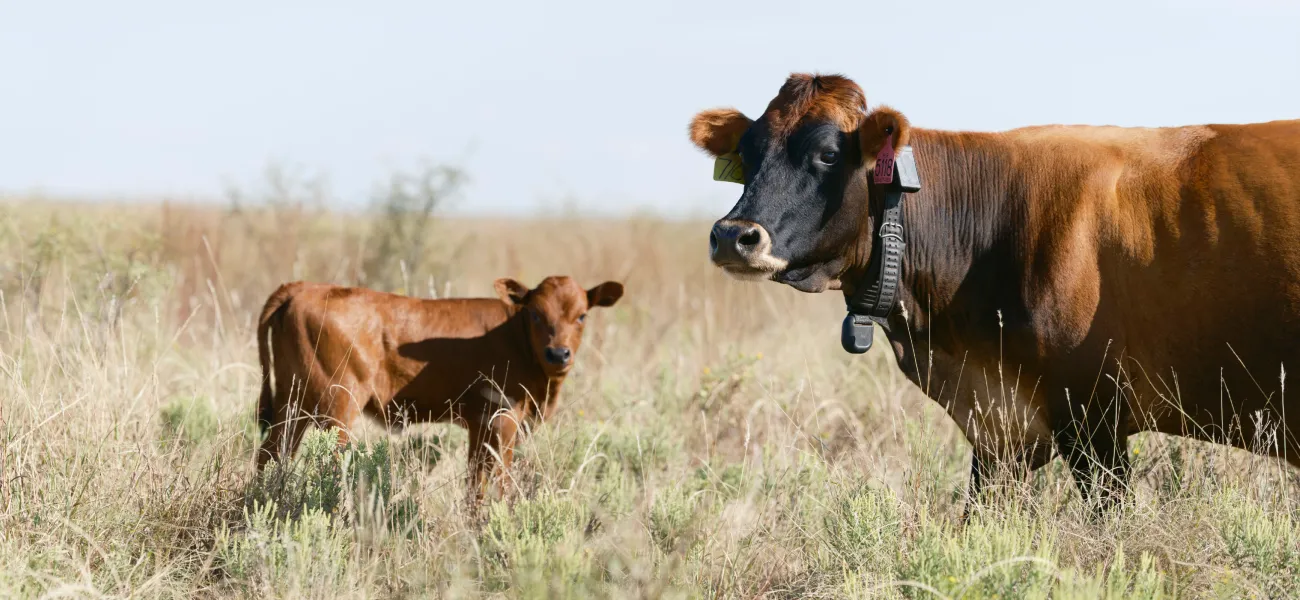
When a cow starts showing signs of calving, or has just calved, pausing her collar is the first move. A paused cow gets no cues or reinforcement from her collar. She's free to wander off and find a quiet corner to calve in, or to follow her calf out past the break edge onto fresh grass. And when you need to be up to find her, instead of grabbing your headlight and stepping into the cold, all you need to do is look on your app and find her in the paddock.
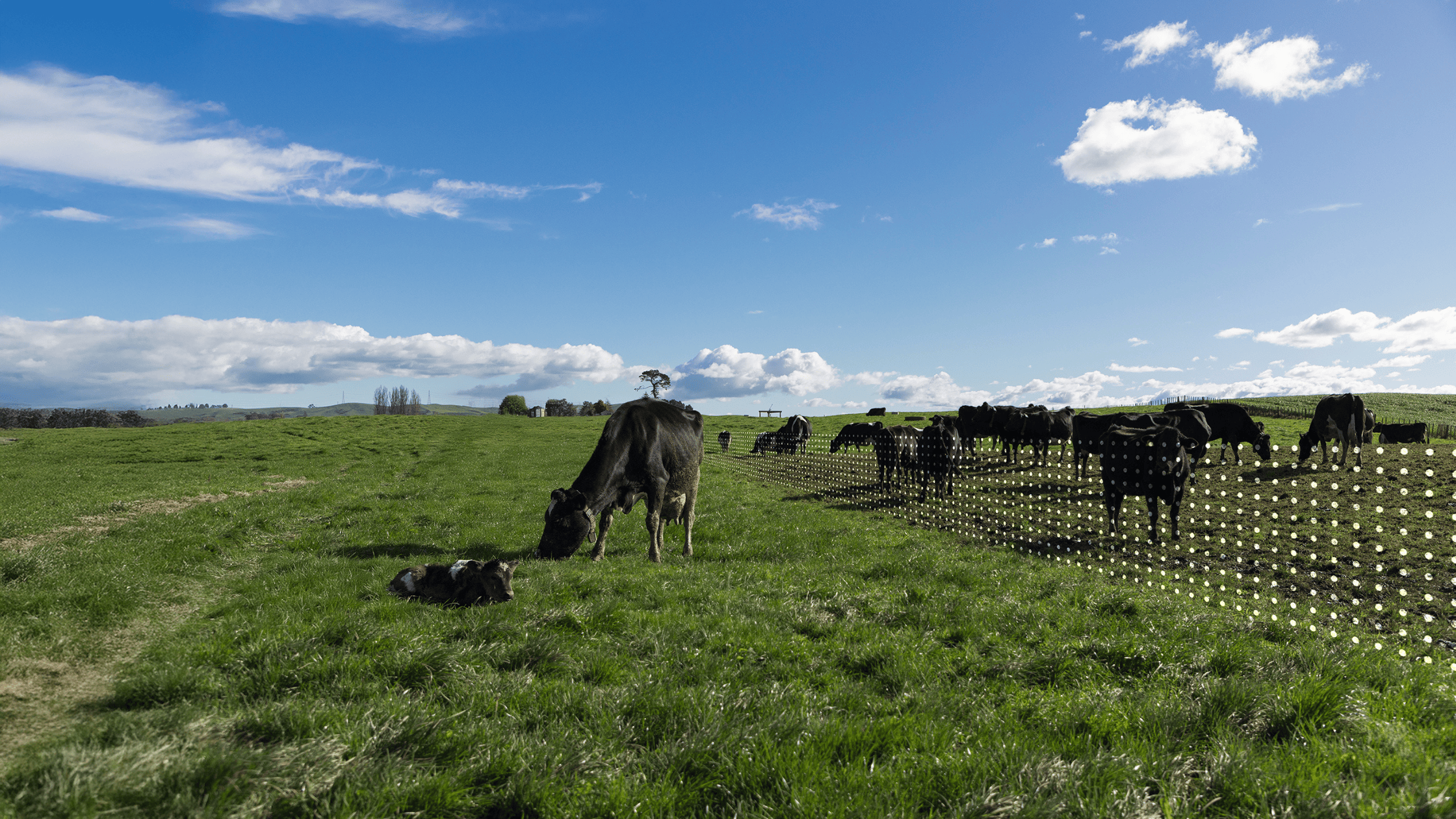
This is also how farmers can draft a freshly calved cow. Normally, getting one hormonal, protective cow away from the mob is a much bigger deal than it needs to be. With Halter - pause her collar, walk her calf past the virtual boundary, and she'll follow on her own. The rest of the mob stays exactly where it is. Before Halter, this would’ve been a two-person job; one person to hold open a gate or shift a reel, another to walk the cow and calf through, all while keeping the rest of the mob from crowding onto the new break.
2. Recording calving dates daily
When one of your cows calves, marking it in the Halter app straight away does more than tick a box. It tells the system exactly what's going on, so it can read her behaviour the right way. Cows naturally eat, move and ruminate differently for a short stretch after calving, and without that context, the app has no way of knowing why her patterns have shifted. Once you've logged the calving event, Halter knows to expect those changes and can focus on what really matters: spotting when something's not right.
These behaviours tracked could be if she's slow to get up or if she is off her feed, not ruminating like she should or keeping to herself. Catching her sooner means treating her sooner, and better outcomes for her and your herd. A few seconds spent marking her as calved sets your team up to catch problems early and get her back on her feet faster.
3. Split your springer mobs
In a traditional setup, managing springer cows means throwing them all into one mob and checking it every few hours. The mob gets big, individual attention gets thin, and your highest-risk cows get lost in the crowd.
Springers also need consistent intake, and in a big group, timid cows can easily miss out. With Halter, you can create multiple springer mobs, then shift and adjust these smaller groups on the fly without moving a single fence. Pasture gets matched to the cows that need it most. The result is less guesswork and more time spent looking after the cows who need it, instead of managing the mob itself.
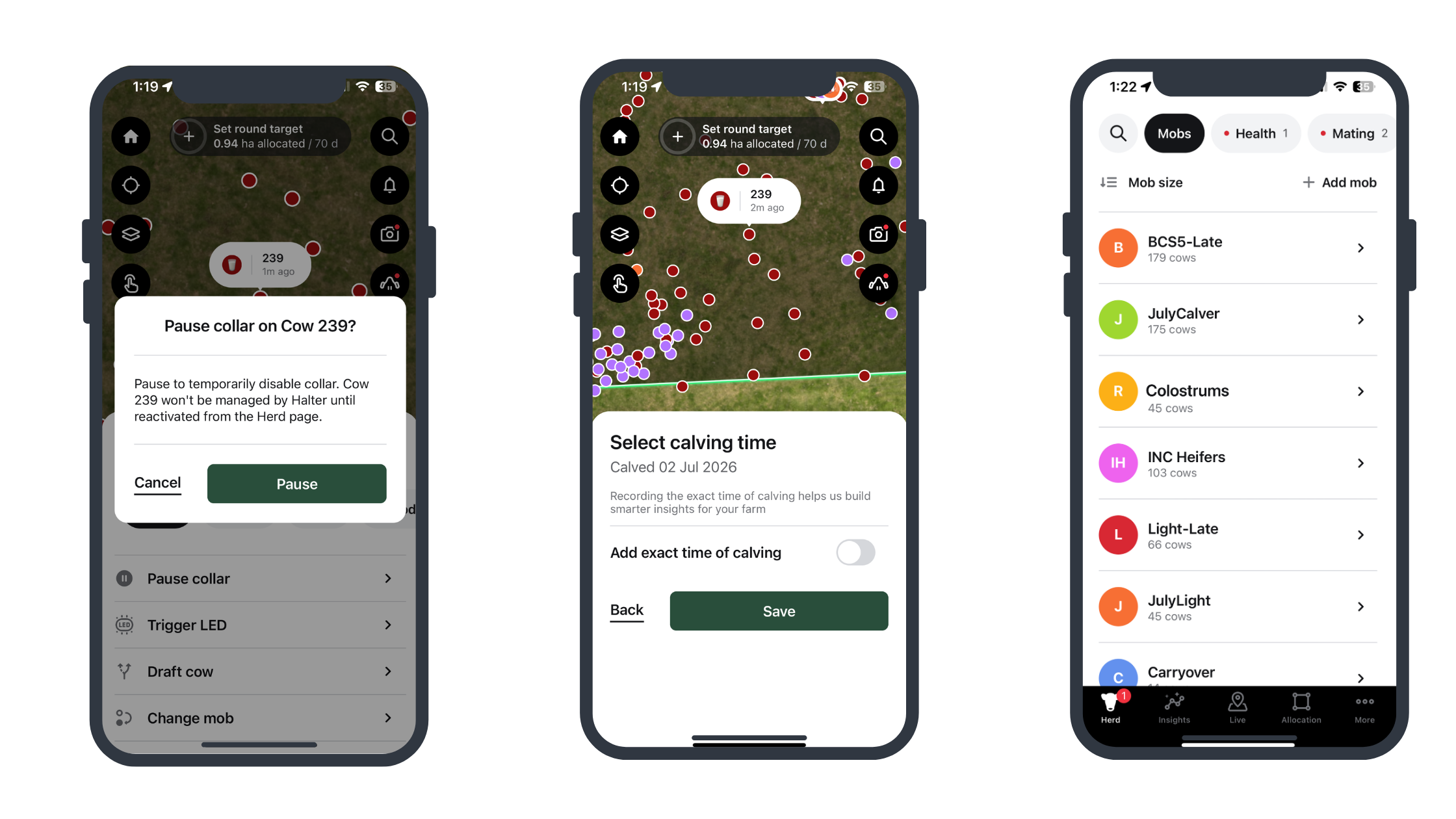
4. Manage your colostrum mob by recovery
A colostrum cow is one of the harder animals to manage. Once Halter picks up that a cow has calved, it tracks her recovery for the next 21 days. Detection leans heavily on eating behaviour, comparing her grazing and rumination against her own pre‑calving baseline, then working out what her recovery should look like.
Cows that recover poorly in this window are more likely to have poor fertility and drop out of the herd. Instead of guessing recovery from the number of milkings, Halter shows you exactly which cows haven't lifted their grazing and rumination time above their pre‑calving levels, so you can manage the colostrum mob based on how each cow is actually recovering, not a fixed schedule.
Farmers who check this list regularly, and filter by rumination rate to zero in, are catching issues like milk fever, ketosis and mastitis before they show up in the paddock, and setting their herd up to hit peak production later in the season.
What’s next? Calving Alerts!
Halter is in the final stages of being able to detect calving and send a calving alert. It’s a feature that lots of farmers have asked for. Farmers in Australia and New Zealand are testing this new function and it’s progressing really well!
Australian calving doesn't run on a single script. Full pasture herds in Tasmania and Gippsland are managing spring calving on grass. Feed pad operations across Northern Victoria and South Australia are juggling large mobs and year round milking. A growing number of hybrid and split calving farms are running 2 calving windows a year to flatten the workload. Whatever system you're running, the habits above are about making sure no cow, and no piece of information, slips through during the busiest weeks of the year.
Want to talk about getting Halter on your farm? Get in touch with a rep.