

"We haven't looked back. I don't see us farming without it.”
The Bowmans have been farming at Cheshunt for a long time. Since the 1850s, to be exact — six generations of the same family working the same Tasmanian land, passing it on, each generation leaving it a little better than they found it.
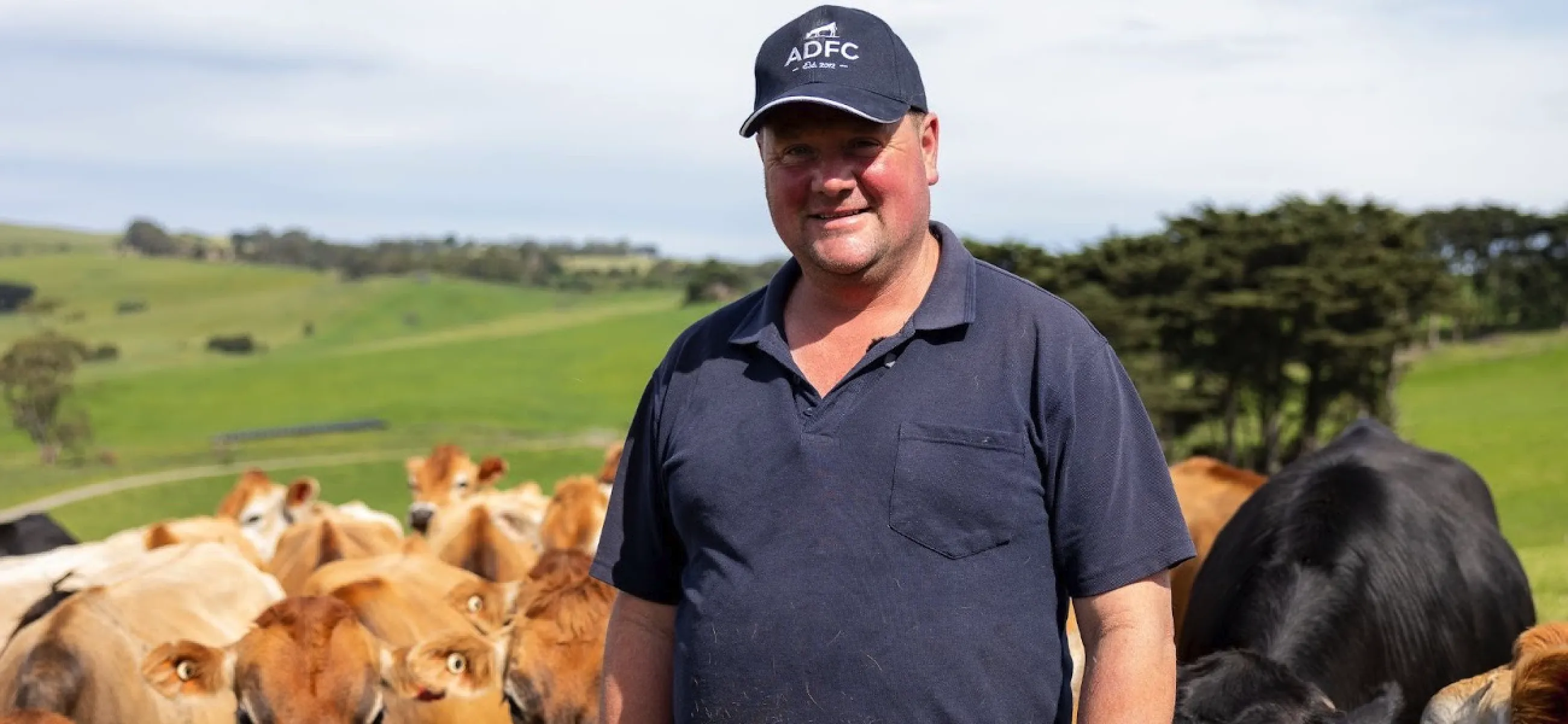
Alastair and his wife Caitlin are the latest chapter in that story. Together they milk around 800 cows, and in their generation, they've added something new to that legacy — the Halter platform.
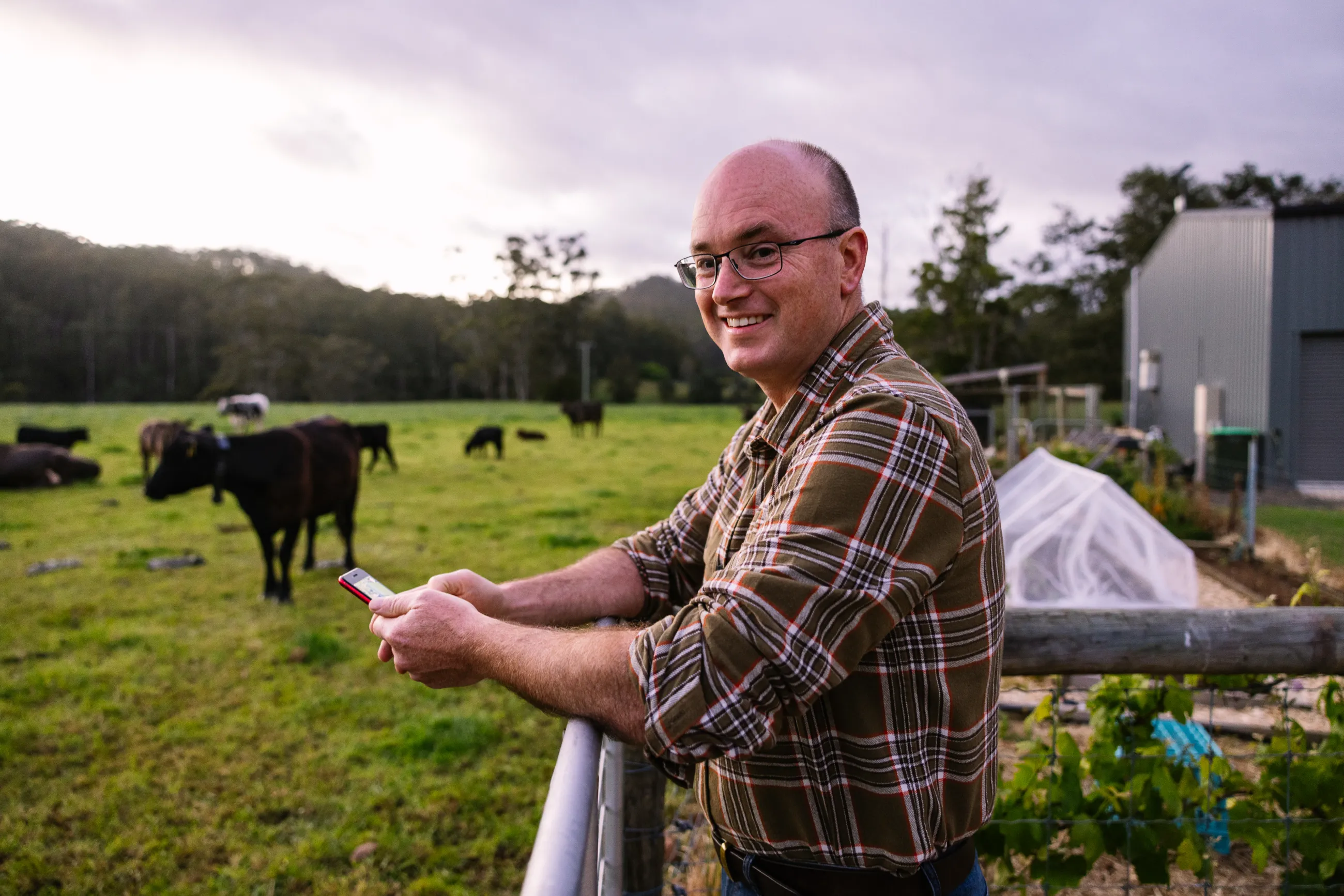
Spending a day out with Alastair on the farm, we asked what that looks like in practice. He watches a mob leave a paddock, and there's a grin on his face that tells you everything before he says a word.
"It's still a bit of a novelty just watching cows leave a paddock," he says. "And then still a novelty when you've got like the best looking grass that you've grown all year and those cows are on the right side of that graze line still. That's cool."
Why Halter
Alastair saw one thing, and he knew. "I think the big thing for me was just the virtual fencing. I was just like, we need that."
For Caitlin, who runs the farm shoulder to shoulder with Alastair, the draw wasn't just the technology itself, it was what it freed up. Every farm has hours in the day that disappear into tasks that keep things ticking but don't move the needle. Moving cows was one of them, and she saw it clearly.
"If you factor that in and say someone's doing 2 and a half hours 5 days a week, it's nearly a whole day's worth of pay that you're just paying them to sit in the buggy and move cows."
Not only was the labour change a huge win for them, but the nature of the cows changed too. Without the constant pressure of humans handling them twice a day, the cows had the freedom of their own schedule to move.
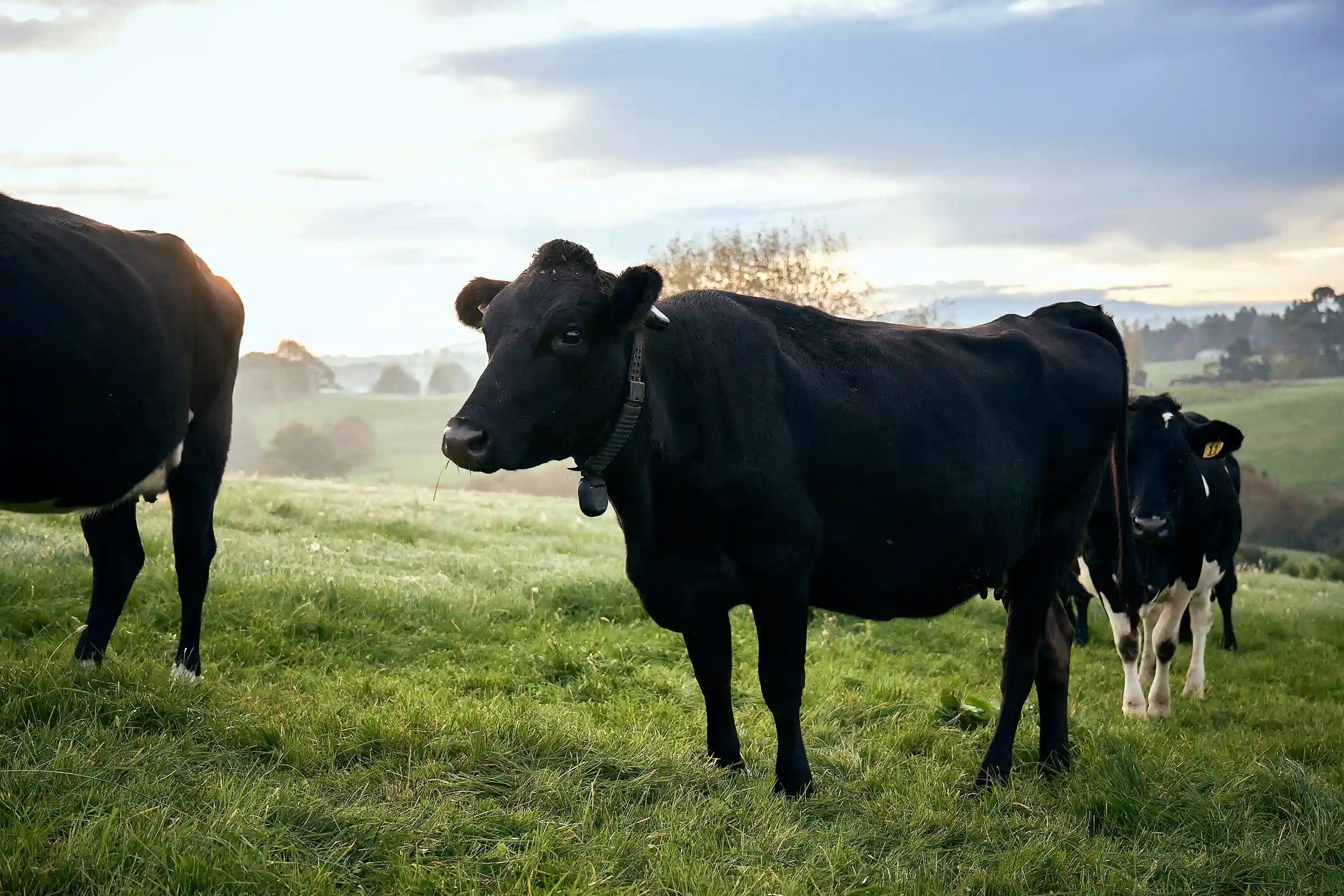
"Those cows are just as happy as they can be, no stress, no limitations, no one chasing them to the dairy anymore. They just wander in at their leisure and do it at their own pace."
The team got their mornings back, nobody had to be out early, and in the middle of the day they picked up another 2 hours for useful work on the farm. There's one other benefit that doesn't show up on any spreadsheet, but Alastair mentions it with a smile.
"I think everyone enjoys not getting out of bed as early."
Feeding down to the kilogram
Labour savings got them through the door, but it's the pasture management where Caitlin and Alastair will tell you the real shift happened.
Before Halter, grazing decisions were made with good instincts and years of experience, and that was enough. But with Halter, the visibility across the whole farm opened up a new level of precision and confidence that neither of them had had before. They could see exactly how much grass was growing across every paddock, set allocations down to the kilogram, and know that every cow was getting exactly what she needed.
"The major part of Halter for us has been the pasture management, utilisation and efficiency of grazing. Halter has enabled us to lift our cow number due to that more efficient grazing."
The day-to-day of it is simple. Cows head to the dairy, come back, and step onto a fresh break every time. Nothing wasted, nothing short. And the confidence that brings flows through to every decision they make about the herd.
"With Halter, you've got a great visual representation of a big picture view of how the grass is growing across farm. Halter's been able to give us the same control over the diet down to the kilogram that we have in the dairy and the feed bale on a paddock level. How much grass we're growing, how hard we can push our residuals, gives us the confidence to know that the pasture that we're growing will support more cows."

Nothing falls through the cracks
With 800 cows spread across a valley at dusk, even the most experienced eye can only see so much.
The cow that's just a little off. The one that didn't move with the mob. The one that looked fine at milking but hasn't been right since Tuesday. For Alastair and Caitlin, those cows used to be the ones you'd worry about — the ones that slipped through before anyone noticed. With Halter, that’s no longer an issue.
"Halter definitely picks up on sick cows a lot quicker than the human eye ever will, because it's monitoring that cow 24/7. When you get into a larger herd, that stuff's a lot harder to see."
Now a notification comes through the app, the cow is drafted at the end of milking, and the vet is out while there's still time to act. Early, every time. The difference between a cow that bounces back quickly and one that costs you.
The same care extends to cows that aren't quite keeping up. Rather than losing track of them inside a large mob, Alastair and Caitlin can pull them out and make sure they're properly set up with what they need.
"Halter has allowed us to seamlessly run more herds and look after cows that aren't quite performing to where we want them to be," Alastair says. "So we can separate those cows out of a larger mob and put them in a smaller mob and feed them a little bit more to make sure that those cows are looked after from post-calving through to mating."
Every cow gets what she needs. The ones that need more, get more. Nothing gets missed.
No more missed cycles
Reproductive performance is where dairy farms win or lose over a long season, and for years heat detection meant being in the right place at the right time. At 800 cows, that's a lot of right places and a lot of right times to be across.
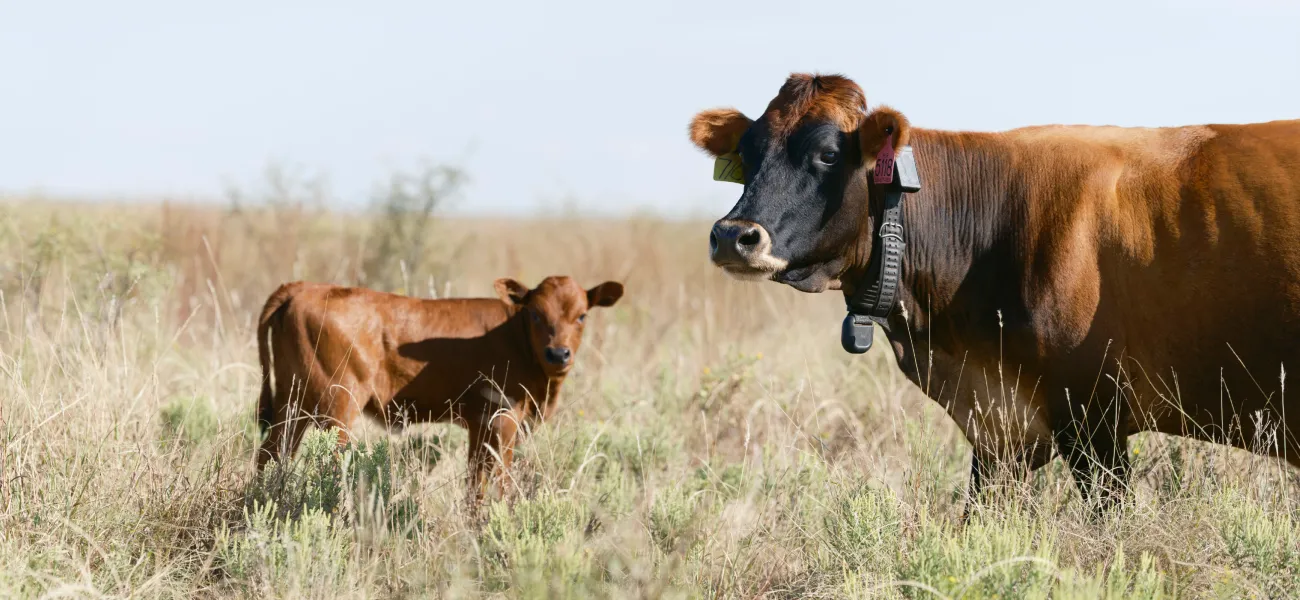
Halter changed that entirely for Alastair and Caitlin. When a cow comes on heat, her collar signals it, the white LED activates and she's easy to spot at the shed.
"Straight after the break drops, it signals all of those cows on heat to start flashing their white LED. It remains on for 4 hours, which is enough time to manually heat detect."
Halter's collars are tracking every cow's behaviour around the clock, picking up the shift in rumination and activity that signals a heat before there's any physical sign of it. Missing a cycle on a single cow doesn't sound like much, but across a herd of 800 it adds up fast, in time, in re-matings, and in cows that don't get back in calf when you need them to. Halter means fewer of those cows, and a cleaner run through the most important weeks of the season.
The farm in the grip of your hand
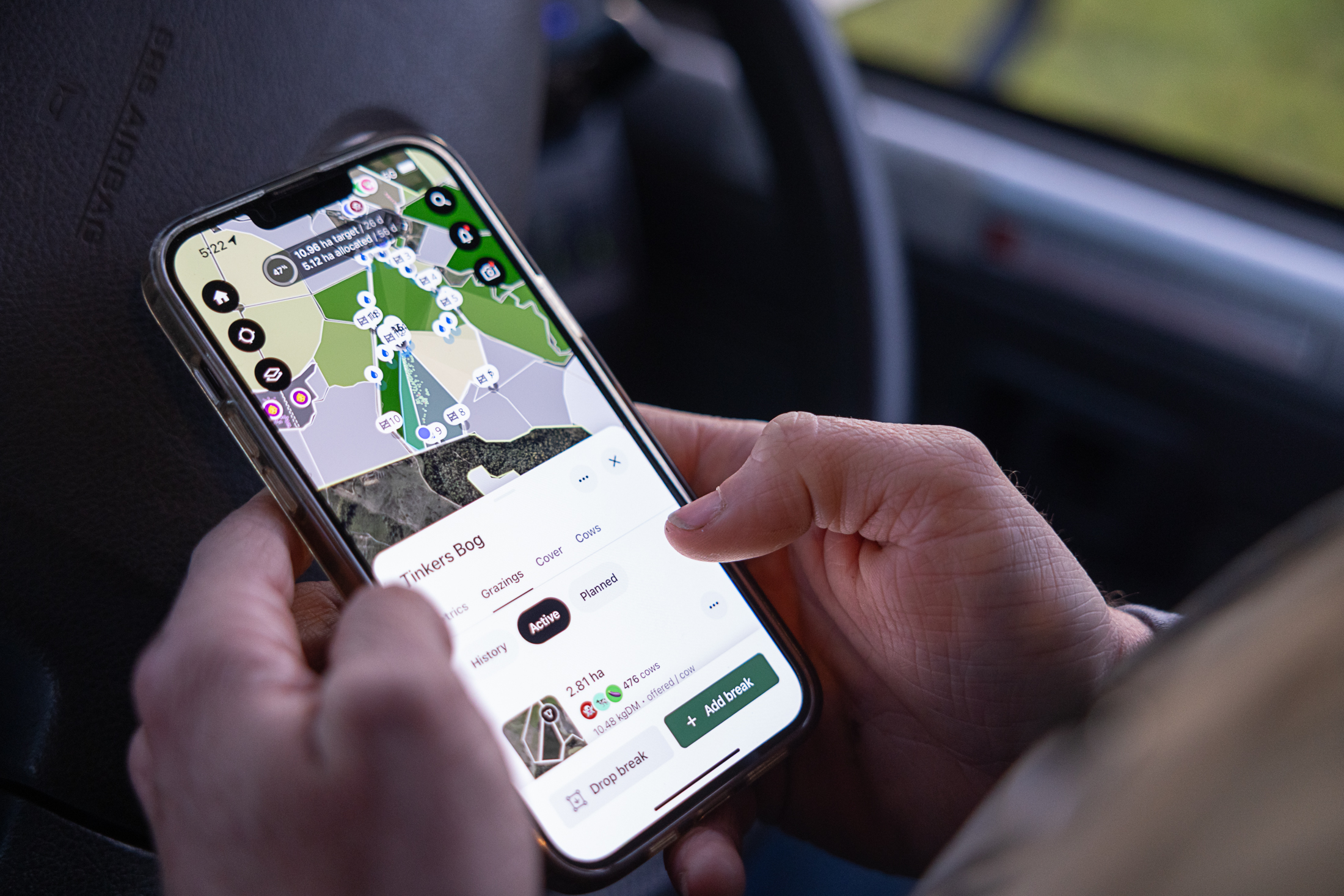
There's a particular kind of conversation that happens when Alastair pulls out his phone at the beach. His mates crowd around, see a screen full of moving dots, and every time, someone asks the same question.
"Is every one of those dots actually a cow? Like yeah, you can actually see every single cow and what they're doing on the farm live. You've got the farm in the grip of your hand now."
For Alastair, it’s not just a party trick, it’s the reality of what farming with Halter looks like, 800 cows, fully visible, from a shack by the water.
"You can be down at the shack at the beach with your mates and still log in and have a look."
Sixth generation and the adoption of Halter
Six generations of Bowmans have farmed this land, and Alastair and Caitlin are writing the next part of that story — with a platform that gives them more control, more visibility, and more of their day back.
"We haven't looked back. I don't see us farming without it. And I've said to a lot of people, you should be utilising it because it has so many opportunities to push their farm further."
The cows are on the right side of the line. The grass is the best they've grown all year.
And it's still cool.
Want to hear from other farmers using Halter?
Explore stories from producers across the country.
Ready to see what virtual fencing could do for your operation?
Find your local Halter rep to chat about your farm.