

.jpg)
There's a word Barb Downey keeps coming back to when she talks about land, and it's not ownership or investment. It's stewardship.
"No rancher ever thinks of land as dollar signs," she says. "Land is a stewardship. It's almost a family member. You've known it your whole life. You've watched it change and grow."
For Barb, that relationship with the land didn't start with a deed. It started with a dream that stretches back five generations, across two continents, and through more than one hard chapter where the whole thing nearly came apart.
An immigrant's dream, a family's thread
The story of Downey Ranch begins not in Kansas, but in Italy. Barb's great-grandmother, Marta, was a woman of education and standing. She spoke six languages, had studied in Switzerland, and had every reason to stay put. She didn't.
She left with children in tow, pregnant, crossing the Atlantic on a ship, to meet a man she loved and start fresh in America. She gave birth on the voyage over. She navigated herself to Saint Louis with small kids and no road map. She followed instructions from Wyoming to Colorado and back again, until she finally landed beside the man who had sent for her.
Together, they cooked for miners, ran a boarding house, and saved every dollar they could. On Sunday afternoons they'd drive out into the countryside around Newcastle, Wyoming, just to dream about the ranch they'd have someday.
They got it. They built something substantial over the years: nine kids, cattle shipped to Denver on their own train cars twice a year. But the ranch didn't pass cleanly down the line. When family tensions came to a head, Barb's grandfather and grandmother packed up and headed south to Kansas to start over.
Then the Dust Bowl hit. What they'd built went with it.
"Flat busted," Barb says. "Nothing left to their name."
They moved to Manhattan, Kansas, where grandpa swept floors at the post office and every kid put themselves through K-State. Barb's father caddied 36 holes a day at the country club from the time he was ten, put himself through on ROTC, and became a chemical engineer, a major he chose because it paid rather than because he loved it. He spent his entire working life trying to figure out how to get back to ranching.
"His heart was broken that he was no longer farming and ranching," Barb says of her grandfather. "I think that's when it started for my dad. That pursuit. He spent his whole career trying to figure out how to get back."
Starting from scratch in the Flint Hills of Kansas
When Barb was a senior at K-State studying animal science, she and her father started looking for ground. They found it in the Flint Hills of northeast Kansas, 457 acres to start, right in the heart of what Barb calls one of the most precious ecosystems left in North America.
"The native tallgrass prairie used to cover from North Dakota down into parts of Texas, east to Illinois, Indiana, and west to the High Plains," she explains. "Kansas, specifically the Flint Hills, represents the last remaining 1 to 2% of that anywhere in North America. We feel incredibly blessed that our ranch is right in the heart of it."
The timing wasn't glamorous. It was the late 1980s, agriculture was struggling, and ground was cheap. Barb's father bankrolled while Barb managed alone, in her early twenties, with an animal science degree and graduate-level ruminant nutrition coursework but precious little practical experience.
"None of us had ever ranched for a living," she says. "I had a lot of theoretical education. But practical execution as a rancher, there's so much institutional knowledge. This is where the water dries up in July. This grass is really good for re-breeding females this time of year. I had to figure that out."
She leaned on neighbors, made mistakes, and learned. And slowly, piece by piece, they built it. They added ground as it came up for sale along their borders, stretched for a 2,200-acre parcel in Riley County that she calls "the soul of the ranch," and eventually reached the 6,200 acres of mostly native tallgrass prairie Downey Ranch covers today.
Barb's husband Joe joined full time in 1995. He became the operator, the COO to Barb's CEO, the one who makes sure things actually get done while she dreams and schemes. Today their team includes herdsman Luke Thomas, son-in-law Joshua, and several others. Their younger daughter, Laura Kate, is finishing vet school and will return to run the ranch day-to-day. Their older daughter, Anna, recently told them it was time to move back closer to home.
"It makes my ranching and mother's heart very, very happy," Barb says.
The tuna casserole principle: a grazing management philosophy
Running a cattle operation at this scale requires a particular kind of thinking. Barb calls it the tuna casserole principle.
The name comes from a five-year-old Laura Kate. Faced with a plate of tuna casserole at grandma's house that she'd been dreading, she looked up and said: "That wasn't near as bad as I thought it was going to be."
For Barb, it became a philosophy for grazing management and ranch operations alike. Don't spend your energy telling yourself why something can't be done. Spend it figuring out how to get it done.
It's how they adopted Sandhills calving, a health management system that requires sorting 450 cows to separate the uncalved ones and move them to a new pasture weekly, so younger calves aren't exposed to bacteria and viruses shed by older ones. When a veterinarian first described the process to Barb, her reaction was blunt: "You are an idiot. You do not have any idea what you're asking me to do."
Then they lost 20-plus calves to scours in a single season and decided it was time to figure it out.
"We'll start doing something and someone will say, 'oh, that's tuna casserole,' and you're like, you're right. We need to start thinking about how we're going to get this done instead of telling ourselves why we can't."
Virtual fencing and the math of carrying capacity
Barb's father used to tell her: do the $200-an-hour jobs and hire out the $10-an-hour jobs. The principle stuck, and it's become the lens through which she evaluates every new technology, including virtual fencing.
"I want to take really capable people, Joshua and Luke and John and Joe and myself, and let them work at the next level instead of doing mundane tasks," she says. "That is what I'm always looking for when I evaluate new technology. How do we free those people to work higher?"
Downey Ranch had hit the limits of what traditional and electric fencing could do. When Barb heard about a virtual fencing company coming from New Zealand, she reached out. When asked about the return on investment with Halter so far, she didn't hesitate.
"A 25% increase in carrying capacity would represent another 150 cows. The grass and traditional management for 150 cows would require another 1,500 acres. The last Flint Hills ground I saw was $2,500 an acre. That's $3.75 million, what it would take to expand carrying capacity the traditional way. With Halter, I feel real confident we can do that 25%."
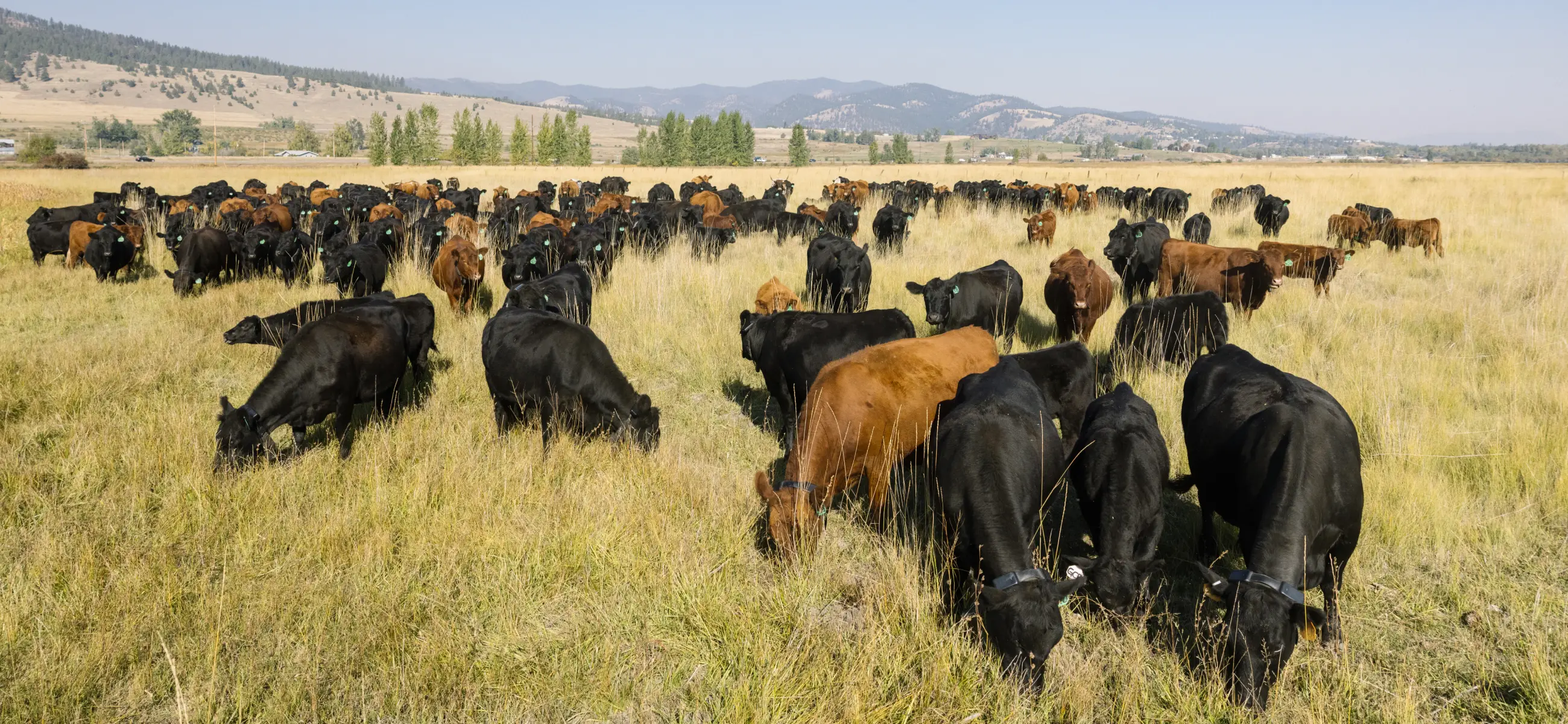
The flexibility of virtual fencing matters just as much as the economics to Downey Ranch. On those hills, cattle naturally congregate on the high ground, overgrazing the tops while the lower pastures go untouched. With Halter, they can fence cattle off hilltops and push them to graze the lower ground. It's the kind of precision rotational grazing that permanent fencing could never achieve affordably across terrain this rugged. Traditional fencing runs $20,000 to $25,000 per mile in the Flint Hills. Virtual fencing is infinitely adjustable, requires no posts or wire, and leaves no footprint on the land.
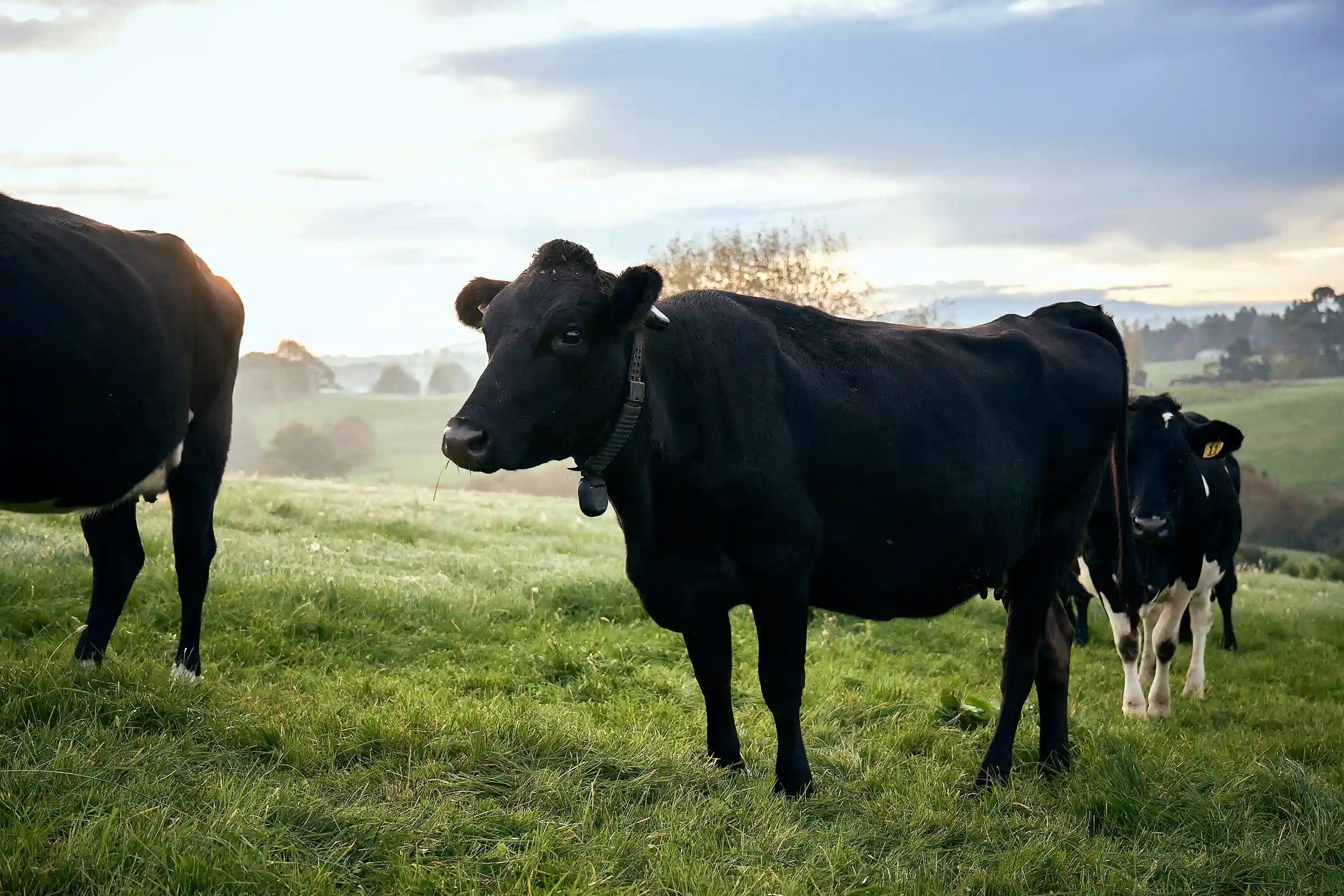
They also use Halter collars during Sandhills moves. The flashing light on a collar provides a visual indicator of which cows have calved, making the sort faster and more accurate than ever.
Keeping it together: succession planning for the next generation
In 2020, when Barb's father passed, the ranch faced the kind of crossroads that ends generational cattle operations. To keep it whole, Barb and Joe had to buy out her siblings, going from a debt-free operation to taking on millions of dollars in leverage, knocking on the door of 60.
"I hate debt," she says flatly. "I have never personally borrowed money in my life. If I couldn't pay cash for it, I didn't buy it."
They sat down with the girls and laid it out: sell the rugged country ground, erase the debt, and consolidate on 3,000 acres. Or keep everything, take on the debt, and bet on the plan.
Everyone voted to keep it.
Halter is part of that plan, expanding the carrying capacity and margin needed to service the debt and make the numbers work for the next generation. Barb talks about succession planning on ranches with the same directness she brings to everything else.
"Unless you have those conversations, within your generation and with the next one, you might as well sell it yourself and save them the trouble. Get planning, people."
What the tallgrass prairie teaches
There is one more thing Barb talks about, and it's harder to quantify than carrying capacity or debt ratios.
She describes the tallgrass prairie as her teacher. She loves math, science, history, and biology, and the Flint Hills of Kansas gives her all of it at once, every day, in a system that never stops revealing more the deeper you go.
"Get down a little closer and it's all sorts of life at your feet," she says. "There's always something blooming. There's little birds, lizards, horned frogs, raptors above you. It never hits you over the head with its beauty. You've got to quiet your mind, shut down your voice, and sink into it. And all of a sudden you're like, wow."
For someone who describes herself as a lifelong learner, a dreamer and schemer, happiest when she's exploring, this land is the right teacher.
Five generations fought to get here. The plan is to stay.
Downey Ranch runs 6,200 acres of native tallgrass prairie in the Flint Hills of Kansas. Barb Downey and her husband Joe Carpenter manage the operation day to day, with the next generation stepping in alongside them. Watch their full story as part of A Halter Series on YouTube.