




The first time Ron Jespersen heard himself described as someone who was overgrazing, it came from his own son.
Lee Jespersen had just come back from a grazing school, slides in hand, ready to show his dad what he'd learned about mob grazing, adaptive grazing, and the difference between the old take-half-leave-half approach and actually managing grass for soil health and recovery.
Ron's reaction was what you'd expect from a man who'd spent decades building on what his grandfather and father had taught him. "I said, no, I'm not overgrazing, but my neighbor is. And then he says, no, you need to sit down and look at this."
Ron sat down and what he saw changed just about everything.
One tree, one homestead, six generations of Nebraska farming
Ron's great-grandfather homesteaded this ground in 1907, a mile south of where the family farms today. There were no trees when he arrived, and the original place got its name from the single one that stood on the property: Lone Tree Ranch. He and his family planted trees along the hillside belt for shelter knowing most of them probably wouldn't survive, so they put two and three seedlings in each hole just to hedge the odds. Most of them made it and you can still see that tree belt today.
From that homestead, the operation passed through Ron's grandfather, who put in an irrigation well in 1953 and kept the place alive through droughts that would've otherwise broken it. Then his father, who managed the finances and the cattle through the tough economics of the 1980s with enough skill to hand Ron and his brother something worth carrying on. Ron farmed alongside his brother for more than twenty years before eventually becoming the one running things day to day with his own sons, Lee, Aaron, and Patrick.
The sixth generation is already here. Ron's grandchildren run around the operation regularly, and at a cattle sale not long ago, one of his young grandsons stood on the auction block while an auctioneer who'd sold Jespersen cattle across four generations called attention to the moment. Ron still has the video.
"There isn't many generations that can make it to the fourth, fifth generation," he says. "Farming is a very tough way of life. High risk, but high reward, because you get to grow up with your family."
What rotational grazing looked like before Halter
The Jespersen operation today runs just over 900 cow-calf pairs alongside a custom backgrounding feedlot, a hay program, and a grain farm. Ron's father was a believer in rotational grazing, so Ron grew up moving cattle between paddocks and managing grass by instinct and routine.
The problem wasn't effort. They had water lines and submersible wells on nearly every piece of grass, plus windmills as backup. But the pastures were strung out across 30 to 40 miles of country, and checking on them meant a half-day drive every two days. On the irrigated grass, they were running 450 head in 60 to 80 acre paddocks, rotating every two weeks, which sounded like a system until you realize the cattle were grazing hard from the water tanks outward and the grass was never getting a consistent rest.
The bigger problem showed up in the pregnancy rates. First-calf heifers were a particular struggle to breed back and their open rates were running around ten percent.
"That is one of the main reasons we went to Halter," Ron says. "We were having troubles getting our breed up on them cows because it seemed like we was switching each paddock. You'd go either into mature grass, or then you'd be going back to grass that was just growing."
Barb Jespersen, Ron's wife, full partner in the operation, and the one most likely to be out at the calving barn at odd hours saving calves that might otherwise have been lost, had watched that cycle play out season after season alongside him. Both of them were ready for something different.
The Sunday night phone call that started it all
Ron had been researching virtual fencing options for a while before he came across Halter online. It was early January, a Sunday, when he pulled it up and started scrolling. He found the Nebraska rep's number and called him at 8:30 that night.
"I told him my goals and he said, we can get you there."
Two weeks later the rep was at the farm. Lee and Aaron were cautious, less skeptical about the technology than unsure about the return on investment for their own cattle, each of them owning 70 cows alongside the main operation. They suggested Ron try Halter first on the irrigated grass and let the results speak.
"We knew right away they had already made up their mind," Ron says. "So we had more collars ordered."
Consistent grazing, better conception rates
Once Ron started using Halter on the irrigated grass, he was watching something he hadn't seen before: consistent grass height from mid-June all the way to the first of September. No paddock grazed too hard and no paddock that had gone untouched and gotten ahead of itself. The cattle were moving more frequently, grazing a narrow strip and moving on, and the residue behind them stayed uniform.
"Every time we went back, the grass looked about identical to where we had been all year. We didn't have the fluctuation up and down."
That first year they ran their first-calf heifers in a separate group on the best available forage, a suggestion from the Halter team based on how the system's managed in New Zealand. Out of 91 heifers, the vet only called five or six open at the end of sixty days.
The calves weaned heavier and came through healthier. The heifers were never put in a position where their nutrition dropped, so their calves never were either, and because the cows always knew where they were going next, they weren't constantly calling for calves after a paddock move. The whole operation got a little quieter.
"Them cows, the disposition of them now, they're as laid back as we are. They're not high strung anymore."
Ten acres a day: using virtual fencing on corn stalks
When grass season ended, the collared cows moved onto corn stalks, and that's where Ron started to see how precise daily grazing allocation could get. Using a formula from university extension work, one cow-calf pair per 45 days per 180 bushels of corn, they calculated they needed exactly 10 acres per day for 450 head. So that's what they gave them.
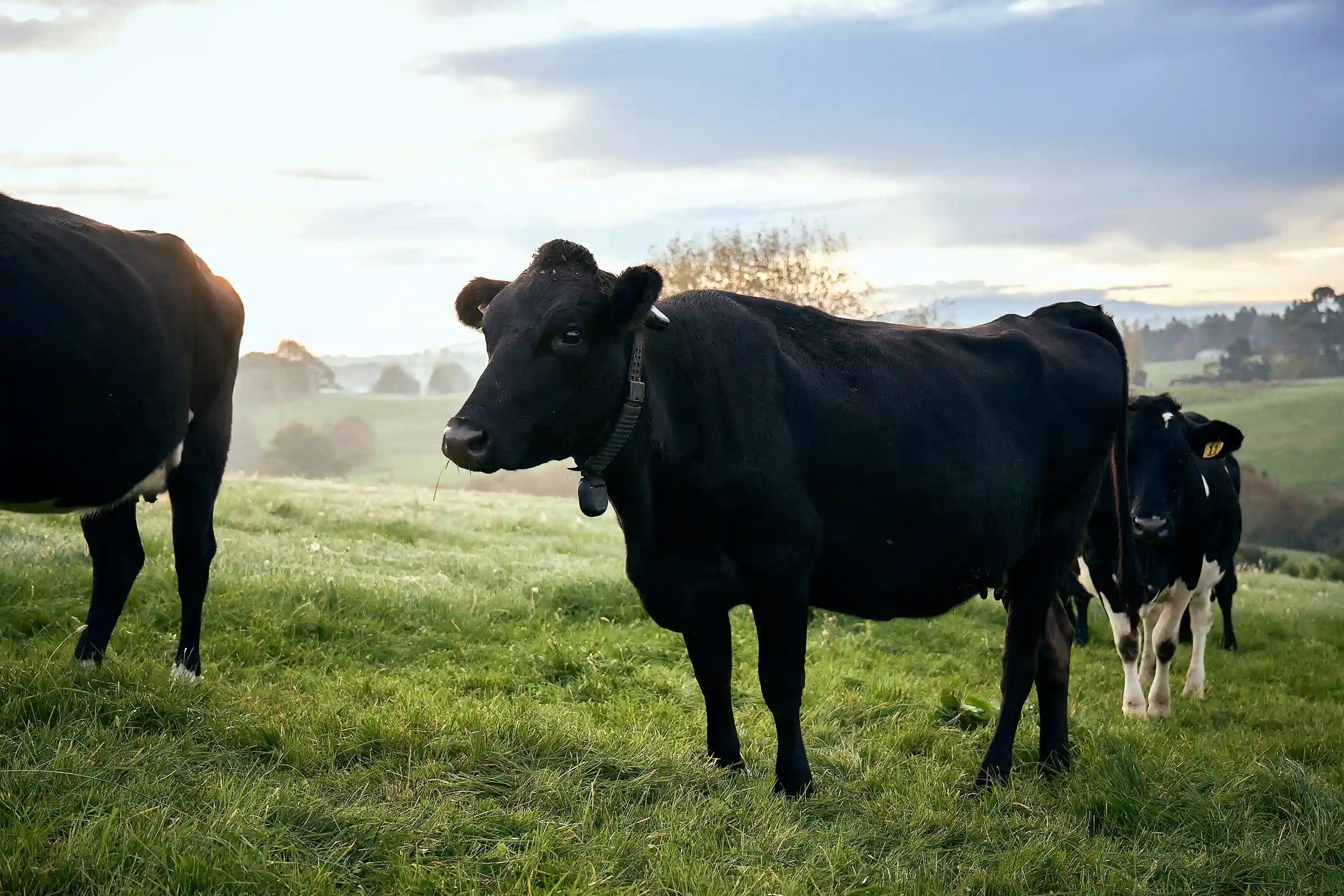
Aaron opens the virtual fence line at seven in the morning. Twelve minutes later, the cows are already in the next paddock. They come in to drink, then go back out, because they don't want to miss what's waiting on the other side of the line.
"It's like feeding them with a feed wagon," Ron says. "They are constantly getting the same amount of corn every day. And the cows look phenomenal."
The consistency through the corn stalk period changed how Ron thinks about cow longevity. If a cow never goes up and down in condition score, she's not spending energy recovering from nutritional valleys. He believes the operation will get one, two, possibly three extra years out of their cows as a result.
"We went from running cattle to managing cattle."
What one grazing school started and where it's leading
When Lee came back saying his dad was overgrazing, he was bringing something home that was bigger than a critique. He and Aaron had learned about disruptive grazing, how to use cattle density, urine, manure, and hoof impact as inputs, not just outputs. How to think about soil biology and what happens when you stop relying on synthetic fertilizer and start relying on the cattle themselves.
Ron started watching. He attended a regenerative farming conference and came back thinking about soil organic matter the way he used to think about bushels per acre. In country that gets 12 to 14 inches of rain a year, where a one-inch rain in 20 minutes currently runs half off the surface, the difference between 1% organic matter and 2% isn't academic. It's an inch of water your ground holds instead of loses.
His goals now include cover crops on every non-irrigated acre, no synthetic fertilizer within a few years, and eventually no pesticides or herbicides either. With 900 cows managed in larger, denser bunches rather than spread across separate pastures, they can graze cover crops and triticale that would've required miles of permanent fence to manage any other way.
"We would've never thought of grazing cover crops on dryland until we got Halter," he says. "Because it would've taken a lot of fence. Now we can just fence a section and use the collars to graze."
More time for everything else
Before Halter, Ron and Barb hadn't taken a vacation in years. Last year they went away. While they were gone, Ron could pull up the app, see exactly where his cows were, check the tank cameras, and watch Aaron moving the herd on schedule. Nothing fell apart and nobody had to be there every minute.
Now, they're putting up a greenhouse and high tunnel for Barb, expanding into a vegetable garden, potentially chickens following the cattle through the cover crops, and leaving room for grandkids to have a role someday if they want one. The operation is still growing, just in more directions than before.
Ron grew up in a community where neighbors stopped for coffee on a 30-mile drive and everyone was close enough to help when something broke down on a Friday afternoon. He shares that a lot of those families are gone now. The ones that remain, Ron's small community and some cousins farming within ten miles of him, are the ones who found ways to make it work across generations.
He sees virtual fencing as part of that equation, not just for his operation, but for any young person weighing whether to come back to the land.
"You know how many people probably did not come back to the rural ranch because they didn't want to build fence anymore. This could be a game changer."
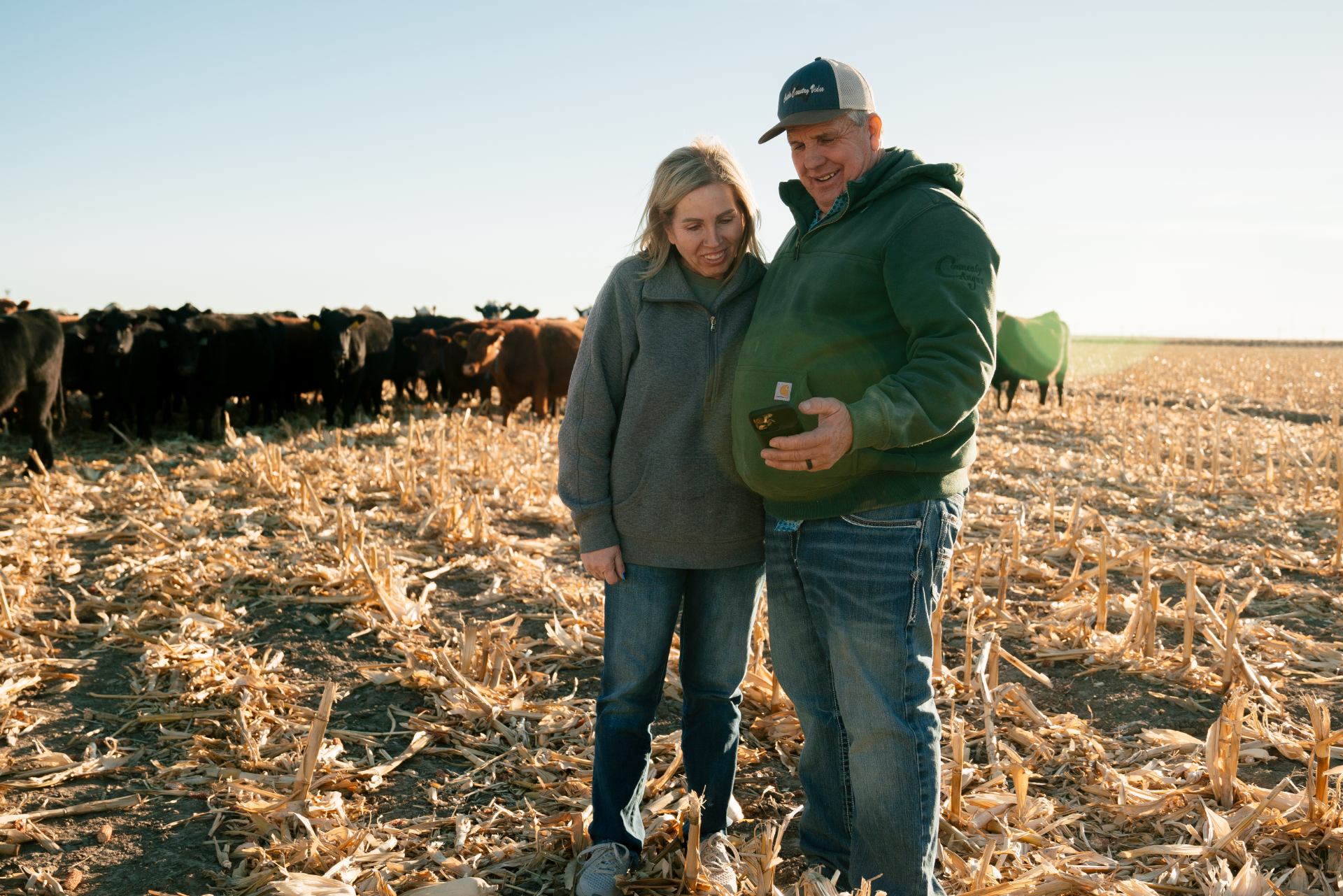
Ron Jespersen is a fourth-generation producer running just over 900 cow-calf pairs alongside a custom backgrounding feedlot, hay, and grain operation in Nebraska. He farms day to day with his sons Lee, Aaron, and Patrick. Watch his full story as part of A Halter Series on YouTube.


