




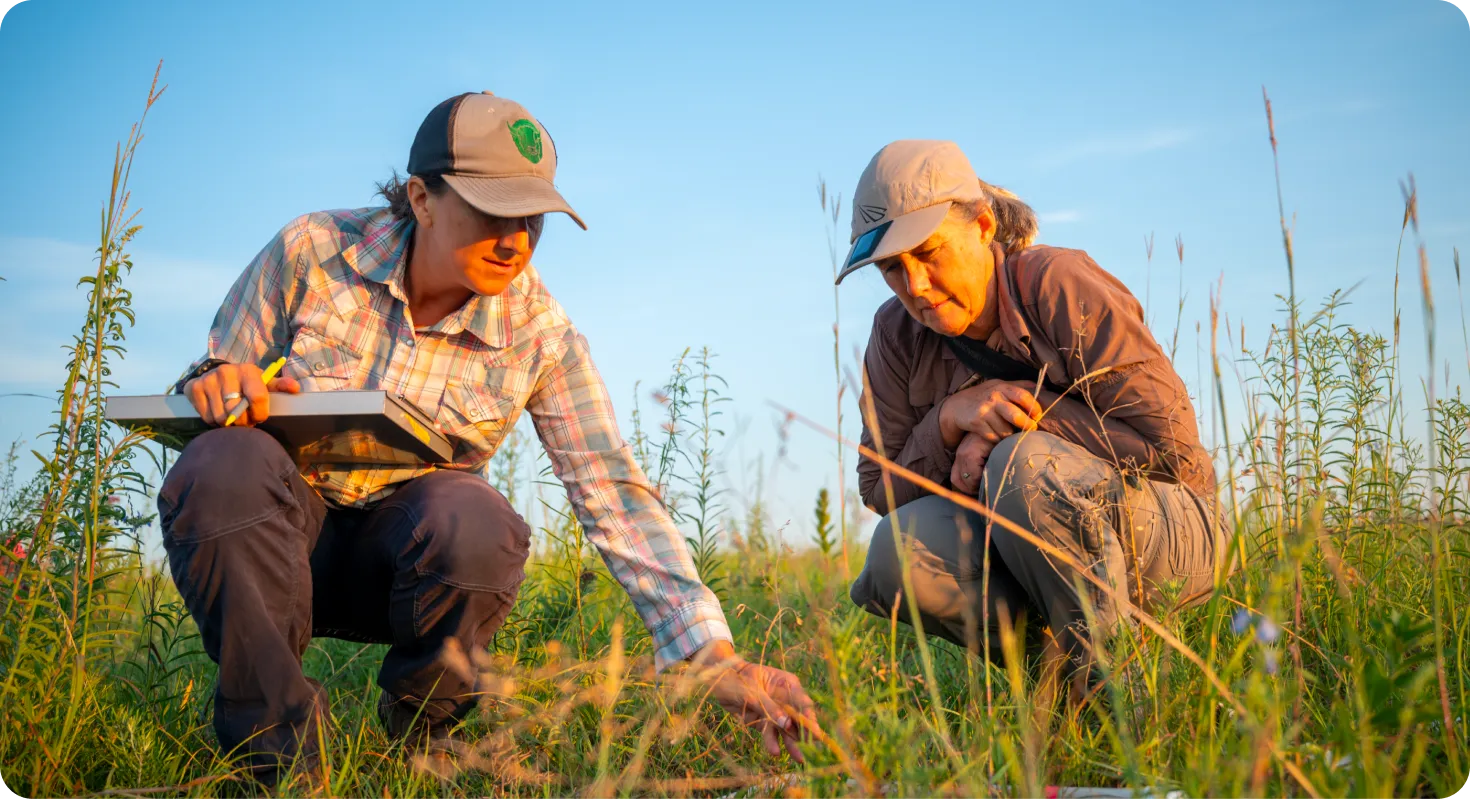
Hero image: Kansas State University Department of Communication and Marketing. Alice Boyle and Theo Michaels collecting vegetation data.
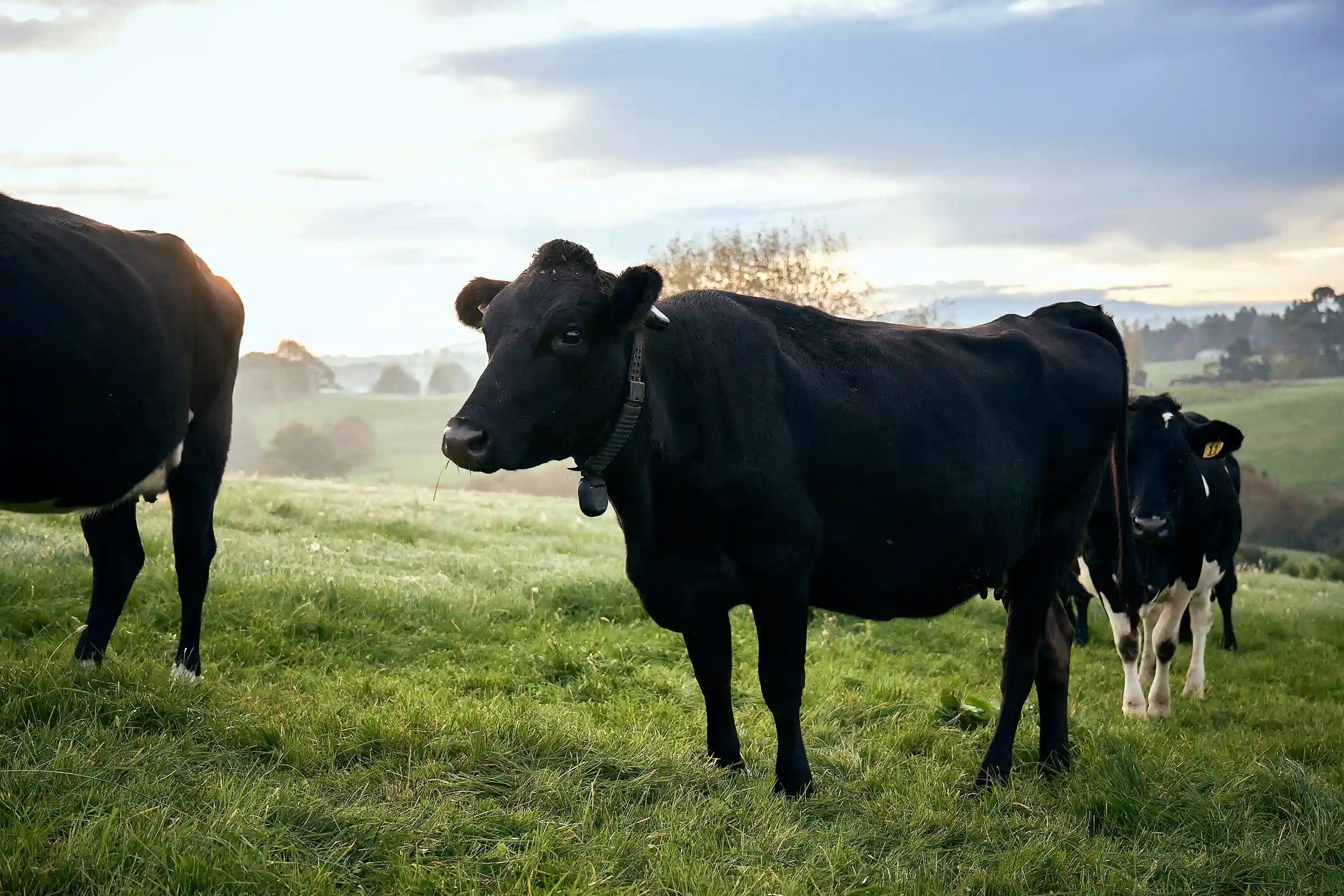
Conserving grassland ecosystem services is one of the many goals rangeland managers and producers try to balance. Researchers at Kansas State University are collaborating with partners including Mushrush Ranches, The Nature Conservancy, and the National Park Service at Tallgrass Prairie National Preserve, to study how virtual fence can be used to enhance ecosystem service goals. At Tallgrass Prairie National Preserve and Mushrush Ranches, the group is using virtual fence to modify cattle movement and space use alongside prescribed fire practices, where roughly half of the experimental area is burned each year. The group's goal is to enhance grassland bird habitat and prairie stream health while balancing the financial and logistical needs of ranchers in the Flint Hills of Kansas.
A patchwork prairie, grazed for birds
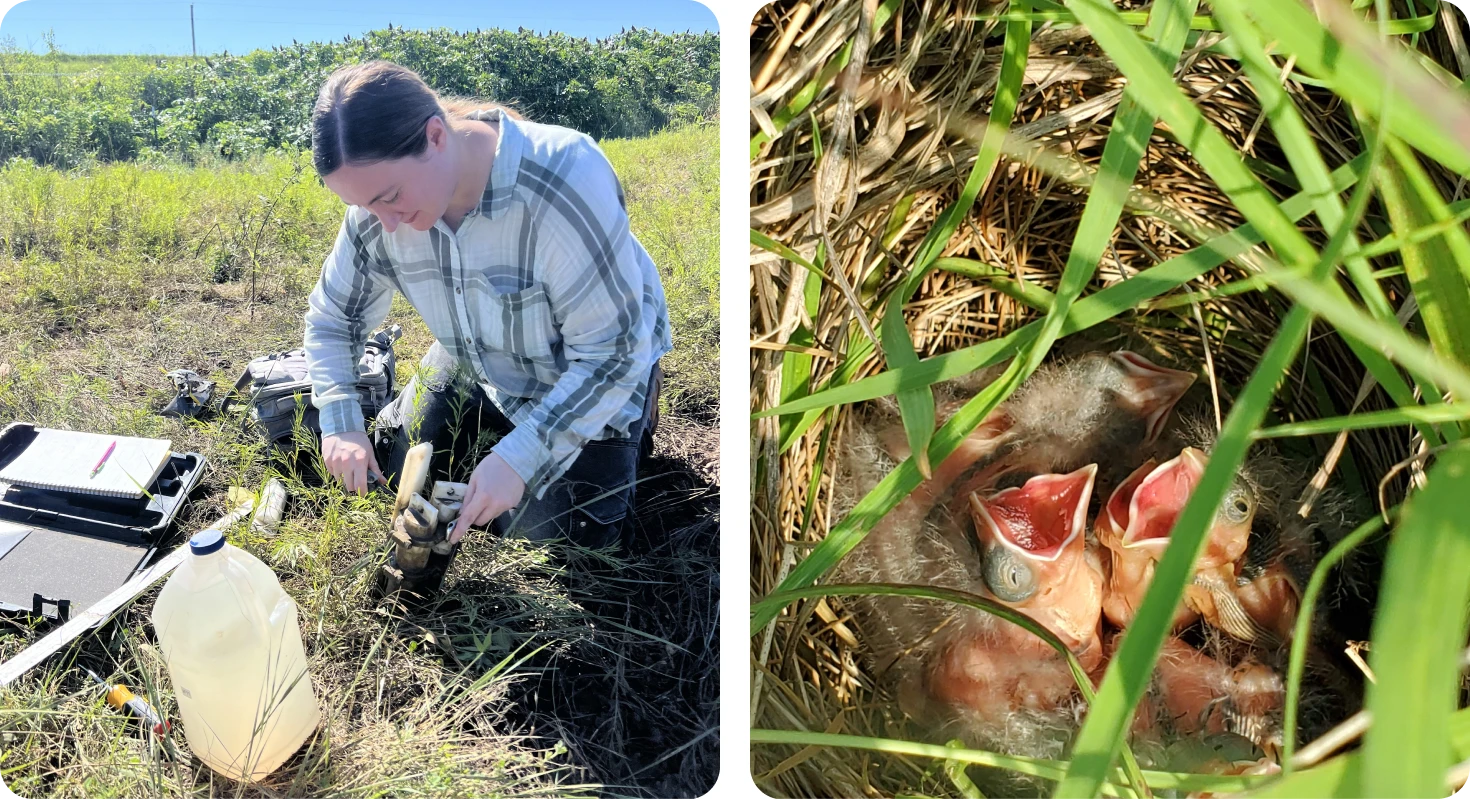
As with other grassland birds in North America, grassland nesting songbirds in tallgrass prairies are declining at alarming rates. While much of the declines are attributed to habitat loss from development and agricultural conversion, we see these declines even where grasslands remain, suggesting that current management practices may not meet the full range of habitat needs across grassland bird species. Each of our grassland bird species requires very distinct sets of vegetation conditions to successfully nest and forage. Traditional management practices in tallgrass prairies create good conditions for some species, but often create uniform vegetation conditions that do not meet the needs of some of the most threatened grassland-dependent species.
In an effort to create these missing habitat components within current management practices, the team uses virtual fence to establish small, strategic exclosures that provide tall, dense vegetation cover many at-risk species, like Greater Prairie-Chickens, need. The team has found that using virtual fence in this way has increased vegetation habitat components in ways that have benefited the entire grassland bird community. As predicted, different bird species have preferred different vegetation structures created by the mix of prescribed fire interacting with the grazed areas and ungrazed patches. Outcomes varied depending on how much rain fell in the previous year. These findings highlight that virtual fence can be used to enhance vegetation structure for a range of grassland bird habitat needs, offering flexible management options that can be adapted to local conditions like rainfall.
Rerouting cattle, restoring streams
Cattle access to streams can impact downstream water quality by physically disturbing the streambank and the stream bottom, which increases fecal, sediment, and nutrient inputs. Current solutions to cattle disturbances of streams often require the installation of temporary fences which can not only be expensive but can also become overgrown with vegetation or act as hotspots for invasive species, making maintenance and removal difficult. Using virtual fencing may provide flexible ways to manage grazing pressure and redirect cattle away from streams, preserving vegetation that can help reduce erosion, and decreasing nutrient loading associated with trampling and urine and fecal deposition.
To manage grazing pressure the team used virtual fence to exclude cattle from streambank areas in some watersheds, while leaving nearby watersheds open to cattle access. Since implementing virtual fence, the team has found that streams with exclosures have reduced total suspended sediments compared to those where cattle have access. The amount of fecal material near the streams has also declined sharply. The improvement in water quality is reflected in the aquatic invertebrate order richness and diversity which have increased and remained elevated since the implementation of the virtual fences. The team is encouraged by these results and sees the potential of using virtual fences to protect riparian zones vulnerable to cattle impact, while using approaches that are flexible to the needs of ranchers.
From information to integration
As part of this work, the team is also sharing their findings with the broader community, including ranchers, land managers, and agency professionals. This includes Grazing Academies hosted and supported by the Kansas Grazing Lands Coalition, scenario planning workshops, webinars, and publications like the ones featured below.

