

Most cattle operations use continuous grazing, letting the herd access the entire pasture for the full season. It's simple, and it works. But research shows you could be running 30-40% more cattle on the same ground with rotational grazing, while cutting hay costs by up to 80%.
Rotational grazing is the practice of moving cattle through different pastures so the grass has time to rest and regrow. Instead of leaving cattle in one pasture for an entire season, the herd is shifted at planned intervals. This means you're splitting your land into smaller sections and moving cattle through them based on how the grass looks, not letting them roam the whole place all season. You might move them every few days, every week, whatever fits your operation and your goals. The point is getting them off before they hammer it down and giving that grass time to come back.
That way, you're protecting your grass, keeping cattle on higher-quality feed, and getting more return out of your land.
What is rotational grazing?
Think of it as a cycle: graze one pasture, move the herd, let that pasture recover, then come back when the grass is ready. While cattle are working the next pasture, the first one is bouncing back. By the time they return, there's fresh forage instead of worn-down ground.
Leaving cattle in one big pasture all season can be simpler, but it usually means some areas get chewed down to dirt while others hardly get touched. Over time, you end up with bare spots, weeds, and less total grass. Rotational grazing spreads the pressure out and gives your forage base a chance to stay productive for the long haul.
The principle is straightforward: moving cattle before they can regraze new growth protects the plant's energy reserves and root system, and better manure distribution acts as a source of nutrients to the soil.
Benefits of rotational grazing
Ranchers switch to rotational grazing for three main reasons: better grass, better cattle, and more flexibility.
Healthier pastures
Grass that's rested puts down stronger roots, grows back faster, and produces more over the season. University research shows rotational systems produce more forage than continuous grazing, and the rest periods let plants rebuild their energy reserves and root systems.
Well-managed rotational systems also keep more desirable forage species around. One study found pastures maintained 86% desirable species under rotation versus 62% under continuous grazing.
Better cattle performance
When cattle are rotated onto pastures with regrowth, they're grazing higher-quality forage (leaves that are more palatable and nutrient-dense, not tough stems or short stubble). This can lead to steadier weight gain, cows maintaining better body condition, and more uniform grazing across the whole pasture instead of hammering the same spots.
Fresh forage also tends to have higher protein and energy, which directly shows up in cattle performance. Rotational grazing systems can increase forage production and improve pasture condition by 20% or more compared to continuous grazing.
Flexibility
Whether it's a dry spell, a wet spring, or a bigger herd, rotations can be adjusted to fit whatever you're dealing with. Having multiple pastures gives you options: you can rest a pasture longer during drought, clip one for hay during rapid spring growth, or adjust stocking density as conditions change.
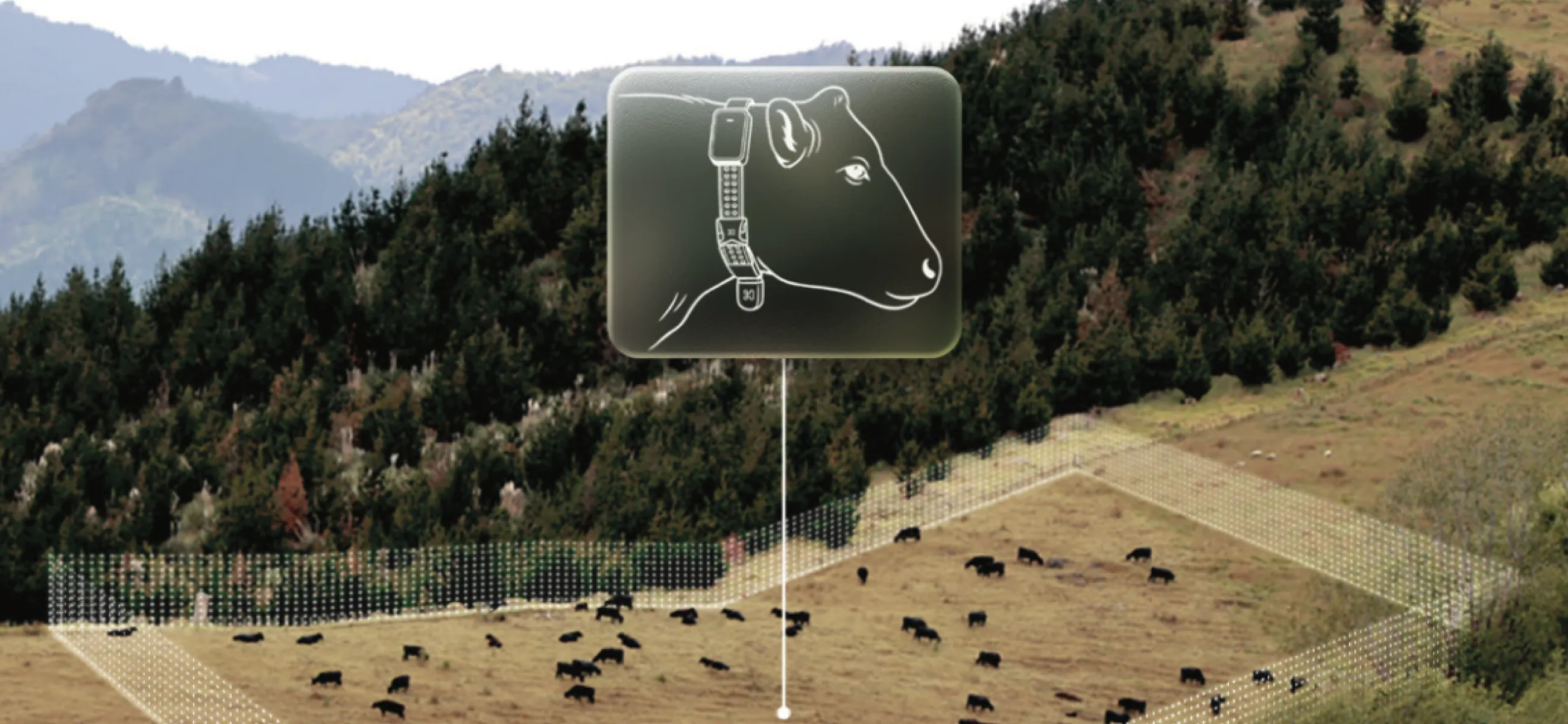
With virtual fencing technology, these adjustments happen from your phone instead of spending half a day restringing wire. Want to shorten a rotation after a good rain? Done in a few taps. Need to give a pasture more time to bounce back? Easy adjustment that takes minutes, not hours.
Rotational grazing economics: Carrying capacity and cost savings
Let's be direct about why operations make the switch: rotational grazing can dramatically increase what you get out of the same ground.
The numbers: Rotational vs continuous grazing
Here's a real-world example of what improved carrying capacity looks like:
100-acre operation under continuous grazing:
- Supports 25 cows
- Average grazing season: 182 days
- Hay costs: $400/cow for winter feeding
- Total hay expense: $10,000
Same 100 acres under rotational grazing (conservative 30% increase):
- Supports 33 cows
- Average grazing season: 235 days (53 days longer)
- Hay costs reduced by 60-70%: $150/cow
- Total hay expense: $4,950
Bottom line difference:
- 8 additional head = ~$6,400 extra revenue (at $800/head)
- $5,050 saved on hay
- Total benefit: $11,450 per year
Minus fencing infrastructure costs (varies widely by setup), it's possible you could see payback within 2-3 years. After that, it's straight profit.
Increased carrying capacity
Studies show rotational grazing produces about 30% more forage than continuous grazing. A University of Georgia study found that a twelve-pasture system with cattle rotated every two days resulted in a 38% higher stocking rate and 37% higher calf gain per acre. Put simply: if a 100-acre farm could support 25 cows under continuous grazing, the same ground might support 34-42 cows under rotational grazing, depending on how you manage it.
Research from South Dakota showed that dividing a pasture into four sections increased carrying capacity by 20.8%, while dividing into eight sections increased it by 40.8%.
Reduced hay costs
One of the biggest economic benefits is the reduction in supplemental feed. Studies have shown that rotational grazing can reduce hay requirements by 60% to 80%. For operations spending significant money on winter feed, that's a good chunk of cost savings.
South Dakota producers using intensive rotational grazing reported an average grazing season of 235 days, compared to 182 days for continuous grazing (a 53-day extension that means nearly two more months before you're feeding hay).
Return on investment
Let's be honest about the upfront costs. Rotational grazing requires investment in fencing and water infrastructure. Traditional cross-fencing can run $3,000-$8,000 per mile depending on terrain and materials. Water systems add another layer of expense.
But research shows it pays off even in the short term, and the long-term benefits compound as you spread those startup costs over multiple years. Virtual fencing eliminates the need for interior cross-fencing (you still need perimeter containment, but that's often already there), which can shift the numbers by a lot.
How to implement rotational grazing: Rest periods and timing
Rotational grazing really comes down to two things: knowing when to pull cattle off and when it's ready for them to come back. What that looks like varies widely depending on your grass type, climate, and season, but there are some common principles that research and experience support.
Understanding stubble height and grass recovery
Grass needs enough leaf area left to photosynthesize and rebuild its root system. Roots mirror what's above ground, so if you graze it too short, you've got shallow roots that can't reach water when things get dry.
For taller grass species like orchardgrass and timothy, grazing typically starts when vegetation reaches 6-8 inches high, and cattle are removed when forage height is reduced to 2-3 inches. For shorter-growing grasses like bluegrass, that's usually 4-6 inches at the start and 1-2 inches when it's time to move. The key is leaving enough plant material that recovery doesn't take forever.
As for when to bring cattle back, that depends entirely on your grass growth rate and what time of year it is. Regrowth to 6-8 inches for tall species, or 4-6 inches for shorter grasses, generally indicates a pasture is ready for grazing again.
Calculating rest periods for your operation
Rest periods aren't one-size-fits-all. Spring growth in cool-season grass country can be fast enough that pastures are ready in 20-30 days. Summer heat or drought might mean waiting 40-60 days or longer. Warm-season grass regions have their own rhythm entirely.
One way to think about paddock numbers: if you want to graze each pasture for 3 days and need a 35-day rest period, you'd need about 13 pastures (35 ÷ 3 + 1 = 13). But plenty of operations don't use formulas at all; they just watch the grass and move when it makes sense.
As a general guideline, rest periods can be shorter during fast growth (spring), but generally not less than 20 days. During drought or stressed conditions, pastures may need 60 days or longer before they're ready again.
The bottom line: your grass will tell you when it's ready. It's about watching what works on your ground, not sticking to a rigid calendar.
Rotational grazing by season: Spring, summer, fall, and winter
Your rotation shouldn't look the same in May as it does in August. Grass growth changes throughout the year, and rotational systems adapt with it. Here's what that typically looks like, though every operation handles it differently.
Spring (April-May)
What's happening: Cool-season grasses are growing fast (potentially 60-100 lbs of dry matter per acre per day in some regions).
What this means for rotations:
- Shorter rest periods (20-30 days)
- Faster rotation through pastures
- Clipping pastures that get ahead of you to maintain quality
- Building a forage bank for summer
Early summer (June-July)
What's happening: Growth is still good but starting to slow. Plants are heading out.
What this means for rotations:
- Extended rest periods (30-40 days)
- Watching for declining quality as grasses mature
- Making hay from pastures that got away from you in spring
- Monitoring soil moisture closely
Mid-late summer (July-September)
What's happening: Growth slows significantly, especially in heat and drought. Warm-season grasses take over in southern regions.
What this means for rotations:
- Longer rest periods (40-60+ days)
- More conservative grazing (take less, leave more)
- Potentially reducing stocking density or providing supplemental feed
- Maintaining plant health for fall regrowth
Fall (September-November)
What's happening: Cool-season grasses may get a second wind. Warm-season grasses go dormant.
What this means for rotations:
- Rest periods depend on your climate (20-40 days)
- Grazing pastures that rested through summer heat
- Leaving enough residual going into winter to protect soil and plant crowns
- Planning which pastures to save for winter grazing (if applicable)
Winter grazing (where applicable)
What's happening: Dormant forage, slow to no regrowth.
What this means for rotations:
- Stockpiling forage in fall for winter grazing
- Grazing when ground is frozen to minimize damage
- Accepting that you're mining nutrients (plan to make it up in spring)
Every region and operation handles this differently. The point is recognizing that your grass doesn't grow at the same rate year-round, and your rotation can flex with it.
Rotational grazing by region: Climate and grass type considerations
Where you ranch changes everything. Here's what rotational grazing tends to look like across different regions, though every operation within these areas still does things their own way.
Northern Plains and Midwest (Dakotas, Montana, Nebraska, Iowa)
Climate: Cold winters, moderate rainfall (15-30")
Grasses: Cool-season dominant (brome, wheatgrass, fescue)
Typical rest periods: 25-35 days in summer, 20-25 days in spring
Main challenge: Short growing season (May-September)
Common approach: Maximize spring growth, stockpile for fall/winter
Southern Plains (Oklahoma, Kansas, Texas)
Climate: Hot summers, variable rainfall (20-40")
Grasses: Mix of cool and warm-season (bermudagrass, native grasses, fescue)
Typical rest periods: 30-45 days, longer in summer heat
Main challenge: Summer heat stress and droughtCommon approach: Rely on warm-season grasses in summer, manage fescue toxicity
Mountain West (Wyoming, Colorado, Idaho, Montana)
Climate: Semi-arid, elevation-dependent (10-18")
Grasses: Native rangeland, irrigated pastures
Typical rest periods: 35-60+ days due to slower growth
Main challenge: Limited moisture, high elevation/short season
Common approach: Conservative stocking, protect plant vigor, use irrigation strategically
Southeast (Georgia, Alabama, Mississippi, Carolinas)
Climate: Hot, humid, higher rainfall (40-60")
Grasses: Warm-season dominant (bermudagrass, bahiagrass)
Typical rest periods: 20-30 days in peak growth, 40+ in spring/fall
Main challenge: Managing rapid summer growth, fescue in transition zones
Common approach: Intensive rotation during growing season, plan for winter feed gap
Northeast (New York, Pennsylvania, New England)
Climate: Cool, moderate to high rainfall (35-50")
Grasses: Cool-season mix (orchardgrass, timothy, clovers)
Typical rest periods: 20-30 days in spring/fall, 30-40 in summer
Main challenge: Wet springs can delay grazing, muddy conditions
Common approach: Manage spring surplus, protect pastures during wet periods
West Coast (California, Oregon, Washington)
Climate: Highly variable by region, Mediterranean in CA
Grasses: Annual grasslands (CA), perennial mix (PNW)
Typical rest periods: Varies widely by precipitation
Main challenge: Dry summers (CA), wet winters (PNW)
Common approach: CA (use winter/spring growth intensively); PNW (manage year-round moisture)
The takeaway: rotational grazing works across all these regions, but what it looks like on the ground depends entirely on your climate, grass types, and rainfall patterns.
Common rotational grazing mistakes (and how to avoid them)
Learning from others' errors saves you time and money. Here's what can trip up even experienced operators:
1. Overgrazing before moving
The mistake: Waiting too long to move cattle because "there's still some green out there."
Why it hurts: Once grass is grazed below 2-3 inches, recovery time doubles or triples. You're robbing the plant's energy reserves and weakening the root system.
What works better: Moving based on stubble height rather than whether there's still forage left. It's better to move early and come back sooner than to overgraze.
2. Not enough water points
The mistake: Setting up great pastures but cattle won't graze evenly because water is too far away.
Why it hurts: Cattle will travel only so far from water (typically 800-1,000 feet in flat terrain, less in rough country). Beyond that, forage goes unused while areas near water get hammered.
What works better: Water access in every pasture. Portable tanks, pipelines, or nose pumps can solve this without running permanent lines everywhere.
3. Too ambitious too fast
The mistake: Jumping from continuous grazing to a 20-pasture system in year one.
Why it hurts: The management complexity overwhelms you, infrastructure costs spiral, and you don't have baseline data to know if it's working.
What works better: Starting with 3-4 pastures. Learn the rhythm of your grass and cattle movement. Add complexity only after you've proven the basics work on your operation.
4. Ignoring rest periods
The mistake: "The cattle need somewhere to go, so I'm putting them back in that pasture even though it's only been 15 days."
Why it hurts: Insufficient rest means regrazed tillers never fully recover. Over time, your best forage species decline and weeds move in.
What works better: Adjusting your stocking rate or pasture size so rest periods match what your grass needs. If you're consistently short on rest time, you're overstocked.
5. Same rotation year-round
The mistake: Grazing every pasture the same number of days regardless of season.
Why it hurts: Spring's fast growth requires shorter grazing periods and rest times. Summer's slow growth needs the opposite. Rigid rotations miss these opportunities.
What works better: Thinking of your rotation as dynamic, not static. Adjust based on actual grass growth, not a predetermined schedule.
6. No monitoring or records
The mistake: Moving cattle by feel without tracking dates, conditions, or results.
Why it hurts: You can't improve what you don't measure. Without records, you're guessing rather than learning from each season.
What works better: Keep simple notes: grazing dates, rest periods, forage height, rainfall, and cattle performance. A notebook or phone app works fine. Review it each season to refine your system.
7. Forgetting about soil fertility
The mistake: Assuming rotational grazing alone will maintain soil fertility indefinitely.
Why it hurts: Even with good manure distribution, you're removing nutrients every time cattle leave the farm (in the form of calves, cull cows, etc.). Over time, phosphorus and potassium decline.
What works better: Soil test every 3-4 years and address deficiencies. Well-managed grazing reduces fertilizer needs but doesn't eliminate them entirely.
Rotational grazing example: A 4-pasture system
Say you've got four pastures of roughly equal size. You might graze the first pasture for 10 to 14 days, then move the herd to the second. While cattle are grazing there, the first pasture is resting.
How long it takes to recover depends on where you ranch and the season you're in:
- Cooler, wetter regions (like parts of the Midwest or Northeast) may only need 20 to 30 days of rest in spring and summer
- Semi-arid areas (Colorado, Wyoming, the Dakotas, Texas Panhandle) may need 35 to 60 days or more, especially in hot or dry stretches
- Warm-season grass regions (Southern Plains) often recover quickly early in the season, then slow way down in the heat of summer
- Drought or stressed pastures may take 60 days or longer before they're ready again
A typical grazing period for a rotational pasture is 5-7 days, followed by a rest period of 21 days, though during periods of slow forage growth these grazing periods may become shorter and resting periods longer. But again, this varies widely by operation and conditions.
Challenges of rotational grazing (and modern solutions)
Let's be honest about the work involved. Traditional rotational grazing means building and moving fence (sometimes daily). Posts, wire, energizers, gates. It adds up in both time and physical effort. That's the single biggest reason operations stick with continuous grazing even when they know rotational would perform better.
Another hurdle is overthinking it. You don't need a perfect rotation on a perfect schedule to make a difference. The grass doesn't know the calendar; it just needs enough rest before your cattle hit it again.
And no, rotational grazing isn't just for smaller operations. Plenty of larger ranches use it; the setup just looks different. Some operations run over 100 pastures across thousands of acres, moving cattle every 1-1.5 days.
The infrastructure costs are real:
- Fencing (permanent perimeter and temporary or permanent cross-fencing): $3,000-$8,000+ per mile
- Water distribution systems (tanks, pipelines, or portable water sources): Highly variable
- Time and labor for moving cattle: The hidden cost that never shows up on a balance sheet
Rotational grazing typically has higher upfront costs than conventional grazing because of the need for more fencing and water systems. But if you're serious about long-term productivity, those costs pay for themselves through higher carrying capacity and lower feed bills.
Virtual fencing technology addresses the biggest bottleneck (the labor and infrastructure of moving boundaries). You still need perimeter containment, but interior divisions become flexible and adjustable from your phone. That changes the equation significantly for operations that have avoided rotational grazing purely because of the workload.
How to start rotational grazing: A step-by-step guide
If you're just testing the waters, don't overcomplicate it. Start with one herd and divide a pasture into a few sections. Move cattle before the grass gets too short, and let that pasture recover before turning back in. Over time, you'll learn how long your pastures need to rest, and what rotation rhythm works best for your land.
Practical first steps
Start simple: Split one existing pasture in half and try rotating between the two sections. Track how the grass responds and how easy (or difficult) the management is for your operation.
Plan your boundaries strategically: With virtual fencing, you have the flexibility to adjust pasture sizes and layouts as you learn what works. There's no permanent infrastructure locking you into decisions that don't pan out.
Monitor stubble height: Keep a measuring stick handy. Move cattle when grass gets down to 3-4 inches (depending on species), and don't bring them back until it's regrown to 6-8 inches.
Track your results: Note grazing dates, rest periods, forage conditions, and cattle performance. This data will help you fine-tune your system over time.
Start conservative on stocking rates: Don't immediately increase cattle numbers just because you're rotating. Let the improved forage production prove itself first, then gradually adjust stocking rates upward as conditions allow.
Rotational grazing FAQs
How many pastures do I need for rotational grazing?
You can start with as few as 2-4 pastures. Many producers find success with at least 4 pastures using a 7-day grazing period and 21-day rest for each grazing cycle. More pastures allow for shorter grazing periods and longer rest, which can further improve forage production, but they also require more infrastructure and management. Where you land depends on your operation and what you're comfortable managing.
What is the ideal rest period for rotational grazing?
Rest period needs vary depending on forage species, season, and environmental conditions. In spring when cool-season grasses are growing rapidly, some operations see adequate recovery in 20-30 days. In summer heat or drought, 35-60 days or more may be needed. The key is watching the grass; regrowth to appropriate heights (6-8 inches for tall species, 4-6 inches for shorter grasses) generally indicates a pasture is ready for grazing again.
Does rotational grazing really increase profit?
It can, if you do it right. The potential is there for higher stocking rates (research shows 20-40% more cattle on the same land is possible), reduced hay feeding costs (60-80% reduction in some studies), and better animal performance from higher-quality forage. But results depend on how well the system is managed and how it fits your operation.
Can I do rotational grazing without traditional fencing?
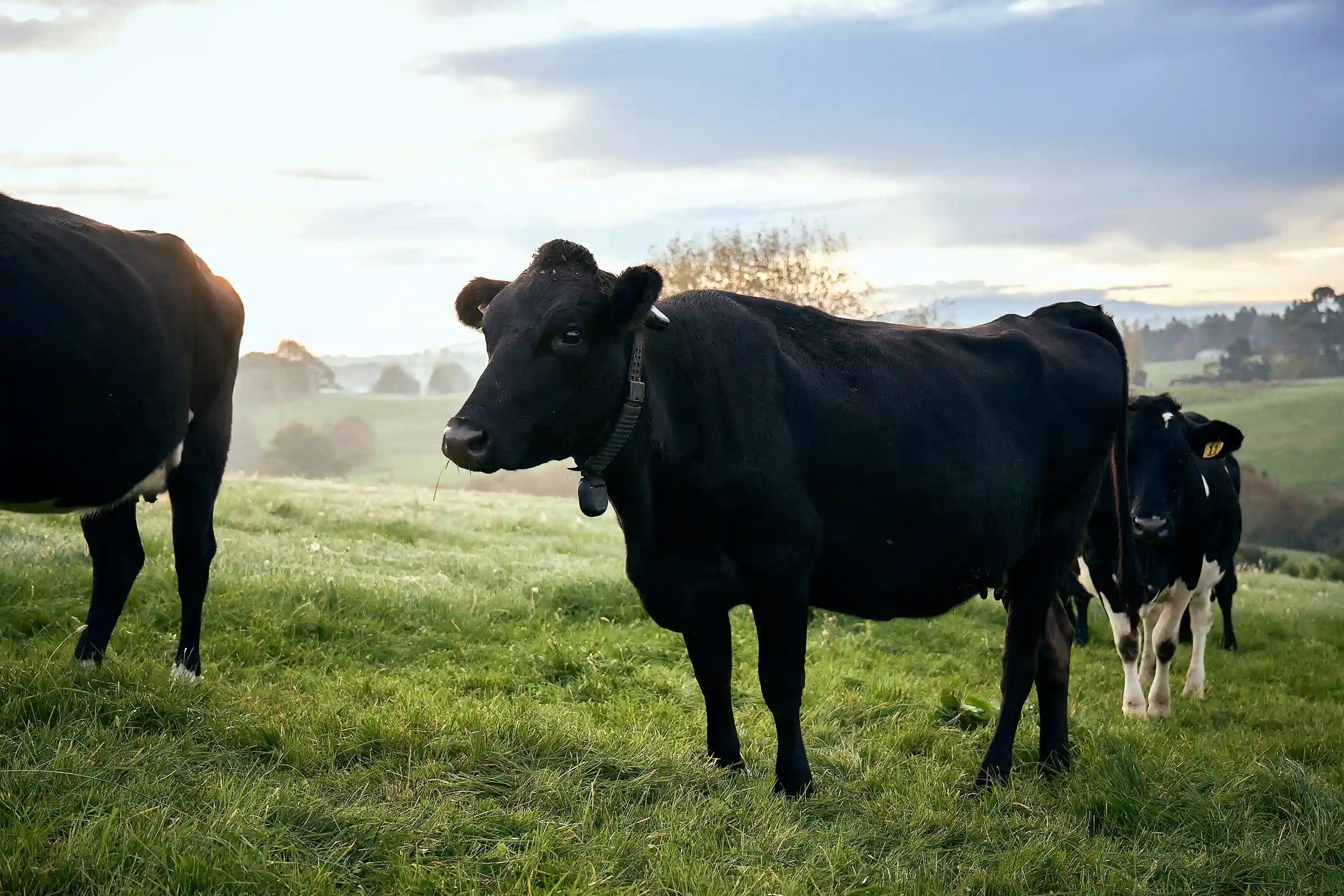
Yes. Virtual fencing technology like Halter allows you to create and move boundaries from your phone, eliminating the need for physical cross-fencing. You still need perimeter fencing to contain your herd, but interior divisions can be managed virtually. This removes the labor and infrastructure barriers that have historically kept operations from adopting rotational grazing.
How do I know when to move cattle to the next pasture?
Move cattle based on grass height rather than calendar dates. For tall-growing species, remove animals when forage height reaches 2-3 inches. For low-growing species, remove at 1-2 inches. This ensures you leave enough leaf area for rapid regrowth.
What's the difference between simple and intensive rotational grazing?
Simple rotational grazing typically involves fewer pastures (4-8) with longer grazing periods (1-2 weeks per pasture). Intensive rotational grazing uses many pastures (10-30+) with shorter grazing periods (1-3 days), providing more precise control over forage utilization and longer rest periods. Neither is inherently better; it depends on what fits your operation.
Will rotational grazing work in drought conditions?
Many rotational grazing users report increased resilience to drought. The improved root systems and soil health from rotational grazing help pastures recover faster when moisture returns. During active drought, you may need longer rest periods or temporary destocking, but the foundation tends to hold up better than continuous grazing.
Does rotational grazing help control weeds?
A well-managed rotational grazing system often has lower weed establishment because desirable forage species fill most niches, making it harder for weeds to compete. The even grazing pressure and healthier plants give desirable forages a competitive advantage.
The bottom line
Rotational grazing is one of the most proven tools for keeping grass healthy and cattle performing well. And the research backs it up: well-run rotational systems mean more cattle, lower feed costs, healthier ground, and more options when the weather doesn't cooperate.
The tough part has always been the extra work (until now). But Halter's virtual fencing is changing what's possible without adding hours to your day. Real-time adjustments that used to mean restringing wire can now happen from your phone. That flexibility turns rotational grazing from a labor-intensive commitment into a practical tool for running more cattle.
At the end of the day, it's about working smarter with what you've already got: your cattle, your grass, and your time.
References
Hoveland, C.S., McCann, M.A., and Hill, N.S. University of Georgia. "Management-Intensive Grazing." Available at: https://sustainagga.caes.uga.edu/content/dam/caes-subsite/sustainable-agriculture/documents/ManagementIntensiveGrazing.pdf
South Dakota Grassland Coalition. "Range 101: Efficiencies of Rotational Grazing." Available at: https://sdgrass.org/range-101-efficiencies-of-rotational-grazing/
Stewart, R.L. et al. (2005). University of Florida IFAS Extension. "Grazing Methods' Impact on Forage and Cattle Production." Available at: https://edis.ifas.ufl.edu/publication/AG268
Matthews, B.W. et al. (1994). University of Florida. "Grazing Systems and Forage Species Composition Study."
South Dakota State University Extension. "Rotational Grazing Improves Stocking Capacity and Ranch Profitability." Available at: https://extension.sdstate.edu/rotational-grazing-improves-stocking-capacity-and-ranch-profitability
If you're curious how rotational grazing and Halter could fit on your operation, reach out to your local rep.