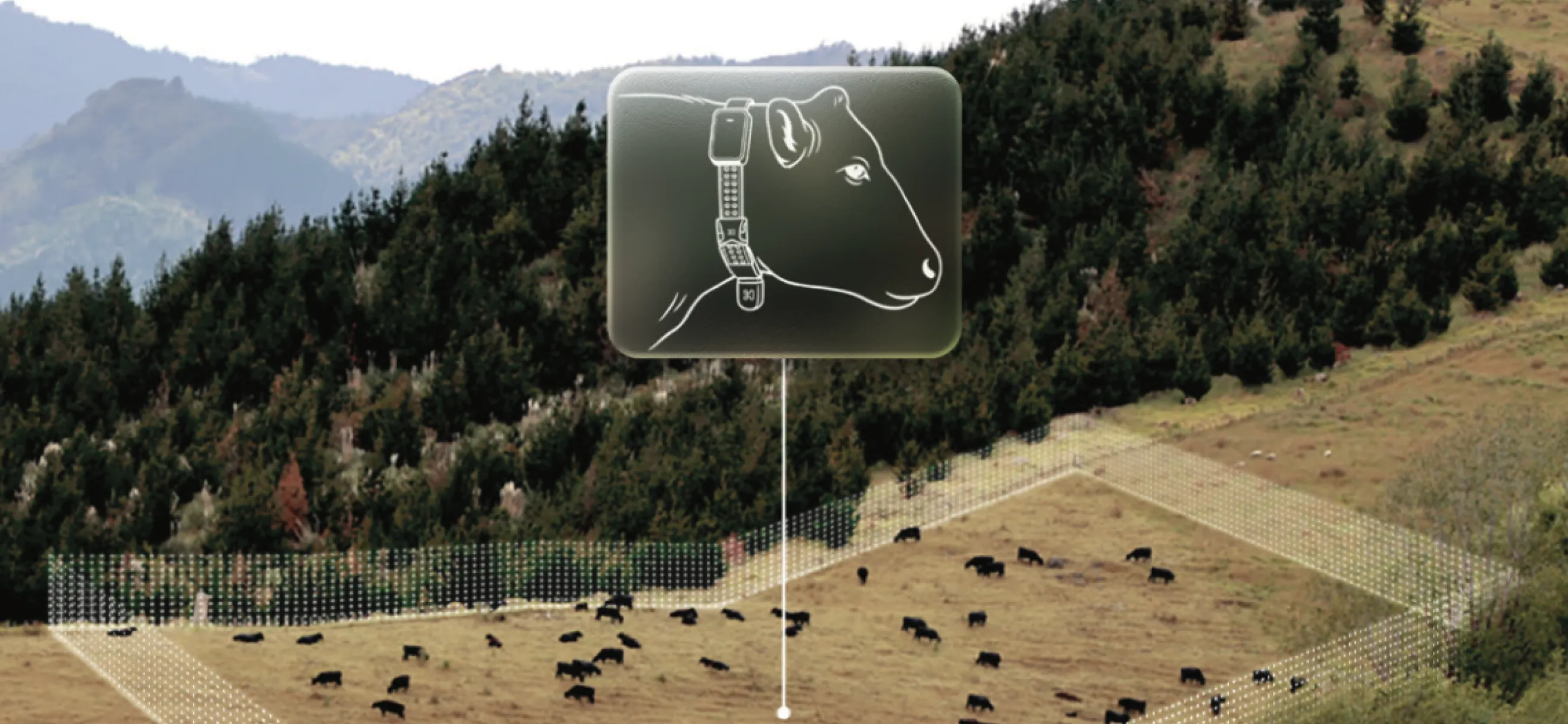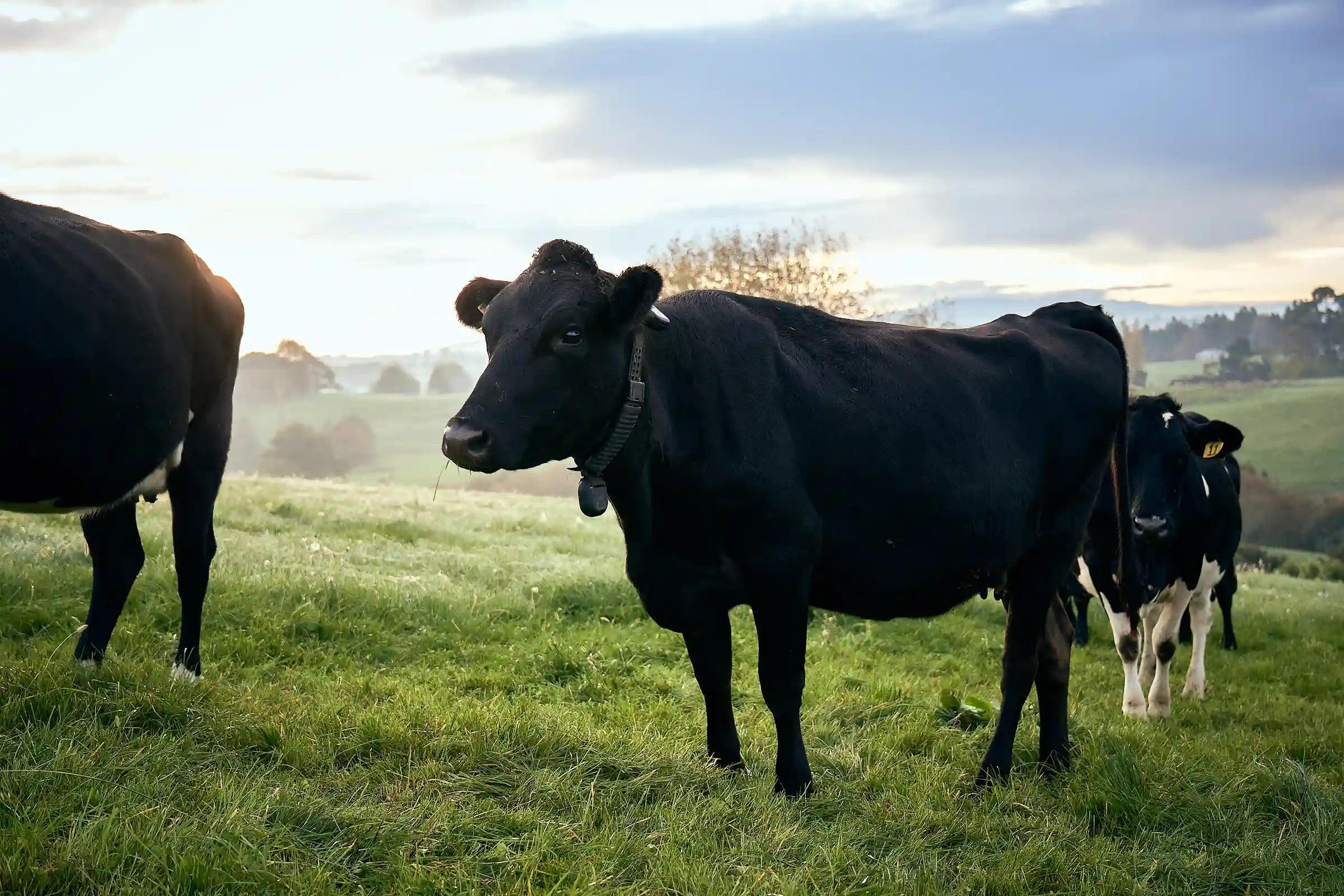


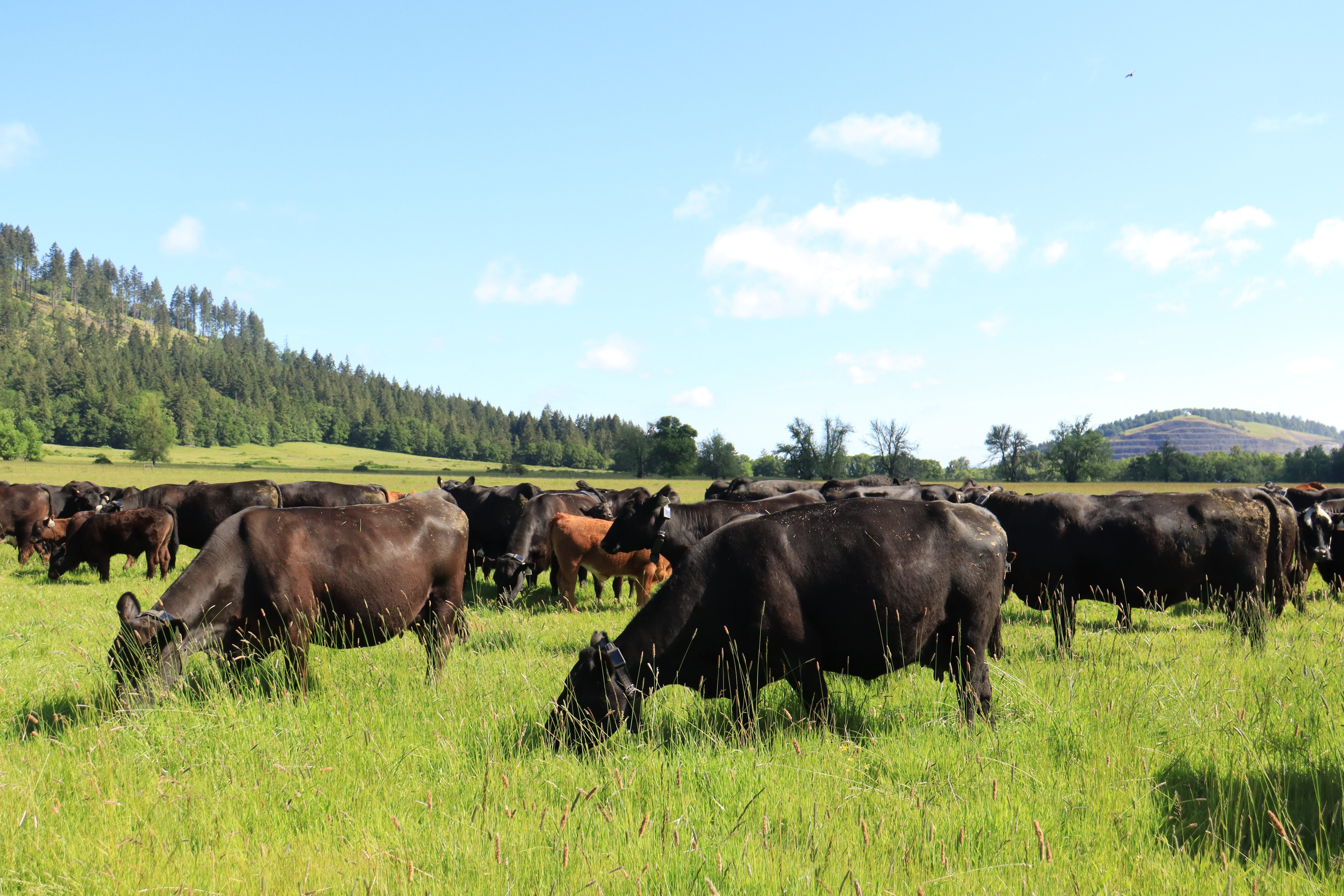
Early research on virtual fencing focused on a simple question: can it reliably contain and move cattle? Turns out it can. So, the focus has shifted to how virtual fencing can benefit producers and the land they manage. More than twenty universities and colleges across the US are using Halter on their research ranches and working with producers to test different grazing management strategies. They're tracking production metrics like grazing behavior, forage utilisation, and animal weight gain. While also looking into conservation outcomes like riparian health and bird populations. These projects will help producers understand how this technology can help them meet their specific goals in their unique region.
What researchers are seeing so far:
Grazing efficiency and forage use
At Kansas State University, researchers are strip grazing cattle on corn stalks and cover crops, tracking forage use, soil compaction, and how moisture affects soil structure. Jaymelynn Farney, who's leading the work, sums up what they found:
"The collars, and strip-grazing corn and milo residue in general, resulted in improvements in grazing efficiency, maintained to improved cow body condition with limited to no additional protein or energy supplements."
These early results suggest that pairing virtual fencing with strip grazing could help cow-calf producers stretch their crop residue further, cut back on purchased feed, and keep cows in good condition through winter, making residue grazing a more practical and profitable option for operations across the Plains.
Managing complex, sensitive land
At the University of Arizona's Santa Rita Experimental Range, researchers are tracking cattle movement, forage use, and riparian health across arid and rough rangeland, ground that physical fencing just wouldn’t work on. Flavie Audoin, from the university's College of Agriculture and Life Sciences, explains their findings:
"We are learning how cattle actually use these complex landscapes and how virtual fencing can help us better match grazing distribution to available forage while protecting sensitive areas like riparian zones."
This is exactly the problem ranchers can use virtual fencing to solve: keeping cattle out of the creek bottom or sensitive areas without a physical fence and managing grazing intensity to protect sensitive native forages.
Real-world feedback that shaped the product
Oregon State University began using Halter at Soap Creek Ranch in the spring of 2024, making them one of the earliest US adopters of Halter. Their feedback directly shaped how Halter built the system for American beef ranchers. This is a prime example of what a strong research partnership can do: it doesn't just prove the technology works; it makes the technology better. They found that Halter was beneficial in a multitude of ways for their ranch. According to researcher Travis Mullinkis,
“Beyond its research application, implementation of Halter has improved our operational efficiency. We have increased total grazing days and calf weaning weights while reducing fencing maintenance costs, harvested forage costs, and labor inputs. Halter has proven to be a valuable management tool and will continue to be an integral part of our grazing system at Soap Creek.”
Protecting riparian land without permanent fence
Dr. Sam Wyffels and his team at Montana State University are testing whether virtual fencing can protect riparian ecosystems while also providing multiple water access points, without the need for physical infrastructure. First-year results have shown that virtual fencing makes it possible to protect ecologically sensitive areas and adapt grazing as conditions change, without committing large amounts of capital to permanent infrastructure where fencing is hardest to build and most damaging to install. While Dr. Wyffels is doing great work with riparian land, his goals are much larger.
"Our goal is to bridge the gap between innovation and application. By partnering with producers and evaluating technologies such as virtual fencing, we generate research that addresses real-world challenges and supports informed decision-making in the beef industry."
More research on the way
If you’re curious to learn more about these research projects and whether virtual fencing holds up on land like yours, Halter's University Research page has the latest info, straight from the researchers running the trials. We’ll keep this page updated as more research comes out, so be sure to check back!
FAQ: virtual fencing and university research
Does virtual fencing actually work? Independent university research using Halter says yes, and early findings suggest the benefits go beyond containment. Initial studies point to gains in grazing efficiency, forage utilization, and land management outcomes, with more trials underway to build on these results.
Has virtual fencing been studied by universities? Yes. Over twenty universities and colleges across the US are currently using Halter for research, teaching, and extension work.
What have researchers found about virtual fencing and grazing management? Most of these studies are multi-year projects, so findings are still early, but initial results are encouraging. At Kansas State, early work suggests strip grazing crop residue with virtual fencing can improve grazing efficiency while maintaining cow body condition. At the University of Arizona, researchers are learning how virtual fencing can help match grazing distribution to available forage across complex, sensitive terrain. At Montana State, first-year results indicate virtual fencing can help protect riparian corridors without the cost of permanent fencing. At Oregon State, the team has seen increased grazing days and calf weaning weights on their ranch, along with lower fencing maintenance, harvested forage, and labor costs.
Is this Halter's own research? Nope. These are independent trials run by university faculty and researchers on their own research ranches, using their own study designs.
How can a university or research program partner with Halter? Bring us a research question, and we'll figure out together whether it's a fit. Reach out at research@halter.co.nz.
I’m a producer; how can I get involved in research? Reach out to your local university or extension office! Many researchers across the US are looking for participants for their trials and would be happy to hear from you.