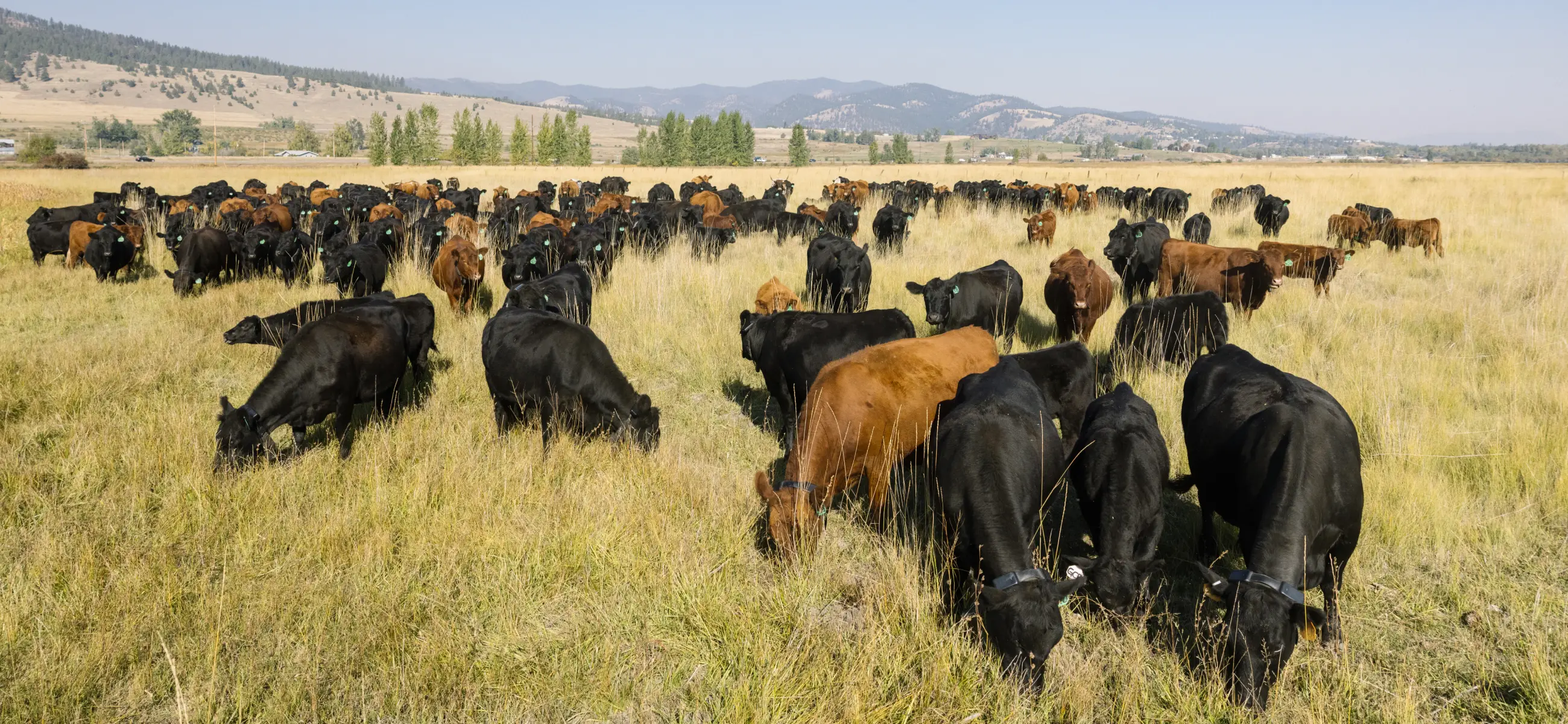


Drought can bring up the same hard questions on every ranch. How long can you hold your cows? When do you start hauling water? How many do you cull, and when?
But there's something else worth paying attention to during a drought. Some pastures go brown faster than others, and when the rain comes back, some ranches green up weeks ahead of their neighbors, even when they got the same weather.
That difference doesn't come from luck, and it doesn't come from one good season. It comes from what's been happening underneath the grass for the last ten years, in the roots, the soil, and the decisions a rancher has been making long before the dry stretch ever started.
What's happening underground, part one: roots and organic matter
The grass you see above the ground is only part of the plant. Underneath, the roots can run anywhere from a few inches to several feet deep depending on the species and how the plant has been managed. Native warm-season grasses like big bluestem and indiangrass can put down roots six, eight, even ten feet into the ground when they're given the chance. A deep-rooted pasture has access to moisture far below the surface, which matters most in a dry stretch when the top foot of soil has already given up everything it had.
Root depth isn't fixed. The same plant can grow deep roots or shallow ones depending on what's been happening above the ground. When a plant gets grazed hard and isn't given enough time to recover before it gets grazed again, it pulls energy out of its roots to push up new leaves, and the roots shrink to match what the top growth can support. When a plant has time to rest and rebuild between grazings, it can put that energy back into the roots and push them deeper. Recovery time is the lever. Without it, no amount of moving cattle around builds the kind of root system that gets you through a drought.
Those roots build organic matter in the soil over time, and this is where the slow work of a well-managed pasture starts to show up. As old roots die off and new ones replace them, they leave carbon behind in the ground. Year after year, that adds up. Organic matter is what gives healthy soil its dark color, the smell of a freshly turned garden, and the crumbly texture that breaks apart in your hand instead of holding together like a brick. It's also what gives soil the ability to hold water. A pasture with healthy organic matter can soak up a heavy rain and hold that moisture in the ground for weeks. A pasture without it sheds water off the surface, and most of what falls is gone before the grass can use it.
Research from the Noble Research Institute has shown that even a one percent increase in soil organic matter can add roughly 20,000 gallons of water-holding capacity per acre, or about seven-tenths of an inch of rain. That's water that stays in the ground through the dry stretches instead of running off into a ditch. Noble calls this difference effective rainfall: total rainfall is what fell on a property, but effective rainfall is what actually soaked in and stayed there. A three-inch rain might be a three-inch rain on every ranch in the county, but how much of it counts depends on what the soil underneath was ready to do with it.
If you're already running Halter and want to go deeper on the research side of grazing and land management, the Ranch Management Resource Initiative is built for this kind of question.
What's happening underground, part two: soil structure and soil life
Soil structure is the other half of how a pasture holds water. The soil itself, the way it's put together, and what's living in it determines whether the rain that falls on a pasture stays there or runs off.
Healthy pasture soil has structure. It's full of small air pockets, channels left behind by old roots, and tunnels made by earthworms moving through the top few inches of ground. Pull up a shovelful of good pasture soil and you can see it. It crumbles into chunks the size of peas and gravel, with visible spaces in between. When rain hits ground like that, it has somewhere to go. The water moves down into the soil where the grass can reach it.
In compacted soil, the pores have collapsed, the channels are gone, and the surface seals over the first time it gets hit with a hard rain. Water runs off instead of soaking in, and what does make it into the ground stays in the top inch or two where it evaporates within a couple of days. A lot of pastures look fine from the road but behave like a parking lot the moment it actually rains.
Most of what builds and maintains soil structure is alive. Earthworms can move tons of soil per acre per year, pulling plant material down from the surface and leaving the channels that water and roots both rely on. Below them, the soil is full of microbes and fungi doing the work of breaking down dead roots and old plant material into the organic matter that feeds the next generation of grass. A single teaspoon of healthy pasture soil can hold more living organisms than there are people on earth.
There's also a kind of fungi that attaches directly to the roots of grasses and acts like an extension of the root system, threading out into parts of the soil the roots themselves can't reach. It pulls water and nutrients back to the plant in exchange for sugars the plant makes above the ground. In a dry year, that extra reach can be the difference between a plant that keeps growing through July and one that shuts down by the end of June.
The surface above tells you what kind of soil you've got. Bare ground bakes in the sun, crusts over, and sheds water when it does rain. The temperature of bare soil on a hot summer day can climb past 130 degrees, which kills off the life in the top inch and bakes the surface into something closer to pottery than pasture. A pasture with good cover, whether that's living plants or the leftover plant litter from the last grazing, keeps the soil underneath cool and damp, slows evaporation, and gives water a chance to soak in when it falls.
A healthy pasture is all of these things at once. The roots, the organic matter, the structure, the soil life, and the cover at the surface are parts of the same system, and they all hold up better on a ranch where the grazing has been managed to give them a chance to develop.
How adaptive grazing management builds carrying capacity
Everything in the last two sections comes down to one thing above ground: how the grass gets grazed.
A grass plant doesn't know whether it's been grazed by a cow, an elk, or a lawnmower. What it knows is how much of its leaf area got taken, and how long it has to grow it back. Take a little, and the plant barely notices. Take a lot, and it has to pull energy from the roots to push up new growth. Take a lot and then come back before it's had time to recover, and the plant starts running a deficit. Do that season after season, and the plant either weakens until something else takes its place, or it dies out entirely.
Adaptive grazing management, a term used by Noble Research Institute and others working in the regenerative grazing space, is the practice of reading what the grass and soil need and adapting accordingly, rather than following a fixed rotation on a calendar. Some years a paddock might need 30 days of recovery before the next graze. Other years it might need 90. The number depends on what the plant is telling you, not what the spreadsheet says.
Recovery time is what matters most. Grazing too often runs roots short, exposes soil, and lets bare ground creep in. Giving plants enough time to fully recover before the next graze is what builds the deep roots, the soil organic matter, and the structure that hold water through a dry stretch. Stocking rate, paddock size, and rotation frequency are all parts of the equation, but recovery time is the one that decides whether the land is getting stronger or weaker over time.
Carrying capacity follows from there. Carrying capacity is the number of animals a piece of ground can run without degrading itself, and it isn't a fixed number on a piece of paper. It's a reflection of how well the land has been managed up to that point. A ranch that's been grazed adaptively for ten years can often run more cattle on the same acres than it could when the work started, not because anyone pushed harder, but because the land got better at growing grass.
In a drought year, the gap between those two kinds of ranches is easy to see. A ranch with deep roots, healthy soil, and good cover holds longer before the grass gives out, while a ranch without those things runs out of grass sooner, has to cull deeper, and takes longer to recover when the rain returns. The drought doesn't create that gap, it just makes it visible.
Where virtual fencing fits
The hard part of adaptive grazing is usually the work it takes to do it. Building enough cross-fencing to graze in tighter rotations takes time, money, and labor, and moving cattle frequently means being there to move them. On a big ranch with leased ground spread across multiple properties, that becomes a lot to keep up with, and a lot of ranchers who want to graze this way end up grazing less intensively than they'd like because the infrastructure can't keep up.
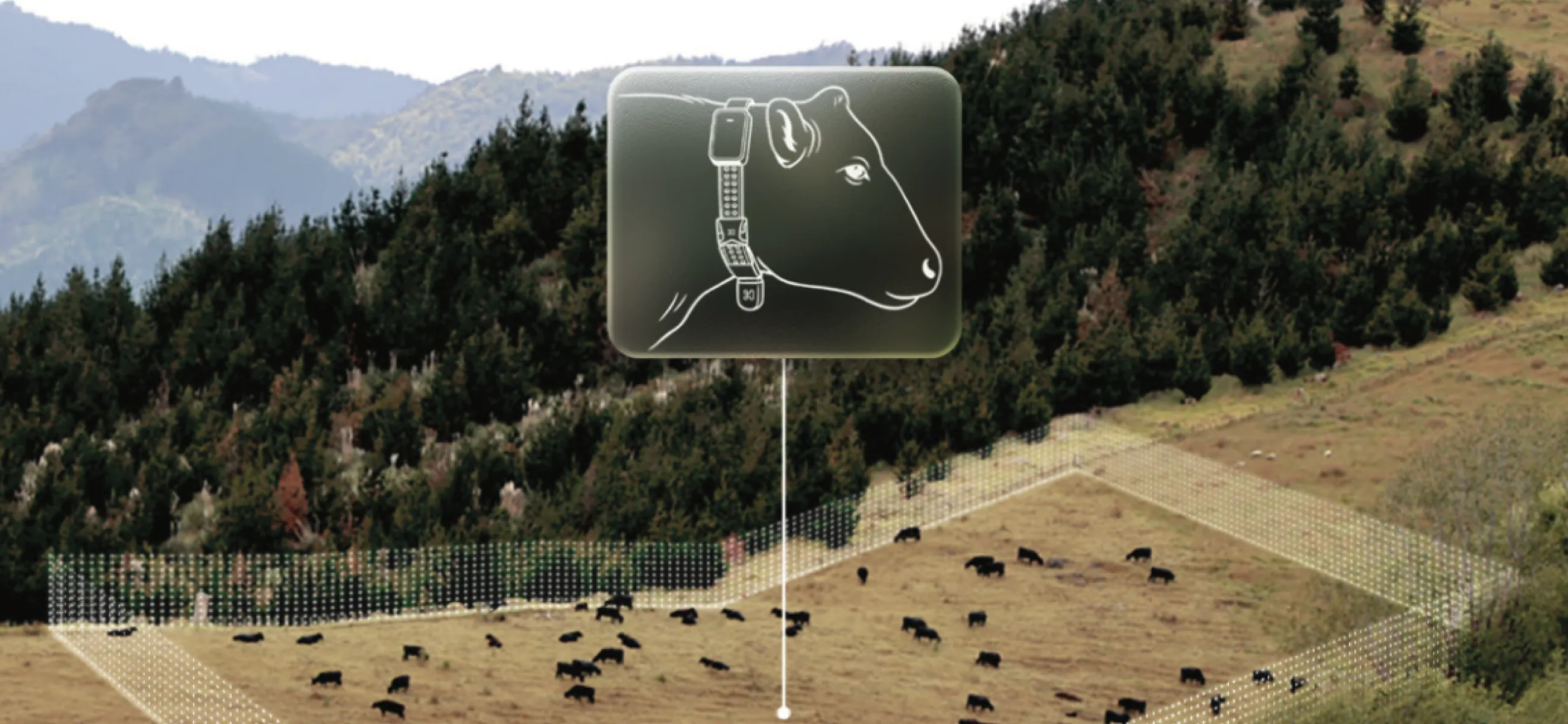
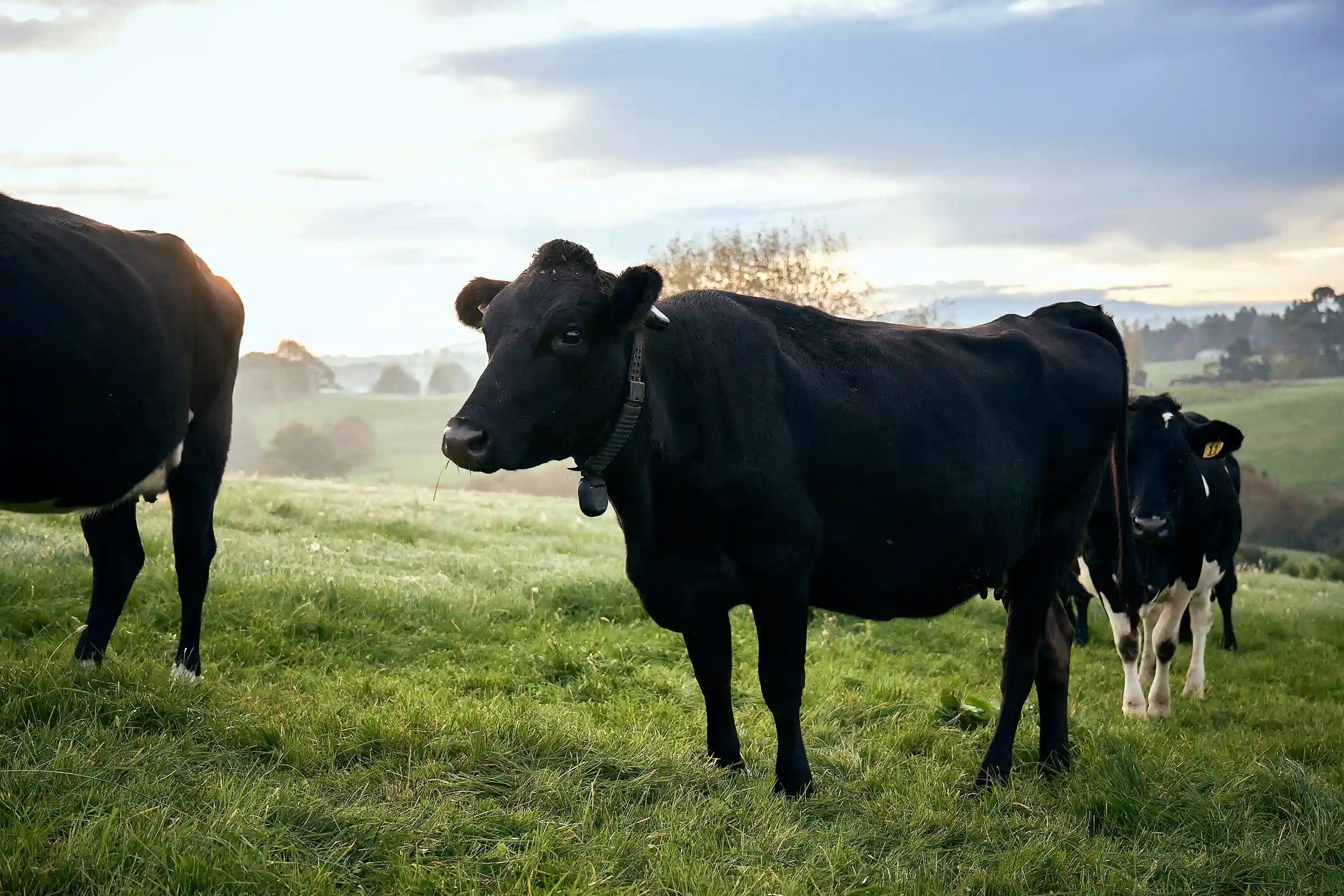
Virtual fencing changes what's possible. With Halter, you can draw a virtual fence in seconds from your phone, move cattle to fresh grass the moment they're ready for it, and rotate without building new wire, which means cross-fences can go up without posts and daily moves don't have to be a labor problem. Recovery time, the lever that matters most in adaptive grazing, becomes something you can manage with much more precision than you can on a fixed-fence layout, because you're no longer locked into the paddock sizes your fences built years ago.
None of that changes the principles of adaptive grazing, which were right to begin with. What it changes is how many ranchers can put those principles into practice, and how consistently. A rancher who's wanted to graze tighter for years has a way to do it without first taking on the fencing project, and a rancher who's never rotated before has a starting point that doesn't require building infrastructure to find out if the approach works for their operation. We've also been building a few new features to help with the grazing side specifically, including ways to see where feed is across the ranch and how to plan around it.
Halter isn't the reason a ranch becomes drought resilient. The grass, the soil, the roots, and the years of careful decisions are the reason. Halter is a tool that helps a rancher put those decisions into practice on more of their ground, more often.
The longer view
Drought is hard, and nothing in this piece argues otherwise. But the ranches that hold their cows longest in a dry summer usually aren't doing anything special in that moment. They're collecting on years of work that happened when nobody was watching, in the decisions they made about grazing and recovery and rest in the wet years before the dry one ever showed up.
Drought-proofing a ranch isn't really something you do in a drought. It's something you've been doing all along, in the way you graze and rest your pastures, the way you read your grass, the way you treat the soil underneath. The ranches that green up first have been doing that work for years, mostly without thinking of it that way.
Sources
- Noble Research Institute, Not All Rainfall Is Effective: https://www.noble.org/regenerative-agriculture/soil/not-all-rainfall-is-effective/
- Noble Research Institute, What Does Organic Matter Do In Soil?: https://www.noble.org/regenerative-agriculture/soil/what-does-organic-matter-do-in-soil/
- Noble Research Institute, Soil and Water Relationships: https://www.noble.org/regenerative-agriculture/soil/soil-and-water-relationships/
- Noble Research Institute, What is the Water Cycle?: https://www.noble.org/regenerative-agriculture/what-is-the-water-cycle/
- Noble Research Institute, Organic Matter Serves Important Role in Soil Health: https://www.noble.org/regenerative-agriculture/soil/organic-matter-serves-important-role-in-soil-health/

.jpg)