




Forage regrowth and herd distribution under intensive grazing
At Soap Creek Ranch, Oregon State University faculty and students are using Halter technology to explore how virtual fencing can support real-world ranch operations. As one of the earliest adopters of Halter in the US, starting in late 2024, the OSU team provided valuable feedback on the early version of the US beef product, leading to improvements that made it better suited for ranchers across the country.
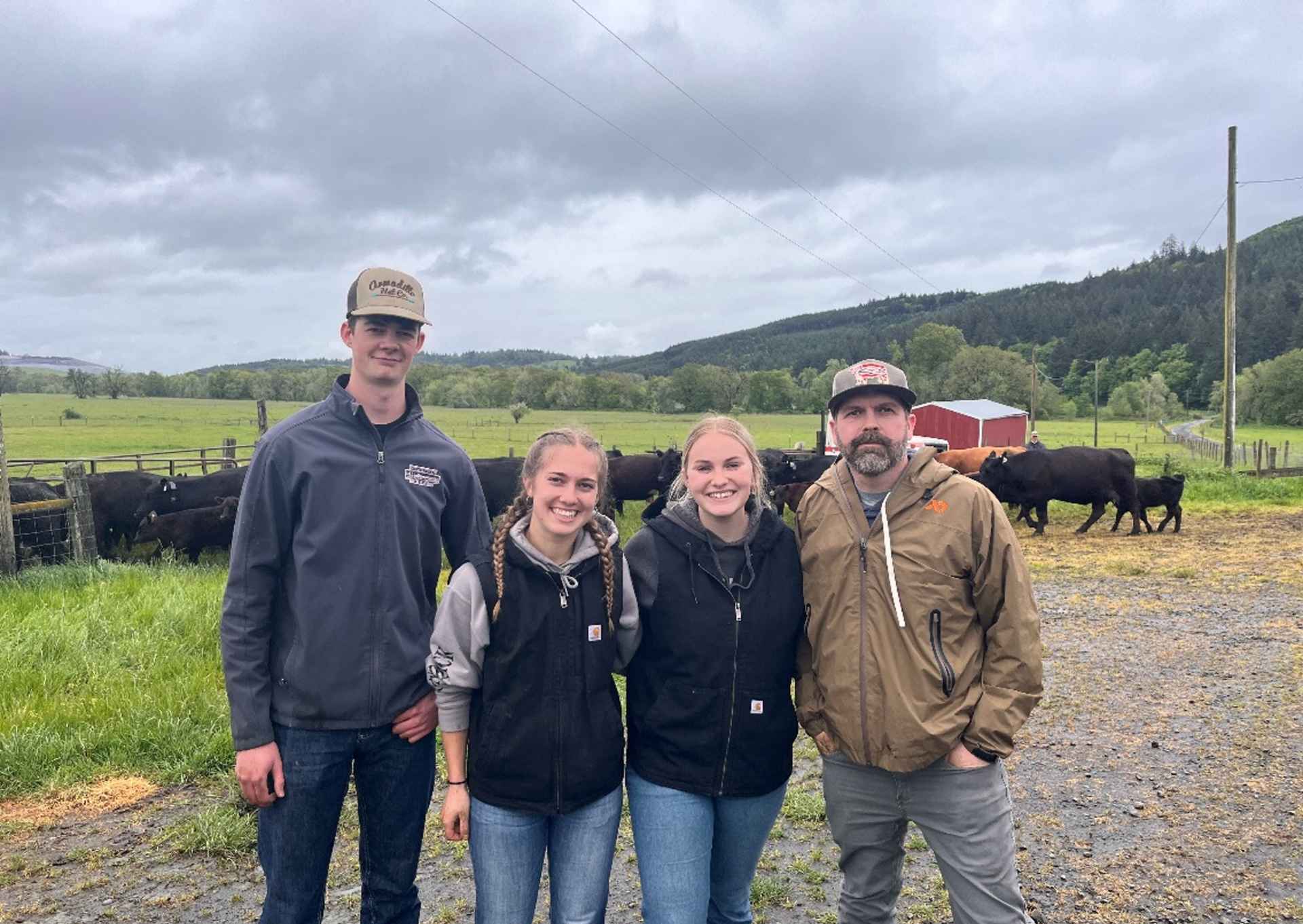
Beyond this early R&D work, the ranch uses its herds and pastures for landscape-level studies, classroom instruction, student projects, extension outreach, and collaborative research that brings cattle and forage dynamics together. The researchers document how small virtual boundaries and intensive rotational grazing interact with forage regrowth, herd distribution, and labor inputs. Future work aims to show how these tools perform both technically and practically, guiding producers who are weighing up precision agriculture tools.
“We partnered with Halter with a dual purpose of addressing key questions from livestock producers by evaluating the efficacy of virtual fence in different grazing systems and applying it towards solving real-world production challenges that we had at Soap Creek. From a research perspective, our objective was to determine the efficacy of virtual fencing technology within intensive rotational grazing systems, specifically its effects on cow/calf performance and forage utilization in small acreages. One common limitation of emerging technologies is location accuracy with small pastures. Halter has enabled use to confidently grazing in pasture sizes as small as one acre with high spatial accuracy, resulting in precise pasture allocation and clean, clearly defined grazing lines.
Beyond its research application, implementation of Halter has improved our operational efficiency. We have increased total grazing days and calf weaning weights while reducing fencing maintenance costs, harvested forage costs, and labor inputs. Halter has proven to be a valuable management tool and will continue to be a integral part of our grazing system at Soap Creek.”

