

"That's the way it's always been done."
Casey Buffington doesn't say it like a point of pride, but rather like a warning, the way someone does when they've watched what complacency costs up close and decided they'd rather be the person who tried something and failed than the one who stood still and lost everything slowly.
"People talk about that being the worst words you can say in the farming and ranching industry," he says. "That's how a lot of people fail. They're afraid to take risks. They're afraid to take chances."
For a man who spent a decade barely leaving Montana, who still saddles a horse to move cows between pastures, and who freely admits that technology is not exactly his strong suit, Casey is an unlikely early adopter. But out here at Basin Cooley, in the north-central Montana flatlands near Ledger, the weight of four generations has a way of making you practical.
What it really takes to keep a ranch alive across generations
The ranch didn't come down through the generations as cleanly as they would have liked. Casey's grandfather put Basin Cooley into the Conservation Reserve Program (CRP) in the 80s and 90s, and without cattle on the place, the finances started to slide.
"Once a place gets in that kind of financial burden," Casey says, "it's basically just a matter of time before it just all trickles downhill and it's gone."
Casey's parents were the ones who stopped that slide, his mom working nights and his dad working days, holding jobs off the ranch for as long as Casey can remember while doing whatever it took to keep the operation up and running. They eventually took the ground out of CRP and put cows on it rather than breaking it up and farming it or leasing it out to a neighbor.
"They just decided, you know, cows is what we want to do, so cows is how we're going to make our living," Casey says. "And they really, really dug this place out of usually what's a pretty big hole to dig out of."
Today his parents are expanding, buying more ground, running more cows. But the pattern they established, where every adult on the place carries a job in town to make the numbers work, never fully went away. Casey runs his own LLC, B Heart Cattle Company, with cattle he's owned for going on eight years now, and he splits his time two or three days a week driving as many as a thousand miles for outside work while managing the ranch around the edges.
He's also doing it as a single dad, sharing custody of his three kids and navigating the logistics of a place that sits 30 miles from the school they attend every day. Flat tires on a tractor tend to happen on the weeks he has them, and water systems have a way of going down at the wrong time. "Every week brings us new challenges," he says. "It's not always the same."
He doesn't say any of this like a complaint. He says it like someone who has done the math on what the ranch has always cost and is trying to change the equation before he hands it off.
What ranch kids bring to the Marines and bring back home
Casey is a Marine Corps veteran with a combat deployment, but when you ask him what the military taught him about ranching, he redirects the question. "I think it actually kind of goes back a little further than that as well," he says. "I think there's a lot that I learned growing up on a ranch and in a small town that helped me with my Marine Corps career."
He tells a story about boot camp in San Diego, 86 kids in a platoon, and a drill instructor who asked on the first day for all the small-town Montana kids to raise their hands. About ten went up. The drill instructor pointed at both groups and told the rest of the platoon: watch these people, because one of them is going to be leading you in three months.
"These are the kids who have had responsibility in their lives," Casey recalls the instructor saying. "They've had to work for everything and anything."
He was right. Three of the platoon leaders came from ranch backgrounds and two from the inner cities. Casey came out of the Marines and went right back to what he'd always known: you work in acres and fence lines, not hours, and you're not done until the job is complete. "Coming out of the Marines, it wasn't anything different to me," he says.
The great lentil fiasco
If there was a single moment that pushed Casey toward Halter, it started with a fence, a neighboring field, and a cow herd that found the gap between the two.
He'd been in contact with the Halter team for most of a year before that, calling periodically, asking questions, working through his skepticism. He'd been a feed and mineral salesman himself, so he knew how products got pitched. "I know you guys, everybody's got to upsell it," he says. "You've got to get people excited about the product." He was wary, but he kept the conversation going.
Then his cows got out and walked a mile and a half into his neighbor's lentil crop. Casey moved into a camper on the pasture to keep watch over them, and the first five days had a certain appeal. "You don't get to be just a cowboy very often and just go literally live with your cows." But after five days the appeal wore off and he made the call.
"I went through every scenario in my head," he says. "Whether it's financially good for me or financially bad. When I really like it, doesn't work as good as they say it does. I went through every scenario. But that day, it was a no-brainer for me."
He called Halter and signed on, telling himself that "ranching's a 100-year industry, 200-year industry. What's three years that may or may not work."
Virtual fencing costs vs. permanent fencing: how Casey's doing the math
Casey was a self-described skeptic going in, and he measures results accordingly.
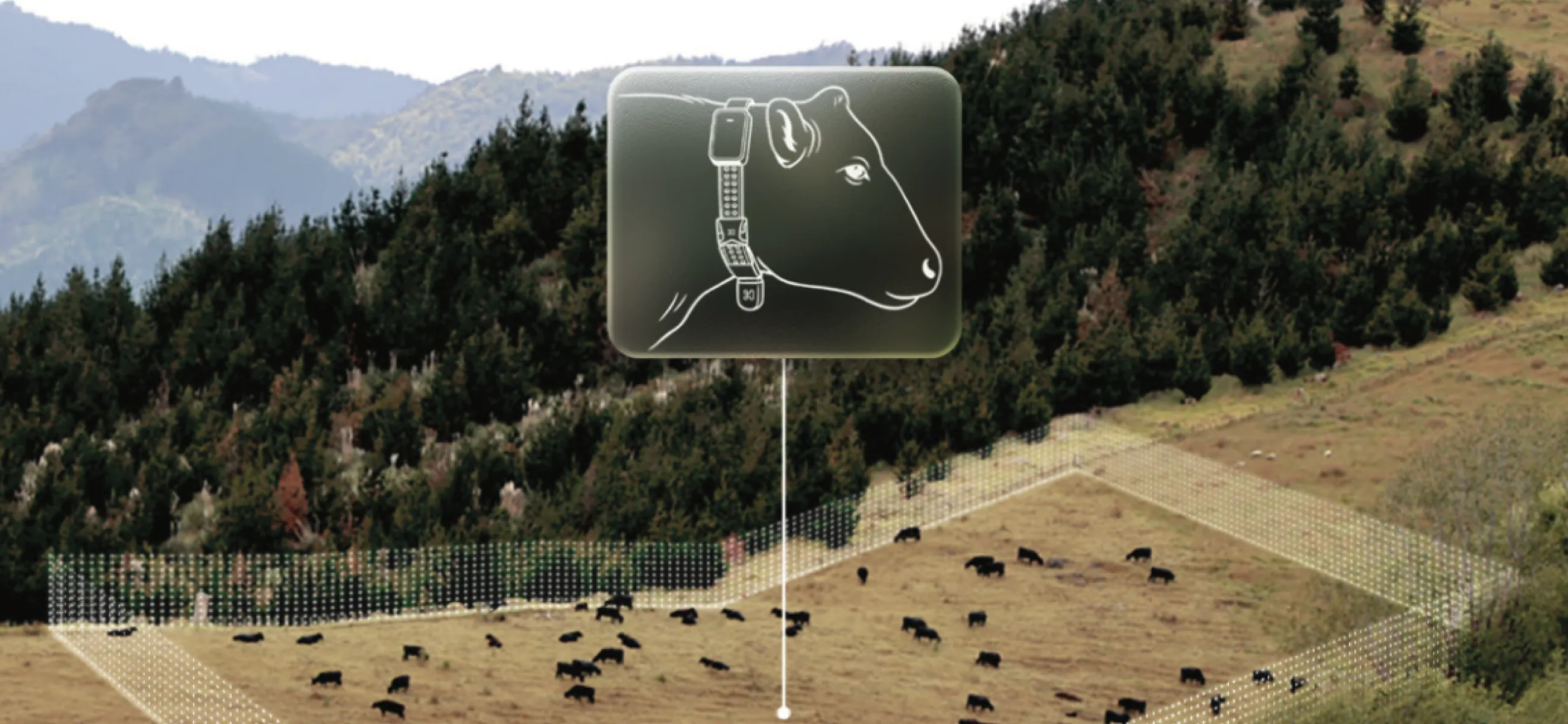
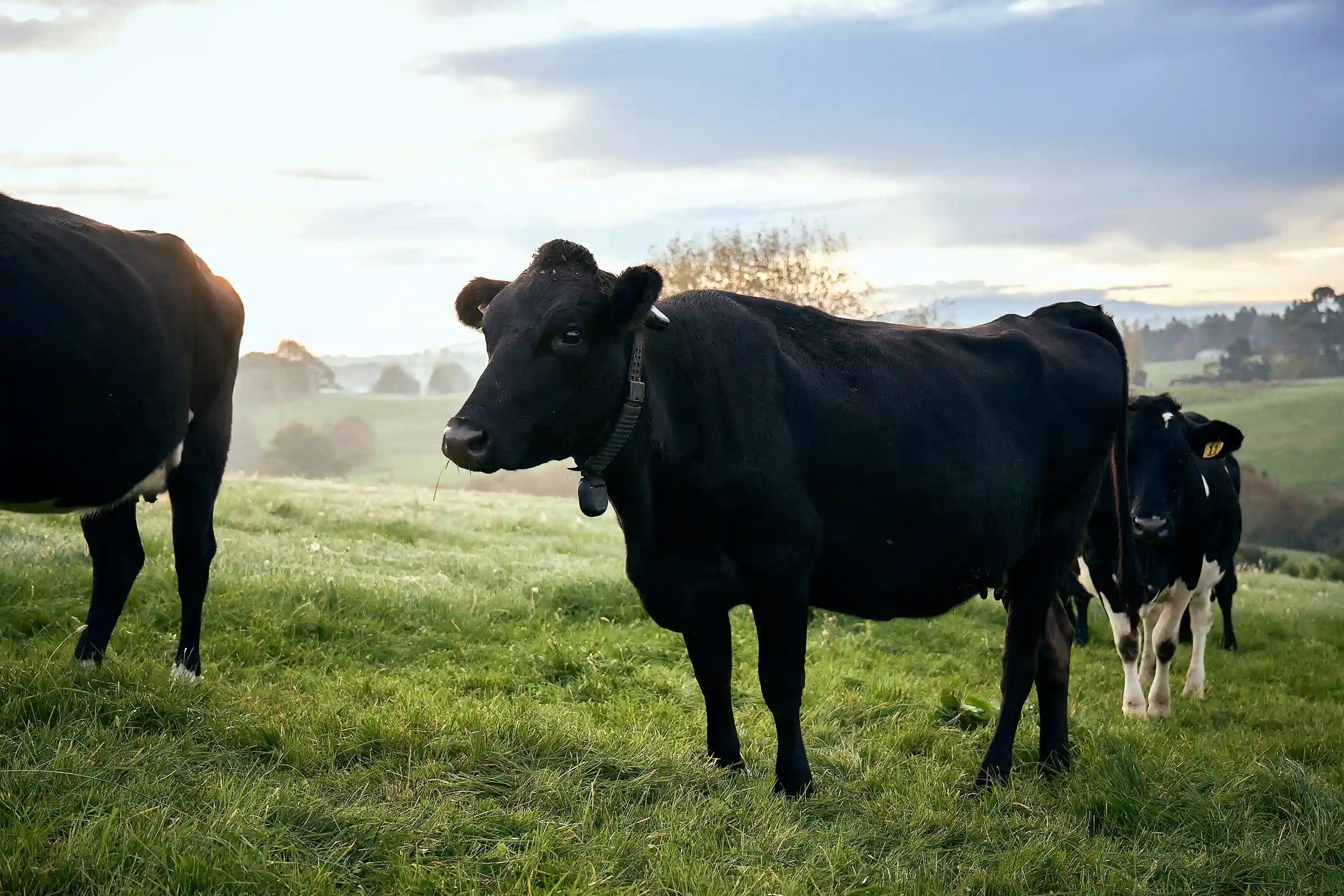
In the four or five months since collaring, he hasn't had a cow get out that he's had to physically go put back. "Literally since about 30 hours after we collared, I haven't had a cow step out, and if they have gotten out, they've turned around and went right back in," he says. "You guys completely exceeded my expectations. And if this is just the base model, it's just going to get better."
The financial picture is taking shape faster than he expected. By keeping his cattle on separate, tighter paddocks rather than grazing across the road with his dad's herd, he's extended his grazing season through an open winter that would otherwise have had him feeding a full or half ration of hay by now. The virtual fencing also saved him from building roughly a mile and a half of permanent fence at $14,000 a mile in this part of Montana, an undertaking that would have run close to $20,000.
"I'd be willing to bet I've damn near paid for it in my hay savings right now," he says.
Farming neighbors who were once reluctant to fence their stubble fields and coulees for grazing have started calling to ask if Casey would bring cattle onto their ground, something that wouldn't have been practical without a way to contain them cheaply. "Maybe not this year, I won't see a lot of cost savings," Casey says. "But over the next couple of years, being able to graze more into the fall and winter, it's really going to dampen my hay input."
For anyone who says it sounds expensive, he has a straightforward comparison: "For every hundred head that you collar, it's about a half a mile's worth of money for building a permanent fence. And I haven't penciled it out a way yet where it's too expensive."
What changes when you can move fence from your phone
The real test, by Casey's own account, is still a few months away. His cattle have been on crop stubble since he collared them, so the intensive rotational grazing he's most excited about hasn't fully played out yet. He's been watching the patterns that emerge even now, though, recognizing what every rancher on big pastures already knows: cattle walk the same lines to water and beat those stretches down while leaving grass untouched in the coulees and corners. "You drive to the next coulee and there's an abundance of grass, but they like that short grass," he says. "They'll come back every six to ten days and whack that grass down rather than utilizing the whole pasture."
Come spring, when the old ground within some of his pastures greens up two or three weeks before the native grass does, he plans to fence cattle onto those hilltops and let the native range get a head start. He's already moved what he estimates at 20 to 30 miles of virtual fence with his fingertip, and he's not planning to run the same rotation twice. "I don't anticipate doing the same rotation every year," he says. "That's where you start getting yourself in trouble. We're going to really just fine tune it and just play with it."
One morning not long ago, Casey rolled over in bed before his workday started and set a new break on his phone, a task that would have cost him half a day on horseback.
"Before my work day really even started, I had already moved my cows," he says.
Every hour he recovers that way is an hour he can put somewhere else, whether that's toward a kid's basketball game, a Christmas concert, or just a longer evening at home.
"My biggest investment is my children," he says. "Every hour I save is just basically like putting money in the bank for me."
Building something the next generation can come home to
Casey is raising three kids on the same place he grew up, in the same house, working through the same pressures his parents navigated, with a steady hope that his generation might be the last one that has to carry both loads at once. He's not forcing anything on his kids. If one of them wants to come back to Basin Cooley someday, he wants it to be a real choice, not a financial obligation. "I want them to have a full-blown opportunity to ranch if that's what they want to do," he says. "I want this to just be as wide open as they want it to be."
His eight-year-old already knows how to pull up the app and check cow tag numbers on the way to school, and he's noticed that his sister's cow and his own tend to graze within 50 yards of each other. Casey's sixteen-year-old played in a state championship football game on a Saturday and was in basketball practice less than 48 hours later. Twenty years from now, when Casey thinks about what he hopes they carry with them from this time, he doesn't reach for anything grand.
"I just hope they remember that we weren't afraid to try something new," he says. "The chances we took, the experiences that we share. That's kind of what we're trying to build. Just the memories of being able to do this as a family."
The generational burden, as he carefully doesn't call it a curse, is the off-ranch job. The goal is to be the generation that makes it optional.
Casey Buffington runs B Heart Cattle Company in partnership with his father's Basin Cooley Cattle Company near Ledger, Montana. The fourth-generation operation runs a cow-calf herd with a focus on intensive grazing and regenerative agriculture practices. Watch his full story as part of A Halter Series on YouTube.

.jpg)