

Mating is one of the busiest, highest-stakes parts of the season. Heat detection, timing and keeping track of performance are all equally important and put pressure on your labour and decision-making. Whether you’re using Halter, tail paint, observation, activity systems, or a mix of tools, the goal is the same: getting the right cows mated at the right time.
Halter brings the information you need into one place, helping you make faster, more confident calls before, during, and after mating.
If this is your first mating season with Halter, you’re after a refresher, or you’re just plain curious, this guide covers how to spot which cows need attention, time insemination with more confidence, and keep an eye on season performance while there’s still time to act.
Is my herd cycling as they should before mating starts?
Before mating starts, it helps to know whether your herd is cycling as expected, which cows may need attention, and whether your team has a clear process for finding, drafting, and recording cows.
Halter gives you an early read on where the herd is tracking before Planned Start of Mating (PSM) begins. If the number looks off, you can bring in your vet or advisor early rather than finding out three weeks into mating.
During mating: The who, when and how that matters on the day
There’s plenty do in the morning during mating – checking heat signs, comparing notes, finding cows, drafting them, inseminating, and recording what action you took.
Halter is designed to bring more of that process into one place. Helping teams move from detection to action with less manual checking and fewer missed details.
A typical morning with Halter might look like this:
- Open the on heat list before milking.
- Review the cows Halter has detected and take a closer look at any you’re unsure about.
- Draft or find the cows that need action.
- Inseminate.
- Record the action in the app.
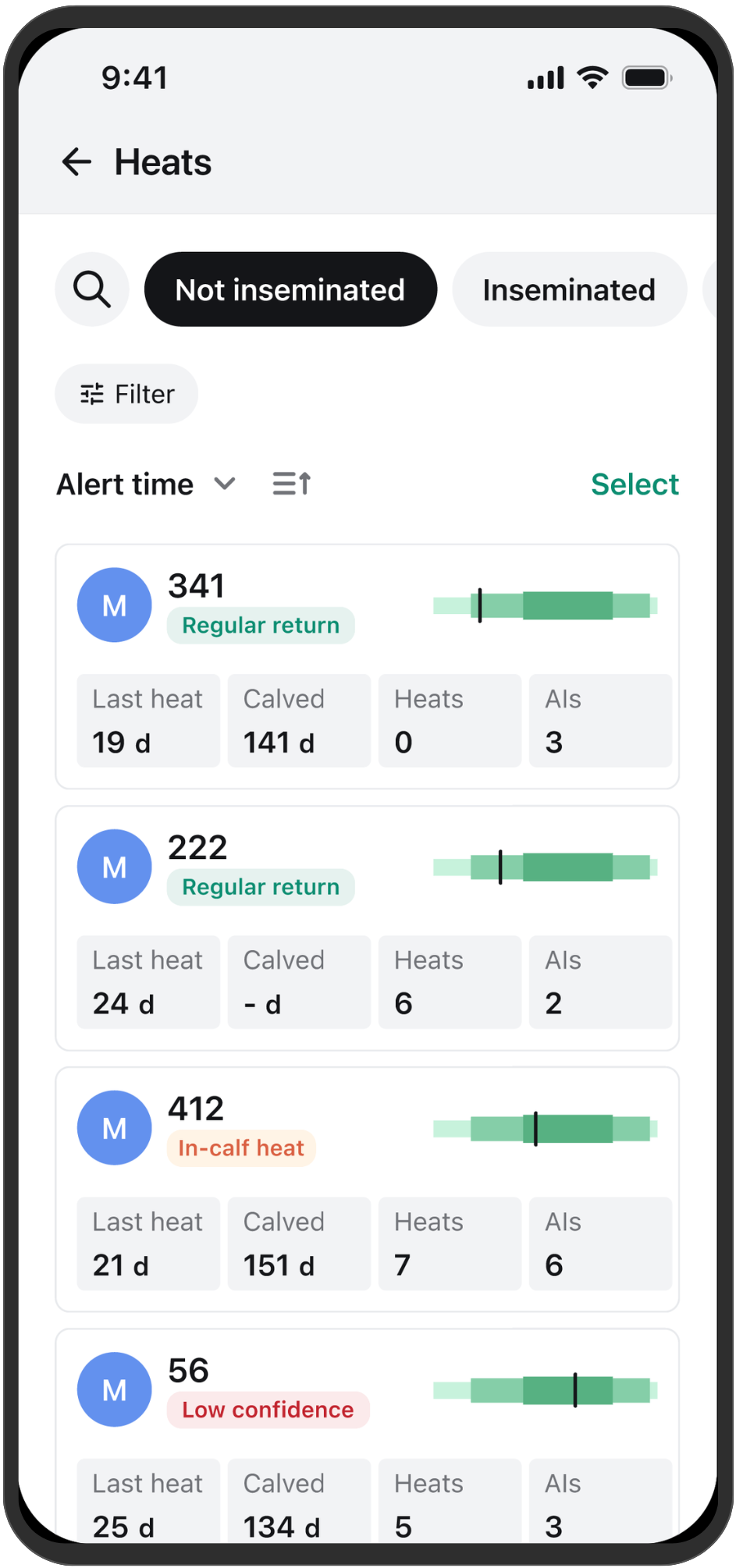
Which cows need attention today?
It’s the question you’re asking each morning: Who needs to be mated today?
Halter’s on heat list is the place where you can see every cow Halter has detected on heat, along with timing guidance, the system’s heat confidence, return intervals, and relevant tags. Less jumping between screens and more of the information you need to make the call and keep moving.
Behind the scenes, Halter monitors changes in each cow’s behaviour and compares them with her usual patterns and what’s happening across the herd. The algorithm uses learnings from previous mating seasons, making this Halter’s most accurate heat detection yet.
What is heat confidence?
The heat confidence score is our system’s confidence that the behaviours it detected represent a true heat. It is not a score of the cow's chance of conceiving or a measure of her heat strength.
Some cows may have low-confidence alert on the app. This doesn’t mean you shouldn’t inseminate. Check the cow yourself and make the call based on what you see.
When is the best time to inseminate?
Knowing a cow is on heat is only part of the job. Timing matters too.
- Aim to inseminate within 5–29 hours. This is the best 24-hour window.
- The strongest 12-hour window is 12–24 hours after the alert. On average, cows inseminated within this window have the highest conception probability and may be good candidates for sexed semen.
Once Halter detects consistent heat activity and alerts a cow as on heat, a 0–30 hour timer begins, showing you the best time to inseminate after the alert.
How do I find and draft cows faster?
Once you’ve decided which cows need action, Halter can help you find them and get them where they need to be.
White flashing LEDs on the collars make on-heat cows easier to identify, while live map pulsing on the app helps you spot them in the paddock. If you have an integrated drafting gate system, Halter can also draft on-heat cows automatically.
Record actions as you go
Recording inseminations, interventions, and false alerts keeps your season data up to date. With Halter, this only takes a moment, and gives you current, useful insights during and after mating.
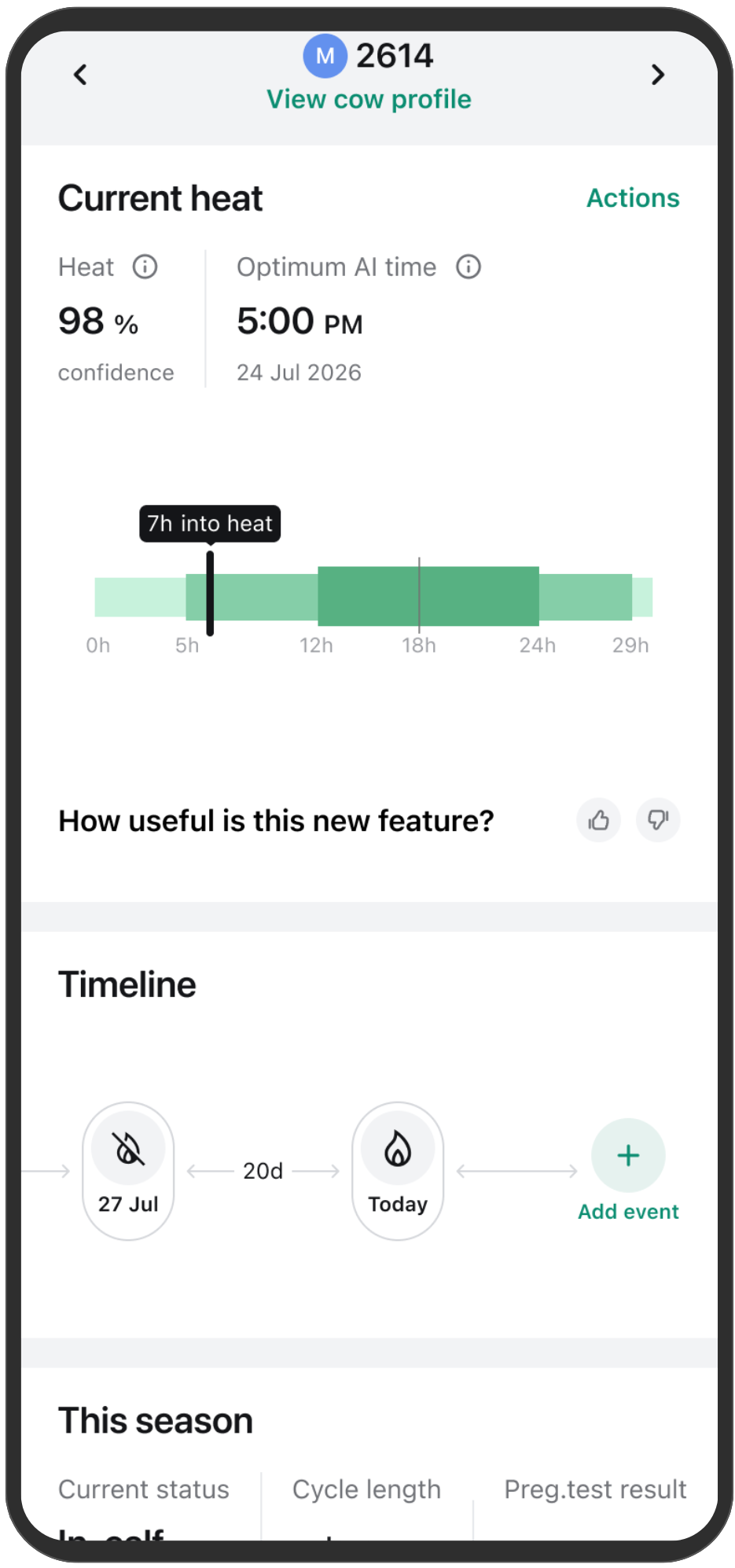
When a cow needs a closer look
Not every cow is a clear-cut decision, and we know there’s no substitute for your experience and judgement. Sometimes you need a bit more information to make the confident call.
That’s where Halter’s individual cow profiles come into play. It’s a tab showing:
- The Heat confidence score from the system
- Her previous heats
- How many days since she calved
- Days since her last heat
- Her inseminations this season
- Longer-term reproduction history
Is the season tracking the way it should?
Mating insights aren’t only useful on the day. Throughout the season, Halter helps you keep an eye on:
- Cycling rate
- Submission rate
- Non-return rate
- Estimated in-calf rate
Together, these metrics give you an early read on whether the season is tracking as expected. If something looks off, you can investigate a mob, adjust your plan, or bring in your vet or advisor rather than waiting until pregnancy testing to find out.
What can I learn for next season?
Once mating wraps up, take some time to look back over the season. What worked well? Where did the team lose time? Were there any mobs or parts of the workflow that need a closer look?
A quick review while it’s still fresh can help you hold onto what worked and make next season even smoother.
From picking up heats to tracking results, Halter keeps the right information close throughout the season — so there’s less second-guessing and more time to focus on getting cows in calf.
Want to see how Halter's mating tools can help you this season? Get in touch with your rep here.