


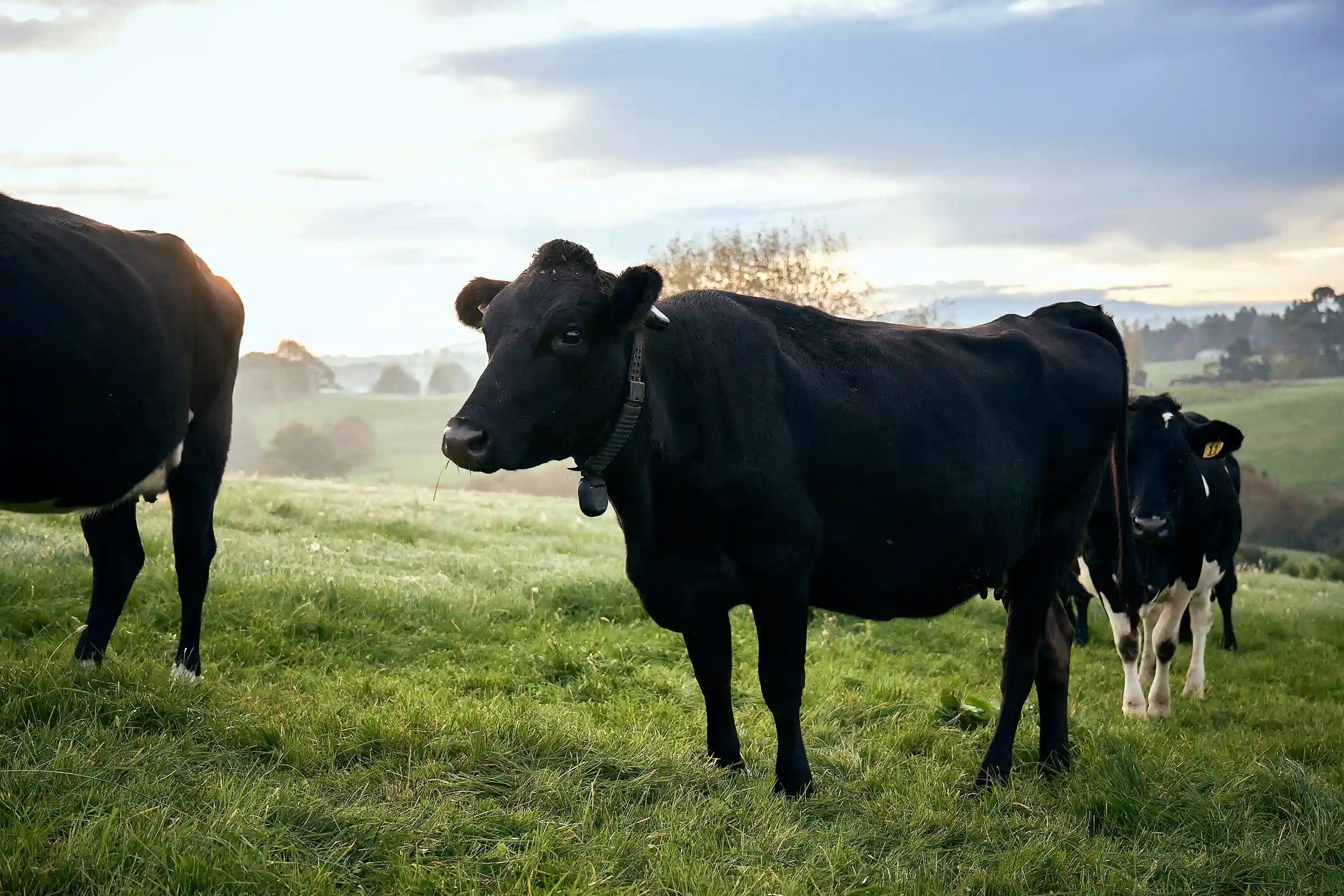


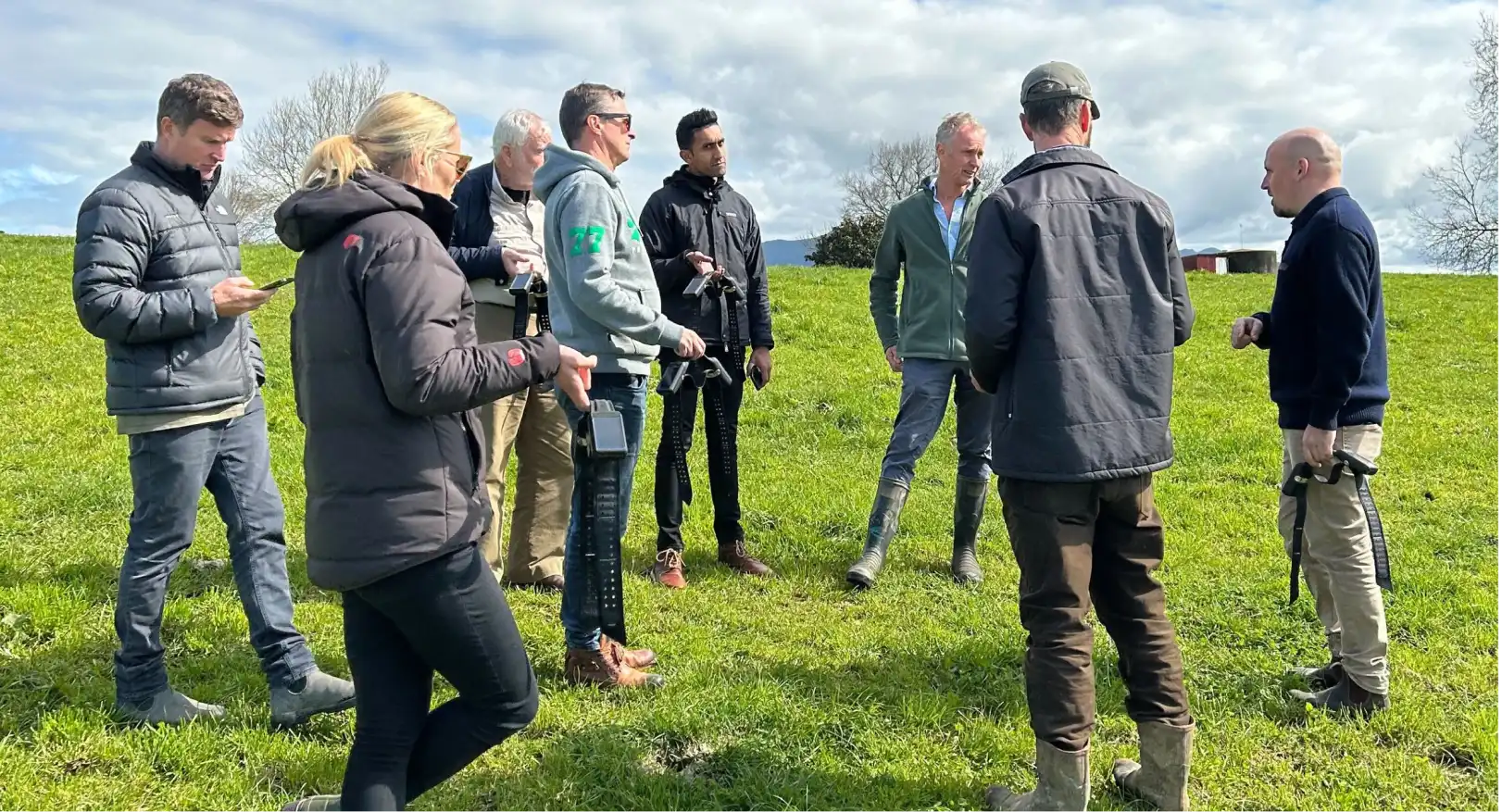
Halter’s independent Veterinary Advisory Board comprises six leading large-animal veterinarians who advise our team. This collaboration draws on deep industry knowledge and expertise to help shape Halter’s product, benefiting the cows managed with Halter. Collectively, the Board brings extensive expertise across animal health, nutrition, reproduction, animal welfare, and disease management.
Halter’s Veterinary Advisory Board members include:
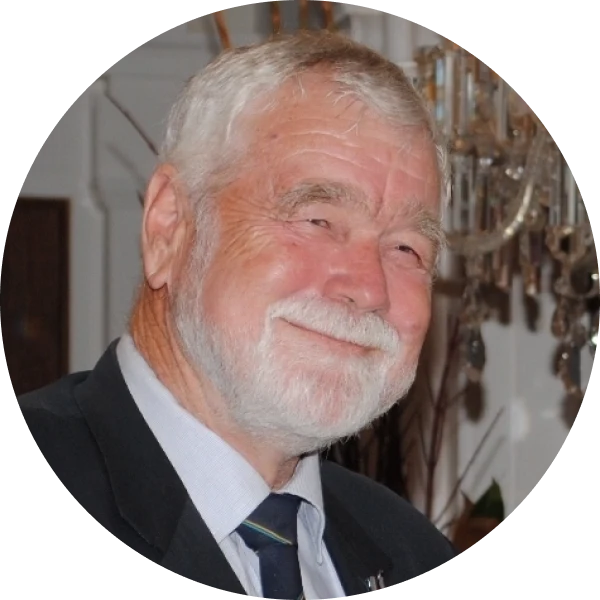
Dr Hellstrom is an independent animal welfare advocate for Halter. He holds a PhD in epidemiology and has a distinguished 40‑year career advancing high animal welfare and biosecurity standards in New Zealand. He served as the New Zealand Government’s Chief Veterinary Officer from 1986 to 1991, leading the establishment of the country’s biosecurity system. He later chaired the National Animal Welfare Advisory Committee (NAWAC) for seven years. Under his leadership, NAWAC successfully advocated for the ban on battery layer cages and sow crates and for amendments to the Animal Welfare Act 1999 recognising animals as sentient beings deserving of respect and compassion.

Dr McDougall is a veterinarian with a PhD in animal reproduction and a registered specialist in cattle reproduction. He was Managing Director of Cognosco, a research company, and is a Professor at the School of Veterinary Science at Massey University. His work focuses on improving cattle health and production through better disease management, particularly mastitis, and improved reproduction. He achieves this through large‑scale on‑farm observational and randomised controlled studies, undergraduate and postgraduate teaching, and extension for veterinarians and farmers.

In his role at Farmfirst, Dr Kannan focuses on understanding and applying technology solutions within veterinary practice to enhance the performance and wellbeing of clients’ animals and businesses. His interests include cow wearables, on‑farm agritech, and data utilisation, with an emphasis on how veterinary teams can integrate these tools to deliver customer value.

Dr Pattie grew up on a dairy farm in the Bay of Plenty, sparking a lifelong passion for animal health and nutrition. After graduating from Massey University as a veterinarian, she spent 10 years as a rural farm vet before joining PGG Wrightson as a Veterinary Ruminant Nutritionist, supported by further study in nutrition. Dr Pattie is a member of the Australian and New Zealand College of Veterinary Scientists, specialising in ruminant nutrition. She is committed to helping farmers achieve better production, reproduction, and animal health outcomes through sound nutrition, believing that strong nutritional foundations are key to optimal animal performance.

Dr Bryan is a part‑owner of Comhla Vet, a wholly employee‑owned group of veterinary businesses across New Zealand and Australia. Comhla employs approximately 200 veterinarians and 200 veterinary technicians and nurses, serving large, progressive rural farming businesses and providing focused companion animal care. In addition to animal health services, the group offers advisory and consulting services to rural businesses and maintains a strong research team, including research technicians, three epidemiologists, data analysts, and a data owner. The team focuses on large‑scale field research, particularly in the dairy sector. Dr Bryan’s current interests include addressing moral distress within the veterinary profession and developing comprehensive data solutions for farmers.

Dr Hopkinson has worked as a dairy veterinarian for over 30 years in South Taranaki and is CEO of Taranaki Veterinary Centre, a large practice focused on dairy and companion animals. The Centre employs 33 veterinarians and over 60 technicians, nurses, and support staff. Dr Hopkinson has served the profession through the Dairy Cattle Vets Society, including three years as President, and on the New Zealand Veterinary Association board. Taranaki Veterinary Centre is committed to partnering with farmers to continually improve animal care, performance, and wellbeing through evidence‑based and practical solutions that support uptake and implementation

