




Animal welfare is central to Halter
In 2016, Halter was founded on our vision to unlock the connection between humans and animals. Animal welfare is central to our founding, our values and our system. It’s central to the decisions we make which advance our system.
The AgResearch Animal Ethics Committee in New Zealand approved research projects associated with the development of the product. For Halter, this was an important step in our early research and development journey that allowed us to undertake critical research that was safe and in adherence with New Zealand’s official animal welfare guidelines.
Today, Halter is the world’s only system that combines virtual fencing and animal guidance technologies. Approximately 700,000 animals and hundreds of farms are now using Halter (as at January 2026), and this number continues climbing as new farms are launched daily. Our product development is informed by scientific literature and research on animal welfare, by Halter’s Animal Welfare Charter (section 3), by our years of experience observing and training animals, by our deep dataset on cow behaviour and by working closely with veterinarians and animal behaviour experts.
Virtual fencing and animal guidance
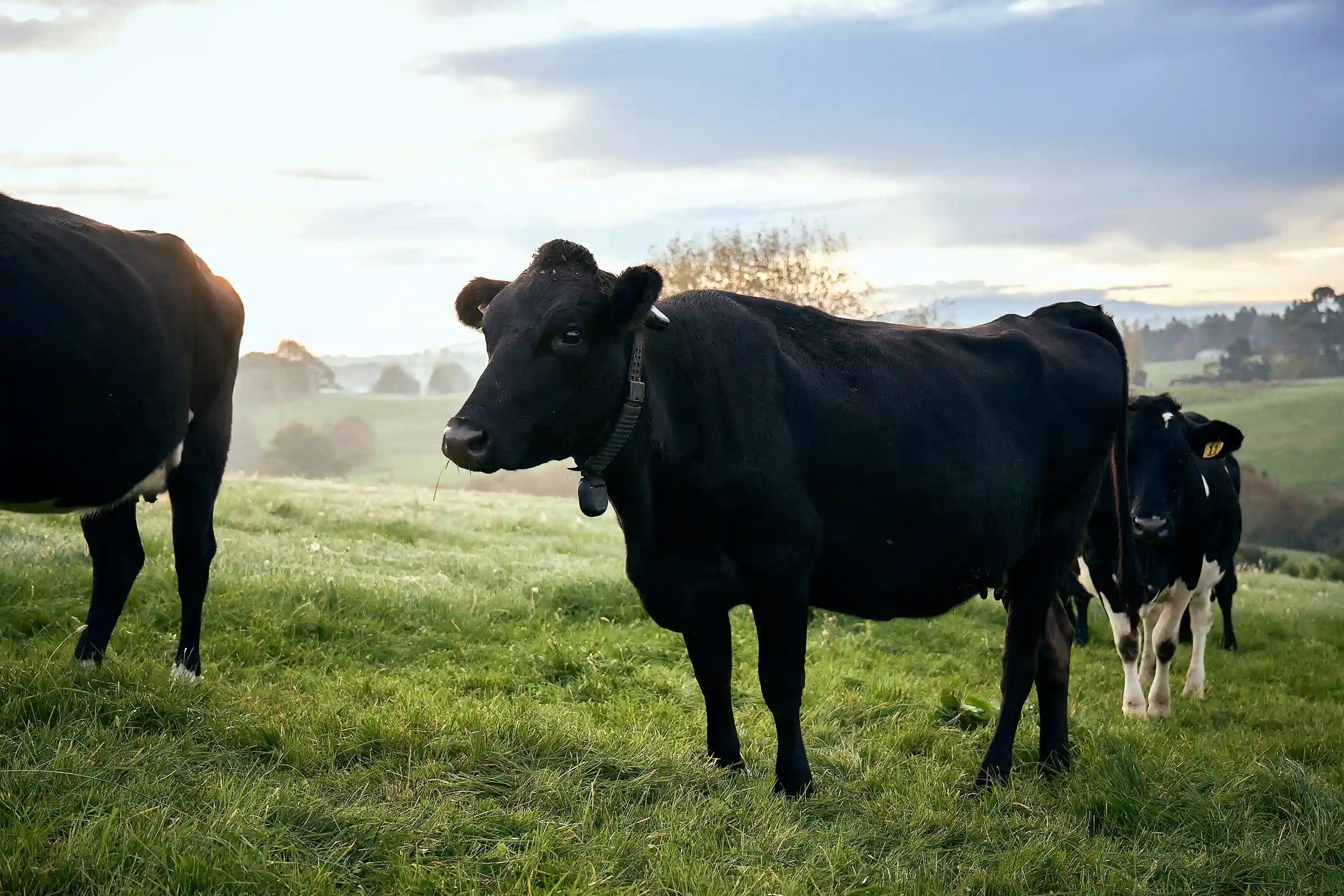
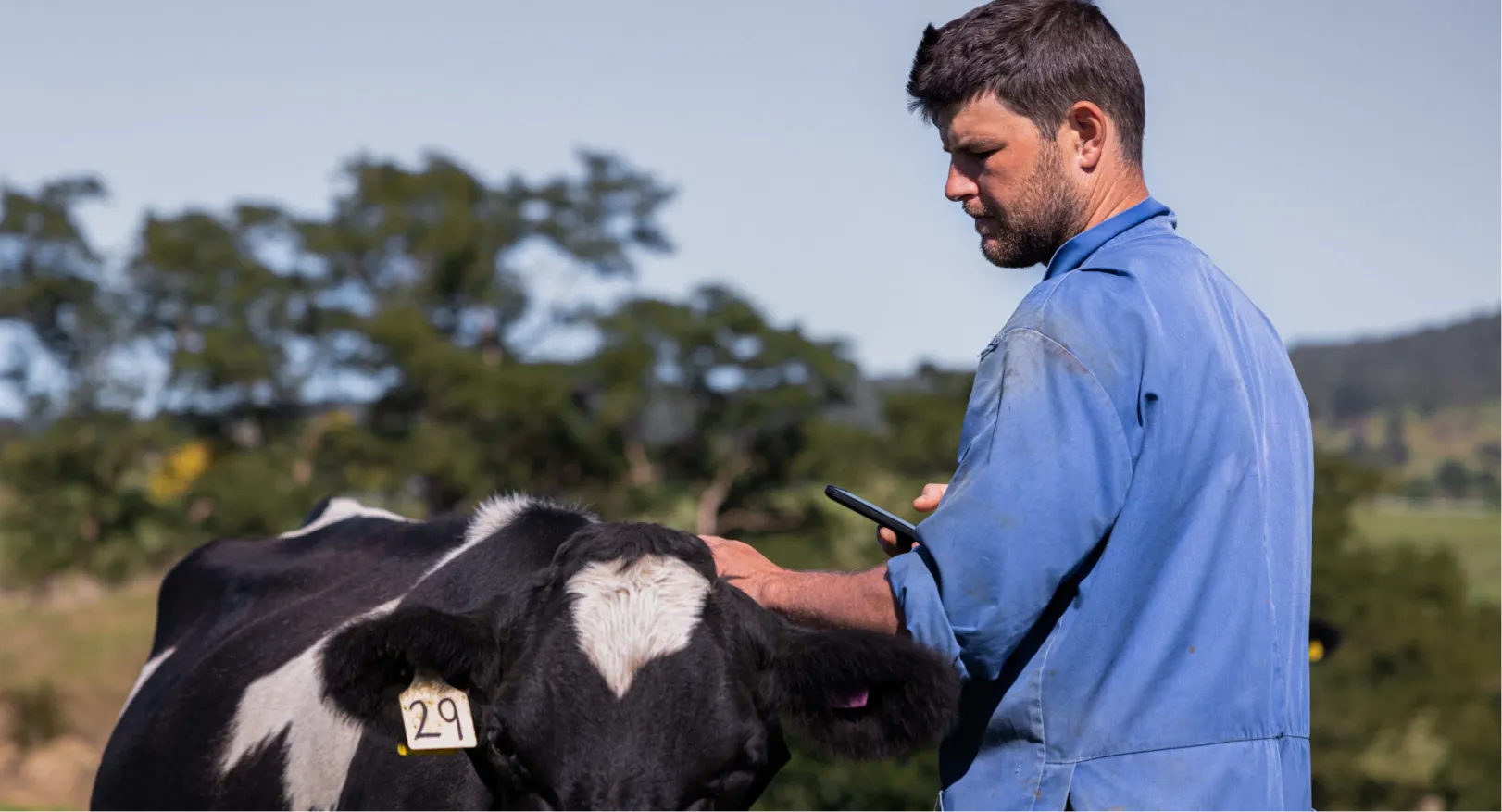
Cows wear a collar, and are trained to follow the collar’s guidance cues. Using the Halter app on their phone, farmers remotely shift their cows around the farm and set up virtual fences for grazing in paddocks. This reduces the need for physical fences, and motorbikes and dogs to move cows.
The collar guides a cow using two primary cues: sound and vibration.
- Sound cues give animals left and right guidance if they cross a virtual boundary, or turn them towards a new area, or exit point;
- Vibration cues encourage animals to walk towards a destination.
The collar also uses a secondary cue - a low-energy electric pulse - that is used to reinforce the two primary cues if they are ignored. The pulse is mainly used during the training period (see section 7) as animals learn to associate the consistent development of the primary cues with escalation to a secondary cue (pulse) unless they change their direction. Once animals are trained, for the typical cow the pulse is rarely used (see sections 5 and 7 for more information). A trained animal can choose to change their direction or can ignore the primary cues in pursuit of a preferred outcome (such as fresh pasture) knowing the consequences of doing so (the pulse). The energy of this pulse is set to the lowest level that will dissuade a cow from ignoring the sound cues, if it is set any lower, they will ignore it. The pulse is significantly weaker in energy than the shock from a standard electric fence. The maximum strength of a single pulse is 0.45 joules, which is significantly less energy than the shock received from a typical mains-powered electric fence (powered by energizer units ranging from 18 to 40 joules).
If a cow moves beyond a virtual boundary, sound cues (an increasing frequency of beeps) are used to encourage the cow to move back within the break. Cows receive ample time to correct their direction and as long as they make progress to return to the break, they won’t receive a pulse. The precise time frame depends on the individual cow and their behaviour at the time, and is informed by our research into hundreds of millions of days of cow behaviour. The moment a cow moves her head in the correct direction, even only slightly, the system detects this instantly and the sound cues ease (beeping interval reduces); if she starts to walk back towards the break, the cues stop. Only if the cow chooses to ignore the primary cues and they have reached their maximum threshold, will a pulse be applied.
The pulse is used to reinforce the primary cues of sound and vibration. Because the pulse is predictable and controllable for cows, no trained cow receives a pulse she wasn't expecting. A cow will never receive a pulse without first receiving, and ignoring, the primary sound or vibration cue. The roles of the two sensory cues do not overlap, meaning different cues are never given at the same time.
Halter’s guidance system allows cows to express their normal behaviour. Once trained, the guidance cues that a typical cow receives each day are almost entirely sound and vibration. Cows are intelligent, so they learn and adapt quickly to the Halter system. Once they associate the sound cue with crossing a virtual boundary, they quickly learn to correct their direction and avoid a pulse. The typical cow receives primary cues (sound and vibration) for only 0.1% of the day (1.6 minutes per day2), meaning that for over 99% of the day they receive no cues.
(i) Sound cue
The sound cue is a benign primary cue that gives animals directional guidance if they begin crossing a virtual boundary, and is also used to turn them towards a new area or exit point. The volume is set low enough to not cause distress. The sound cue is an increasing frequency of beeps, similar to a car’s reversing sensor.
Most cows have already learnt to avoid electric fences. With electric fences, the primary cue is the visualcue; when they see a fence, they learn to avoid it to not trigger the secondary cue of an electric shock. Halter substitutes this primary visual cue with a sound cue. Instead of seeing a physical fence, cows with Halter hear where a virtual fence is. The sound cues complement a cow’s senses; cows have better hearing than humans, over a wider range of frequencies and volumes.
(ii) Vibration cue
The vibration cue encourages animals to walk in the intended direction (such as towards a fresh pasture allocation or to the dairy shed), when they are oriented in that direction. The cue is a soft physical vibration applied by the collar, similar to the vibration of a smart phone.
- This cue is not used to control the speed of the animal; it is used to prompt a stationary animal to move forward.
(iii) Electric pulse
Customising the pulse for individual animals
The low-energy electric pulse is an aversive cue that cows experience as a shock if they choose to ignore the primary sound and vibration cues. A single shock event experienced by a cow is made up of two variables; energy and duration. The system customises pulse energy to each animal’s tolerance and determination to push boundaries.
Pulse energy
Halter’s system allows for a wide range of pulse strength settings, the lowest of which is less than 0.1 J. Approximately 80–98% of cows at pasture receive pulses of less than 0.2 J depending on the time of year. A small proportion of animals are resistant to this level and require stronger energy pulses to be safely contained, up to a maximum of 0.45 joules, depending on the season. These include bulls and animals that have a temperament to push boundaries, particularly when grazing on crops or in winter grazing where over-feeding can lead to animal health issues.
While the pulse from a virtual fencing system is not entirely comparable with a shock from an electric fence given they are different systems, at the maximum strength, Halter’s pulse is less than 1/10th of the regulated maximum energy of an electric fence shock (5.0 joules)2, is typically even less than this, and unlike an electric fence is tailored to be the minimum required for that individual animal.
Safeguards to protect animal welfare are fundamental to the Halter system.
- The system is calibrated per individual animal to use the least amount of energy to safely contain animals, given animals have different propensities to push boundaries. This safeguard is consistent with a recommendation from the UK’s Animal Welfare Committee’s opinion on the welfare implications of using virtual fencing systems (see section 5 of Halter’s Animal Welfare Charter).
- The system monitors all animals to confirm they understand the cues and are not showing signs of confusion or distress.
We continue to monitor and adapt these settings as we scale to manage a larger number of animals, breeds and different farm management systems. For more information about Halter’s safeguards, see Section 3.
Pulse frequency
A single shock event experienced by an animal is made up of either a single pulse or multiple pulses delivered almost instantaneously. There is a range in the number of shocks delivered, just as there is a range in animal temperament and propensity to push boundaries.
For most of the year, while grazing pasture, trained animals rarely ignore the primary cues of sound and vibration. When animals do ignore the primary cues, the vast majority only receive a single shock to be safely and effectively contained. Some animals experience more shocks for safe and effective containment, especially when on restricted feed or grazing winter crops. An animal experiencing additional shocks will first receive primary guidance cues and ample time to allow them to correct their behaviour to avoid receiving an additional shock. From continuous monitoring of the behaviour of these animals, there is no evidence of compromised welfare; they fully understand the system, they choose to push boundaries, and they exhibit normal behaviours. This is also consistent with the independent research conducted by the Tasmanian Institute of Agriculture that demonstrated that there is no increase in chronic stress when cows experience the pulse (for more information, see Section 5).
There are layers of product safeguards that protect animal welfare and that prevent animals experiencing continuous shocks including time-bound limits and daily maximums for the number of shocks. These limits vary based on seasonal factors. If these limits are reached for an individual animal, then the system will be disabled for a set time period and, if necessary, the farmer can be alerted to take over manual control of the animal. The system only reactivates once the animal has demonstrated it can respond to the cues.
Seasonality
Halter adapts its settings and safeguards for animals in different scenarios including when feeding on pasture, when feeding on crop, and when managed through restricted feed periods. This adaptation is crucial for continuing to safely and effectively contain animals in different environments.
- During restricted feed periods and when cows feed on crop, most cows experience more frequent shocks than during the rest of the year; this is a time when cows are highly motivated to push boundaries as farmers constrain feed for health and welfare reasons.3
- In spring, for dairy cows, shock frequencies decline and return to baseline levels when cows return to the milking herd.
Use of aversion to manage stock
Managing livestock on any farm requires the use of aversive cues to contain and shift them. Aversive cues are varied and include: humans, dogs, motorbikes, electric fences and even drones and helicopters. On most farms using conventional animal management methods, aversive techniques are often calibrated to the most assertive animal, meaning most animals in the herd will experience excess aversion. For example, an electric fence must be strong enough to at least contain the most assertive animal in that mob, meaning that the energy from a shock will be excessive for every other animal in that mob. By contrast, Halter’s system uses the least amount of aversion necessary to contain and manage each animal. Any less and they ignore it. We have designed the system to give highly predictable and controllable cues as these have also been shown to be less aversive (Kearton et al., 2020). The Halter system uses an electric pulse as an aversive cue because:
- It is adjustable - the energy can be customised and reduced to the minimum necessary for each individual animal; and
- It is designed to be highly predictable and avoidable.
Furthermore, the Halter cues are consistent. Every day the cow is guided with the same primary cues (sound and vibration), as opposed to the wide range of conventional cues which can vary considerably from day to day, for example across different farm staff, dogs and other methods. Cue consistency is essential to predictability and therefore efficiency of outcomes achieved and to the animal retaining control of its actions.
Ongoing product development
Halter has grown considerably in the last few years, from training and managing thousands of animals to now over 700,000 animals - and this number is growing steadily, with new farms going live daily. Over this time, the system has evolved, and it will continue evolving in the years ahead. Continuous research and development optimises the most effective delivery of a shock needed to safely manage animals while protecting animal welfare. We continuously monitor animal performance and behavioural data to make system enhancements that protect and improve animal welfare. We also remain committed to transparency about our product and sharing context with our farmers and the public, and will provide more information as our system evolves.
Herding dairy cows vs herding beef cattle
Halter uses two different types of ‘shifting’ functionality to virtually herd cattle from one location to another: active shifting and passive shifting.
Active shifting (dairy cows)
To herd dairy cows, Halter uses ‘active shifting’. Dairy cows are already familiar with regular daily movements on farm, so active shifting is used to guide dairy cows to new pasture areas or to the milking shed. Sound cues are used to guide the cow in the correct direction and vibration cues to encourage forward movement. If an animal ignores the vibration cues to move forward with the rest of her mob, after an extended period and only once the cues have escalated, she would then receive a shock to encourage her to keep moving. If for any reason she cannot keep moving forward, the system will disable and pulses will stop.
Passive shifting (beef cattle)
For beef cattle the Halter system uses ‘passive shifting’, which accounts for differences in behaviour and temperament of beef breeds compared to dairy breeds. Passive shifting allows animals unlimited time to move to their next pasture area. When they are being passively shifted, cattle receive directional sound cues and then a vibration cue once they are facing in the direction of intended direction. This vibration cue is never reinforced with an electric pulse. The virtual boundary between the old and new pasture allocations becomes activated when the majority of cattle have crossed the boundary, to prevent cattle returning to the previous area. It is only activated for those cattle that have already crossed the boundary. Their natural social desire to be with the rest of the herd draws the rest of the cattle into the new area.
Halter’s virtual herding does NOT use a ‘roaming’ virtual fence to ‘sweep’ cows into a zone from behind. This is a somewhat common misconception about virtual herding. Instead, cows receive individual guidance cues at the same time, and these cues are customised per animal based on their location and heading. All animals are allowed to move in their own time.
1 Tasmanian Institute of Agriculture - ‘Managing dairy cows with Halter virtual fencing technology’, Dr Megan Verdon (preliminary study results, September 2023)
2 The Australian/New Zealand standard for the safety of electric fence energizers: AS/NZS 60335.2.76:2019
3 Farmers must constrain protein intake to stop milk production and manage pre-calving body condition to avoid metabolic disease

