

5:30am on a crisp winter morning in Golden Bay, at the top of the South Island of New Zealand.
On Uruwhenua Farms, a 750 dairy cow operation near Tākaka, Sam Sowman and herd manager Jorja Ayers are in the paddock, doing morning checks for newborn calves.
Calving season is notorious among dairy farmers for being a relentless, stressful and tiring few months in the year.
A lot of farmers shift cows who are close to giving birth into a “springers” mob and physically check on them every three to six hours, day and night.
It works, but it’s a blunt tool - on an operation this size, that mob can easily run past 150-200 cows, making it hard to give the highest-risk animals closer attention, and impossible to have eyes on the paddock in between checks.
Spotting the cows who need extra care
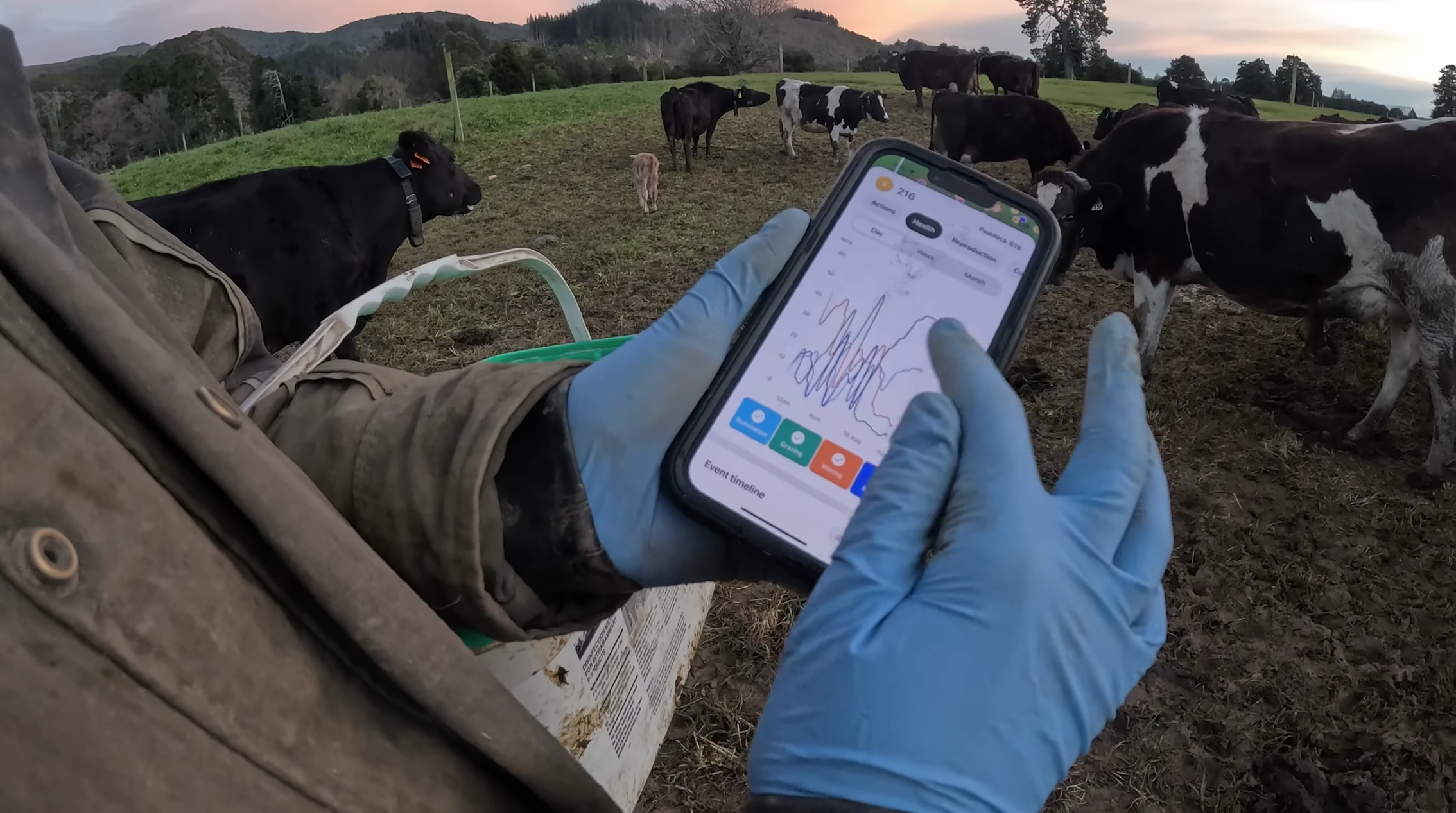
“I'll go into Halter and I'll identify a mother,” says Jorja.
On Halter’s live farm map, the new mothers in the paddock are marked in a different colour to the rest of their mob.
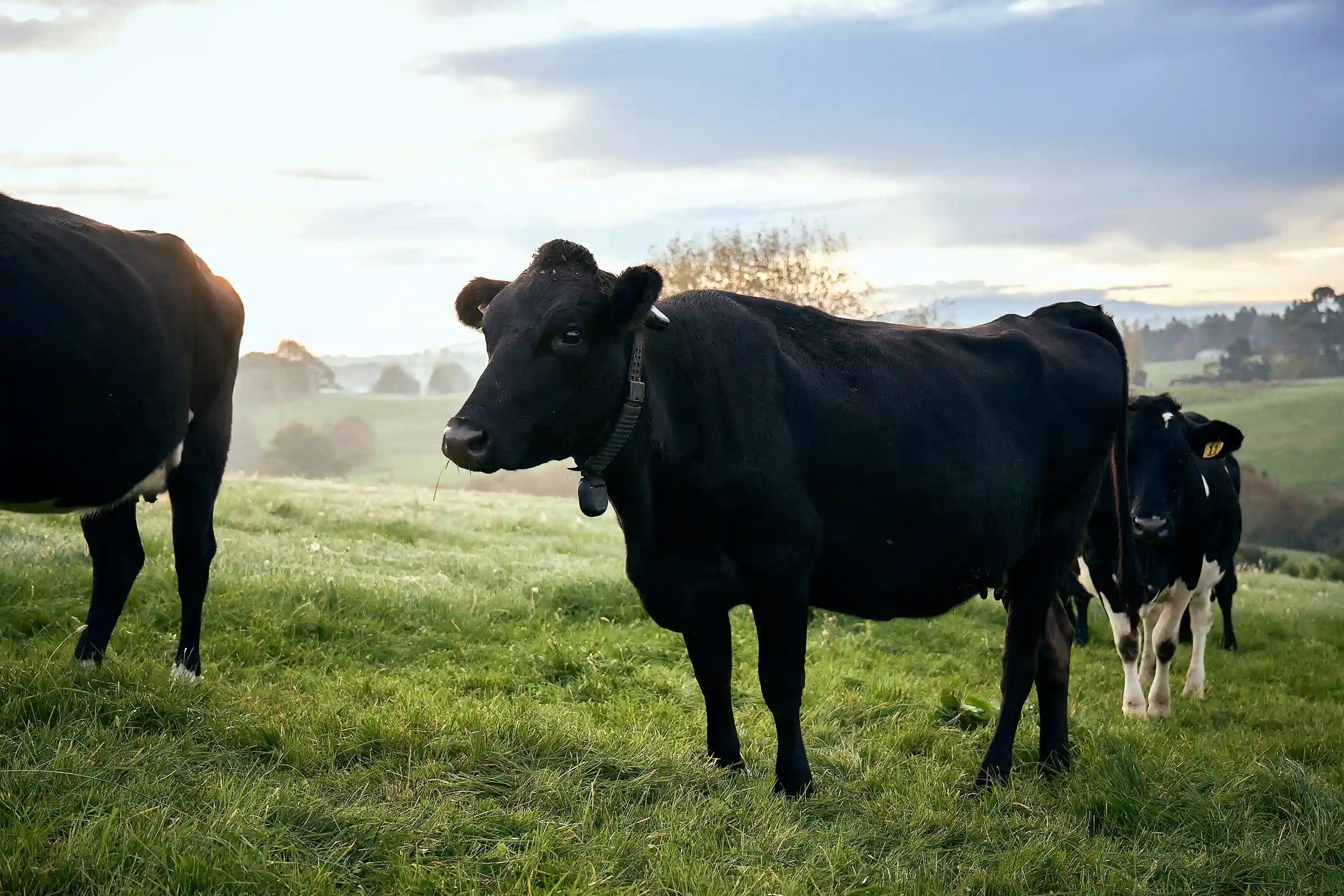
Every collar uses GPS tracking that lets Jorja see exactly where in the paddock a cow is, whether she’s isolating herself, starting to nest, or simply grazing with the mob - all signs vets and farmers are trained to watch for ahead of a birth.
Clicking on the new mum, Jorja pauses her collar and changes her into the “Just calved” mob.
Pausing a freshly calved cow’s collar allows the mother access to fresh grass and to follow her calf if it leaves the virtual break.
Before, this would’ve been a two-person job; one person to hold open a gate or shift a reel, another to walk the cow and calf through, all while keeping the rest of the mob from crowding onto the new break. Now Jorja can do this alone: pause one cow’s collar, and she can cross the virtual boundary while her herdmates stay contained behind it.
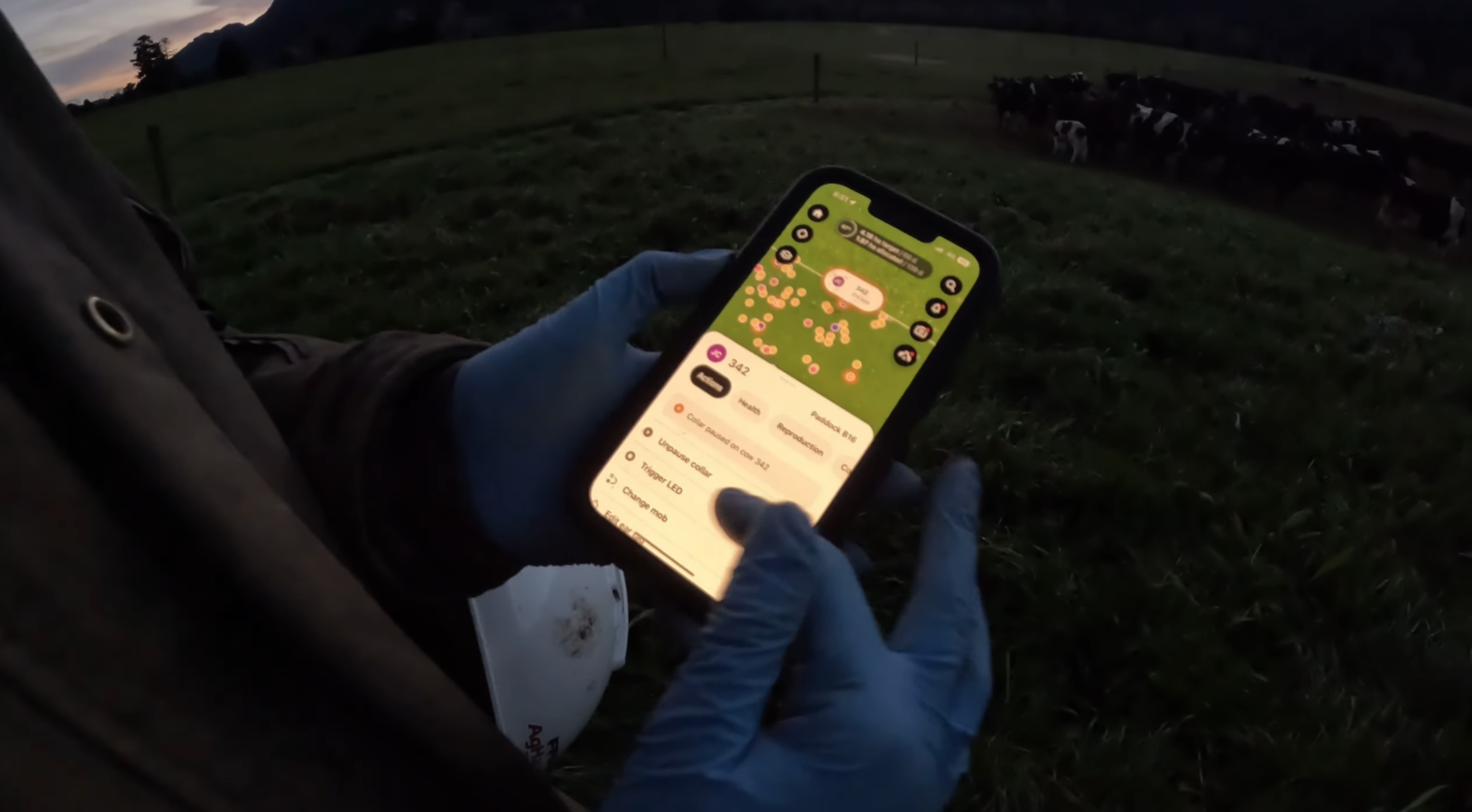
Cows that are close to calving get switched to a "point of calving" mob for closer monitoring. Jorja’s looking out for number 490 (“a big fat jersey”) who she’s noticed is “mothering like crazy”.
It’s a newer version of the traditional springers mob, but instead of checking the group physically every few hours, Jorja can split it further into higher- and lower-risk cows and watch all of them continuously from her phone.
She triggers 490’s LED on her collar to pick her out of the herd easily in the dim dawn light and clicks into her behaviour graph on the app.
“Halter’s been really good because we can look at the cow’s rumination, her eating, her resting, her movement. And that's such a great tool to tell if they've calved or not, if we can't physically see it that well.”
This is Cowgorithm - our algorithm that turns raw collar data (movement, chewing patterns, resting time) into a behavioural fingerprint for every cow. It compares each animal’s current rumination, eating and resting patterns against her own recent history and her mob’s, and flags any sustained drop-off - the kind of change that often shows up hours or days before a cow calves, or before she’s visibly sick.
.png)
The results: fewer down cows, better condition
The data precision is turning in productive results. Sam says that this season the farm has had just five down cows, about 1% of those calved.
Down cows are typically the result of metabolic issues like milk fever or grass staggers, which are both more likely in the 24 hours before calving when cows stop eating, or environmental mastitis contracted right after birth.
Catching the early signs and letting a freshly calved cow onto clean, fresh grass as fast as possible - matters as much for the books as it does for the cow.
“It’s probably 12-15% better than it's ever been,” says Sam about the down cow rate.
“Part of it's weather, but a lot of it is that we're so pinpoint with our grazing management now.”

The flow-on effect
“It's so easy to check on them, give them a little bit more grass and check they're all eating,” says Sam, “Because if they’re not eating, that’s the first sign that there's something wrong with an animal.”
Once the calves have been collected, Jorja starts drawing a new break of fresh grass on the app for the mobs to move onto.
“We’ve got them on four rolling breaks a day this month. As they shift, it gives us a really good opportunity to walk through them again and make sure they're all eating.”
Getting the breaks and grazing management right makes everything that follows easier, says Sam.
“You don't end up with animal health problems. They start lactating well. Mastitis is less of an issue in the cow shed. It's all driven by getting this part right – because this is the key to their immunity and all the systems of a cow.”
Want to know more about how Halter can help you during calving season? Get in touch with your local rep.